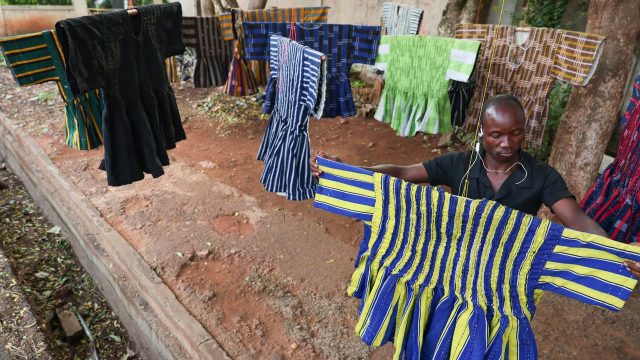
A colourful, traditional Ghanaian smock, once dismissed as outdated, is becoming a symbol of national pride again. The fugu, a distinctive, “structured, poncho-style garment”, also known as batakari, is being worn proudly by Ghanaians, many of them incensed by the online ridiculing of their president for wearing one on a state visit to Zambia, said the BBC.
‘Patriotic symbolism’
The fugu has been made for centuries on traditional looms, and is a powerful symbol of Ghanaian cultural tradition. Its “vibrant, striped patterns” are woven and stitched together by skilled craftsmen “from the Dagomba and Mamprusi tribes”, said the Ghana News Agency. Yet, despite its rich history, it had, in recent years, become seen as “too heavy to wear, and unfashionable” for modern life, better left as a “relic of the past”.
What changed was not the design but the narrative. When President John Dramani Mahama wore a flared, striped fugu on a state visit earlier this month, it “drew mockery from non-Ghanaians on social media”, said Agence France-Presse, with some saying his outfit was “inappropriate for a head of state”.
Since then, many Ghanaians have chosen to rally around the fugu for its “patriotic symbolism”. Weavers have reported a spike in demand. “People are coming specifically for it now,” Accra textile trader William Nene told AFP.
Weaving the future
The fugu is “more than a fashion choice”, said Gilbert Attipoe in Ghana’s Graphic Online. Its “vibrant colours, intricate geometric patterns and occasionally protective amulets” tell the story of its history as “warrior attire” and as ceremonial dress for important social occasions. Its revival is a “reclaiming of self-determination and dignity”, and a reminder to all African nations – who each have their own cultural attire – of the “common struggles and bright shared future that Africans can build together”.
The resurgence of interest in the fugu could have “far-reaching social and economic benefits” for local weavers and traders, said Ghana’s Tourism Minister Abla Dzifa Gomashie. But a “lack of locally grown cotton” means weavers must rely upon imported yarn and, without “increased government investments”, they could struggle to meet the growing demand, said The Associated Press. “Using our hands slows the process and limits our ability to be productive. We need industrial machines,” Abigail Naki Gabor of Ghana’s smock weavers and sellers association, told the news agency.
Pressures on the weavers are only likely to increase: the government has now declared every Wednesday is “Fugu Day”.
A centuries-old outfit is being rewoven into a statement of cultural pride – and defiance