‘The Rolling Stones: The Biography’ by Bob Spitz
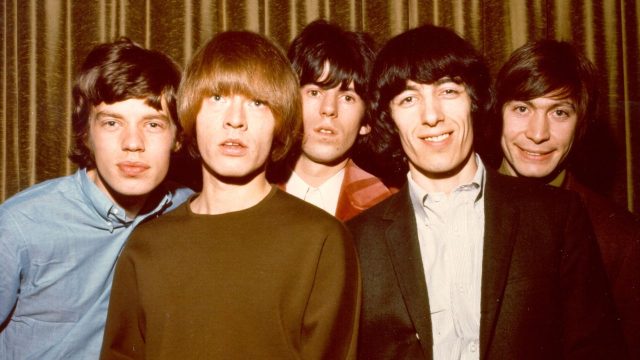
“Hundreds of books have been written about the Rolling Stones, but few sparkle quite like Bob Spitz’s,” said Marc Ballon in the Los Angeles Times. The author, who has previously written doorstop accounts of the Beatles, Bob Dylan, and Led Zeppelin, tells the band’s story in full. We get the boys’ early days as a blues cover band, creative highs such as Exile on Main St., valleys such as 1986’s Dirty Work, the drug problems, the breakups, the makeups, and the disastrous 1969 concert at Altamont. Though Spitz “unearths little new information, he excels at presenting the Stones in glorious Technicolor” because he “homes in on telling details that give the band’s story a deep richness and poignancy.” The result is a “magisterial” work worthy of its 700 pages. “For anyone who loves or even likes the Stones, it’s indispensable.”
The tale begins with “one of the great origin stories, ranking up there with Steve Jobs inviting Steve Wozniak over to play with computers,” said David Kirby in The Wall Street Journal. Mick Jagger and Keith Richards were the loosest of acquaintances when they ran into each other as 17-year-olds in 1961, Richards struck by Jagger’s armful of records. Thus was born one of rock’s most dynamic duos, soon to be joined by Brian Jones, Charlie Watts, Bill Wyman, and Ian Stewart, the last a piano player pushed off the band’s official roster because of his looks. Most would make it through several decades together, though Jones was dismissed from the band he co-founded shortly before his 1969 death, to be replaced by Mick Taylor, then Ronnie Wood. Revisiting their collective story with Spitz’s guidance is like seeing a familiar portrait anew. “The faces are the same, but the light is different, and suddenly you see shadows you never noticed, a new determination in one person’s eyes.”
“There’s a certain swagger in Spitz’s subtitling his chronicle of the band ‘The Biography,’” said Leah Greenblatt in The New York Times. But the author is a credible biographer of record, his takes on the music are “both forensic and poetic,” and “many small revelations and corrections emerge along the way.” His account is “diligent to a fault” as he strings together albums, addictions, court battles, and relationship dramas, and after devoting 600 pages to the ’60s, ’70s, and ’80s, he “suddenly leapfrogs over several decades in the final chapter, as if he just realized that his car is double-parked.” But he’s wise enough to position the Jagger-Richards partnership as the story’s central platonic love and enduring source of tension. And his epilogue, which finds the surviving Stones crushing yet another 2024 tour stop, “feels appropriately celebratory and bittersweet, like an Irish wake without the body.”
‘Project Maven: A Marine Colonel, His Team, and the Dawn of AI Warfare’ by Katrina Manson
“Unpacking global policies on the use of AI by militaries—the potential benefits, pitfalls, and murky ethics—will fill books for decades to come,” said Matthew Sparkes in New Scientist. Katrina Manson’s new book does something simpler. It relates the fascinating story of the development of the Pentagon’s main AI initiative, Project Maven, launched in 2017 to take the work of consolidating and analyzing military intelligence data away from slow, mistake-prone humans and assign the work to AI. But backers of the project always intended to go further by having the AI program choose targets—as it does now—and eventually take them out autonomously. AI weapons need to be managed closely. Manson’s chilling story “suggests the reality is otherwise.”
At the center of the veteran reporter’s account stands Maven’s founder, Drew Cukor, said Fred Kaplan in The New York Times. Realizing in 2017 that AI would spread to the battlefield, the Marine intelligence officer vowed to help get the U.S. up to speed with China, which was off to a head start. After Google pulled out of the project when employees protested doing military work, Cukor turned to then-obscure Palantir to get Project Maven off the ground. But he knew that reducing the role of human decision-making in the so-called kill chain would spook Pentagon officials, so while courting them, he kept that part a secret, waiting until Maven proved its value. By 2022, it was being used by Ukraine to hold back Russia. A year later, Israel used it in its attacks on Gaza.
“Manson clearly comes to like Cukor, or at least begrudgingly admire him,” said Gideon Lewis-Kraus in The New Yorker. Maven’s catalyst wanted to reduce the number of war casualties that are caused by errors, which makes it “at least intermittently possible” to root for him as he battles hide-bound bureaucrats and agencies resistant to sharing data with nominal compatriots. But Cukor insists he trusted that Maven would never do more than assist human decision-making, and “Manson repeatedly points out that this was always somewhere between wishful thinking and deliberate obfuscation.” Today, machine-driven carnage isn’t coming; it’s here.
A dazzling telling of The Rolling Stones’ story and a revealing look at the Pentagon’s major AI initiative