Thirty-two years later, the memory of the genocide against the Tutsi remains not only a moment of mourning but a test of understanding. Commemoration, if it is to mean anything, must go beyond ritual. It must compel reflection — honest, uncomfortable and shared.
On April 7, the UN marks International Day of Reflection on the 1994 Genocide against the Tutsi in Rwanda. The date acknowledges the beginning of the 100 days during which more than a million people were killed.
Yet recognition came late.
During the killings, the term “genocide” was deliberately avoided. Only later, through the establishment of the International Criminal Tribunal for Rwanda and landmark rulings such as the Akayesu case, did the crime receive its full legal name — irreversibly inscribed in international law.
The world hesitated, then acknowledged. But what about Africa?
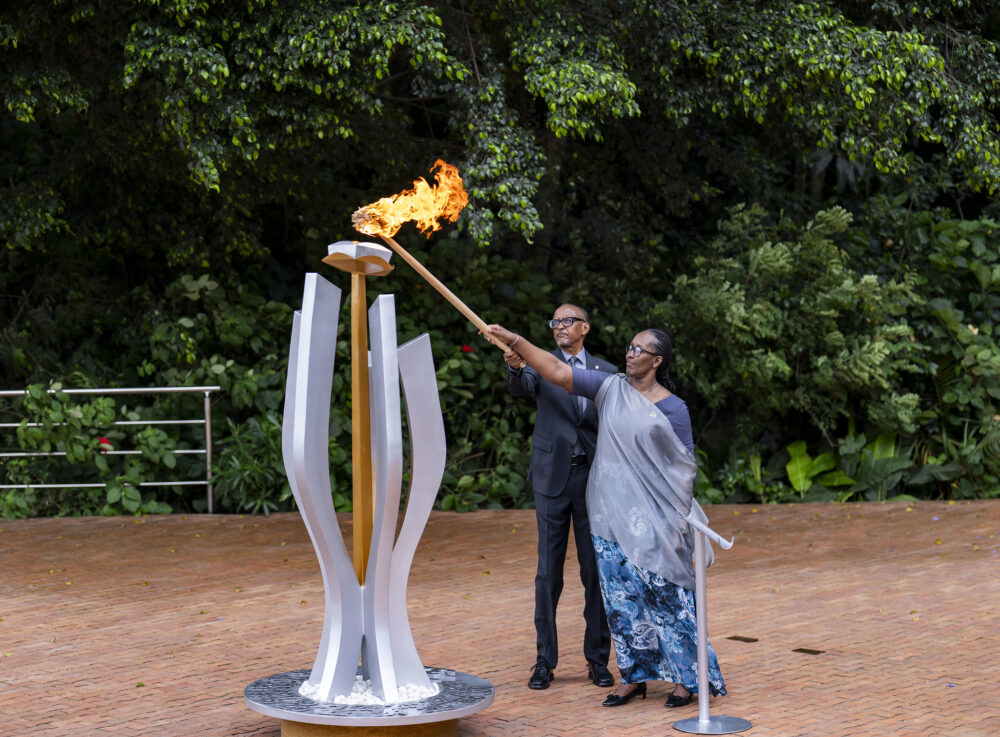
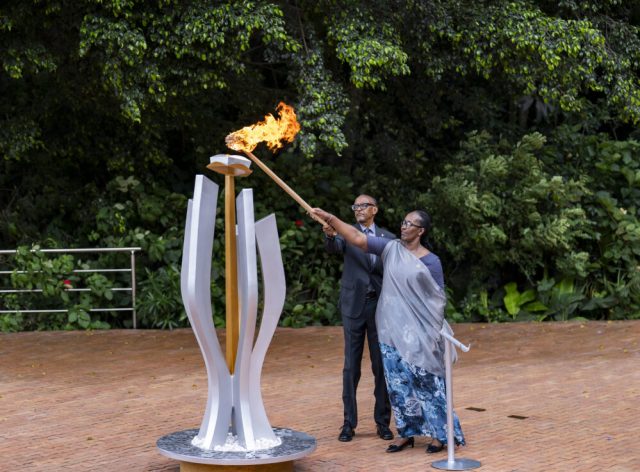
In 2026, during Kwibuka 32, the most visible African voices in commemoration were institutional: the African Union and the East African Community.
Beyond them, most African states expressed solidarity diplomatically, through presence, not words.
With few exceptions, national voices remained muted, absorbed into collective statements rather than articulated individually. This is not indifference but it reveals something deeper: distance. The genocide is remembered, yet insufficiently internalised. It is acknowledged, yet not fully claimed. There exists, in this regard, an African intellectual deficit.
To be clear, Rwanda has carried the burden of memory with remarkable consistency. The responsibility is its own, rooted in the necessity of survival and reconstruction. But the work of understanding cannot remain exclusively Rwandan. A tragedy of this magnitude — historically, politically and morally — demands continental engagement.
There have been important voices. Boubacar Boris Diop gave literary form to memory. Mahmood Mamdani dissected its political origins. Adama Dieng contributed to its legal and preventive frameworks. Rakiya Omaar documented its unfolding in real time. Koulsy Lamko and Tierno Monénembo explored its human and cultural aftermath.
But those remain exceptions, not a continental intellectual movement.
Across much of Africa, the genocide is not taught in schools or universities. In public discourse, it is too often framed through a misleading lens: ethnic conflict. This is perhaps the most persistent misunderstanding and one of the most consequential.
Pre-colonial Rwanda was not a society divided into antagonistic ethnic groups. It was one people, sharing language, culture, beliefs and lineage, organised through social categories that were fluid and mobile.
All Rwandans descend from those who began the “project Rwanda” or “proto-Rwanda” about 2 000 years ago and more than 90% are related. What colonial rule — first German and then Belgian — introduced was not difference but the rigidification of social organisation. Social distinctions were recast as racial identities: fixed, codified and ultimately politicised.
This racialisation was not only imposed,it was internalised. It is this distorted reading that many across the continent have, consciously or not, adopted. It explains, in part, the troubling refrain often heard when the genocide is raised: “Why can’t you move on?” But this, too, is a misunderstanding.
Rwanda has moved on. In the three decades since 1994, the country has undertaken one of the most profound processes of reconstruction on the continent. Beyond physical rebuilding, it has reconstituted itself around a foundational principle: the rejection of the categories that were weaponised to destroy it.
Today, a generation has come of age that does not experience itself through those imposed divisions. It sees itself, first and fully, as Rwandan. The youth who now form the majority of the population are not living in the shadow of “ethnic conflict”. They are carrying a national project — one built on unity, security and shared purpose.
To ask Rwanda to “move on” is therefore to misunderstand both its past and its present.
The issue is not that Rwanda has failed to transcend its history. It is that much of Africa has yet to fully understand it.
To grasp the genocide is to recognise that it was not the eruption of ancient hatreds but the outcome of a long historical process: colonial disruption, the institutionalisation of division, decades of discrimination and the gradual normalisation of exclusion as policy.
By 1994, the architecture of genocide was complete. Classification, dehumanisation, organisation and preparation had all been systematically constructed. When the trigger came, the machinery did not improvise, it executed.
This is what must be understood, not only remembered.
For Africa, the genocide against the Tutsi is not an external tragedy. It is part of the continent’s historical trajectory.
To reduce it to “ethnic violence” is to misread it. To keep it at a distance is to avoid it. And to fail to fully engage with it is to leave its lessons unlearnt.
Thirty-two years later, the question is no longer whether the world recognises the genocide. It does. The question is whether Africa has fully claimed it — intellectually, historically and in its understanding of itself.
That reckoning remains unfinished.
Albert Rudatsimburwa is a veteran Rwandan journalist who covered the first Congo (then-Zaire) war in 1996. He is also a political analyst and the founder of one of the first private radio stations in Rwanda, Contact FM, which he established in 2004.
The question is not whether the world recognises the genocide against the Tutsi. It does. The question is whether the continent has claimed it — intellectually, historically and in its understanding of itself