“Companheiros! Companheiras!” shouts a man called Enric, standing on a covered septic tank in the parking lot of the Pensão Vincente in Chiúre.
It is the morning muster and a group of drivers, doctors, nurses and counsellors, all wearing white Médicos Sem Fronteiras (MSF) flak jackets, assemble in and among five world-weary Land Cruisers fitted with tall radio antennae.
Each faces the hotel gate, having been artfully reversed in the night before. (Chiúre is one of the safer towns in northern Mozambique but there have been attacks in the district before and you never know when you might need to leave in a hurry.)
In a hoarse smoker’s voice well accustomed to projection, Enric goes through the day’s activities — who is going where, carrying what — and then cries, “Ok, vamos [let’s go]!”
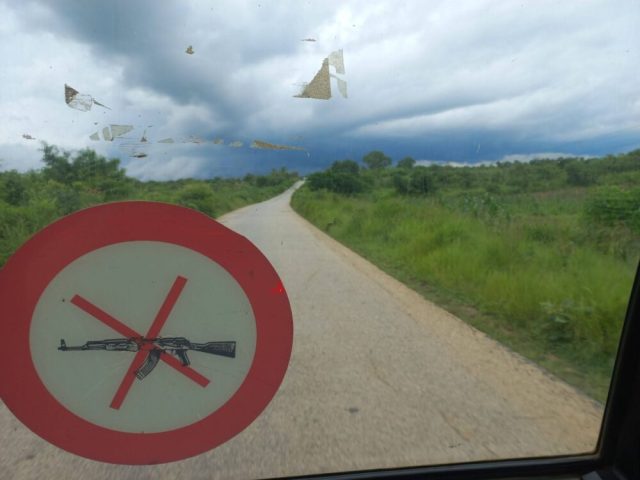
The men and women subdivide into outreach teams and the vehicles cavalcade out into the world, weaving at high speeds around potholes and missing sections of road on the way to Nampula province, on the other side of the Lúrio river.
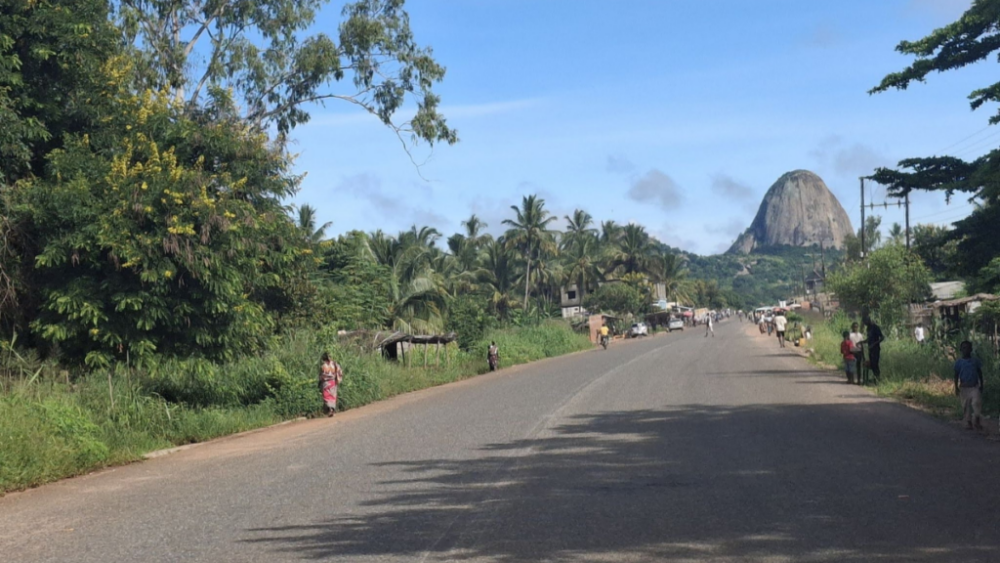
Most are headed for temporary clinics MSF has set up near to the town of Alúa, in Eráti district, which is notable for the enormous cowl of granite that rises up on one end.
The entire landscape is littered with fantastically shaped inselbergs, in fact: here a vast lion, there a thimble (one of the more phallic formations between Alúa and Namapa is called “Monte Jeito”, after a well-known condom brand).
In October last year, large numbers of people came streaming into this picturesque world, fleeing attacks by Islamist militants on the villages of Chipene and Necoro in the neighbouring district of Memba.
More than 39 000 people scattered, according to the International Organisation for Migration, with at least 30 000 more fleeing fresh attacks in November.
Some of those who came had sought refuge here before, after the school, health centre and church at the Catholic mission in Chipene were looted and set fire to by militants in September 2021.
Four years on, fear alone is enough to set many people running when they hear that “malfeitores” [villains] are abroad again.
“I didn’t see soldiers, I only saw smoke rising but people came and said, ‘you won’t see Fulano and John again, they are dead’ and so we ran,” says Isabel Carlos Pereira, who injured her back picking up children and carrying them to a nearby woodland.
Speaking through an interpreter in a tent attached to MSF’s mobile clinic in Alúa Velha, she says, “We walked,” her voice rising high to indicate the harshness of the journey.
Their group of 12 included nine children (more than half of all who fled Memba were children), one of whom, her youngest granddaughter, died on the trail of measles.
The mother — Pereira’s daughter — lost another child back in their village, not long before. Pereira said the cause of death was unknown but the child suffered from epilepsy and getting help from their nearest clinic had been difficult.
“They [clinic staff] can even shout at us, ‘Womoliya [go away],” she says, adding that patients must pay one metical (about 26 cents) to enter the health centre. If there is medication, they must produce five meticals (about R1.29) more.”
It isn’t much but Nampula, where 70% of children live in monetary poverty, is among the poorest provinces in Mozambique. And anyway, as Pereira said, “there never is any [medicine]”.
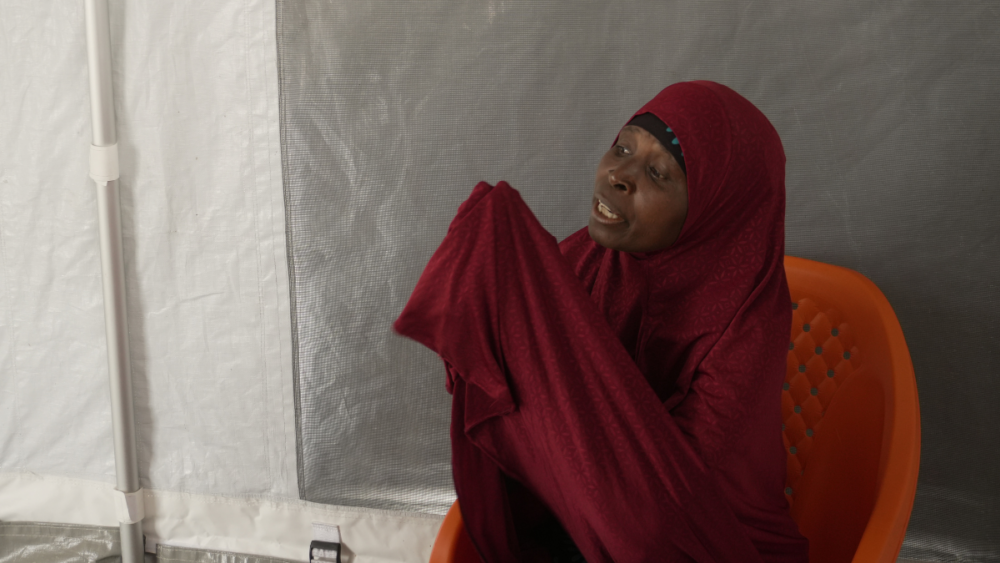
She and her family were not accepted by the Alúa Velha community at first. They slept outside and had to beg and forage for food. Had MSF not established an emergency clinic in late December 2025, they might have moved on, or returned to Memba like most of the others.
“I would be happy to stay here forever if this clinic remains open,” she says. “The children were all sick. Now they are fine, some are even attending school. The medication is free, the nurses are kind,” says Pereira, whose primary worry now is her daughter, the mother of the two dead children.
“She is suffering. She has the problem of mental health. I have it too.”
Layers of problems
From the air conditioned NGO offices off Pemba’s Avenida Marginal, where the soft ocean can be glimpsed, online calls are held with journalists, in which the humanitarian situation in Cabo Delgado province and northern Mozambique broadly, is presented in urgent tones.
The year’s choice phrase is “multi-layered shocks” (in previous years “a perfect storm of compounding crises”). There is the shock of conflict, of cyclones, flooding, drought and disease, all stacked on top of one another.
Unanimously, the most devastating of these layers is the conflict, which started in October 2017, reached a bloody zenith in 2021 and has since July last year again intensified.
Most humanitarian communicators avoid anatomising it, or even naming it, which is understandable — NGOs, after all, address the symptoms of man’s inhumanity to man, not the root causes.
It is not necessary to speak of Al-Shabaab, the Islamist militant group responsible for the attacks (no connection to the better known militant Somali group of the same name), or to explain that this murderous movement was born out of the historical sidelining of the Mwani people by the dominant Makonde in the far north of Cabo Delgado, in a context of resource deals and governance hierarchies that have little benefited the Mwani, or indeed most of the local population.
There is no need to go into this, because the symptoms of this conflict are simply too urgent: rape, psychological trauma and displacement in the main — a total of 1.3 million people since 2017 — and with displacement goes more rape, more psychological suffering, sickness and hunger.

Then there is the weather, easier to talk about in many ways.
Tropical storms have always battered this coastline but as sea surface temperatures and humidity levels rise in the southern Indian ocean more powerful storms are spawned and more frequently, spinning out of the Mozambique Channel into the mainland.
In the 2024/2025 cyclone season alone, three destructive storms — Dikeledi, Jude and Chido — ruined the homes and livelihoods of hundreds of thousands of people living in Mozambique’s Cabo Delgado, Nampula and Nyasa provinces, causing more displacement, more hunger and more sickness.
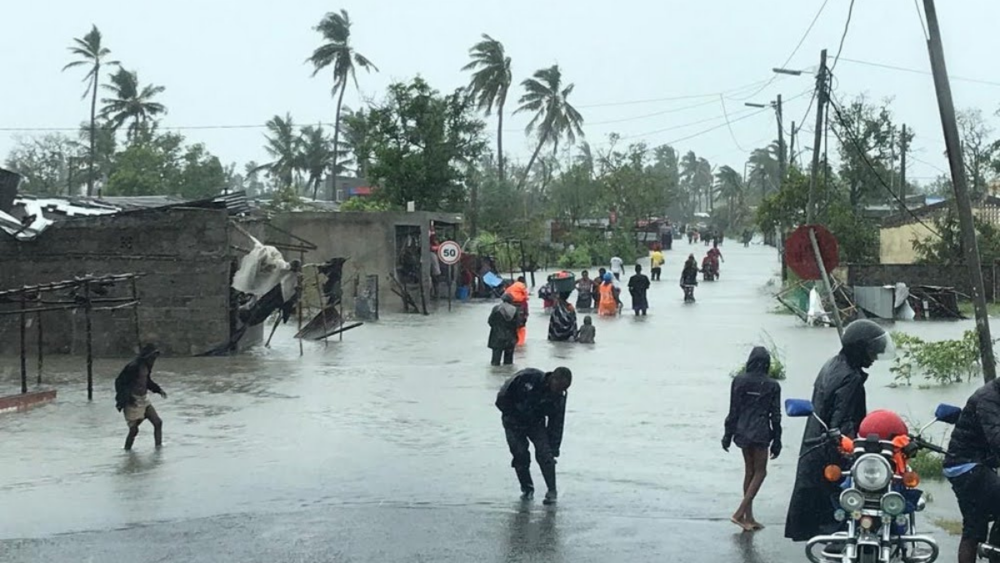
Having outlined the pressures, every humanitarian update sketches a picture of structural deficiency. The health system isn’t even halfway equipped to deal with what is going on and this was true long before it was going on.
Any number of statistics will serve to demonstrate this, like the government’s own 2023 Health Workforce Analysis report, which found that the health system workforce meets only 44% of the population’s needs.
Or that only one in two babies is delivered in a healthcare facility in Nampula province, contributing to one of the highest under-five mortality rates in the world, with about 72 deaths per 1 000 live births.
For decades, donors and NGOs have subsidised (and substituted for) the government health system, but now — and this is how these updates conclude — at exactly the moment of greatest need, funding to the humanitarian sector has been slashed.
A perfect storm indeed.
An NGO’s perspective
MSF isn’t the only organisation providing humanitarian support for certain communities in Cabo Delgado — most, if not all of the UN agencies are present, as is the International Committee of the Red Cross, Save the Children, the Norwegian Refugee Council, Catholic Relief Services and a bunch of others — but it does have more appetite than most for speaking out about the plight of the populations it works among, or what the French call témoignage [witnessing].
It is an ethic that MSF incorporated during the Biafran war in the early 1970s and a tradition that Benjamin Janeiro Mwangombe, the deputy coordinator of MSF’s activities in Mozambique, honours, albeit cautiously.
“What a lot of people don’t realise,” he says, “is that access to healthcare is being significantly reduced [by the combination of conflict and heavy weather].”
He opens a map of Cabo Delgado, showing the coordinates of health centres destroyed or damaged when Cyclone Chido made landfall in December 2024, and then several more maps of specific settlements that were affected, a swarm of red pixels denoting destroyed homes and buildings.
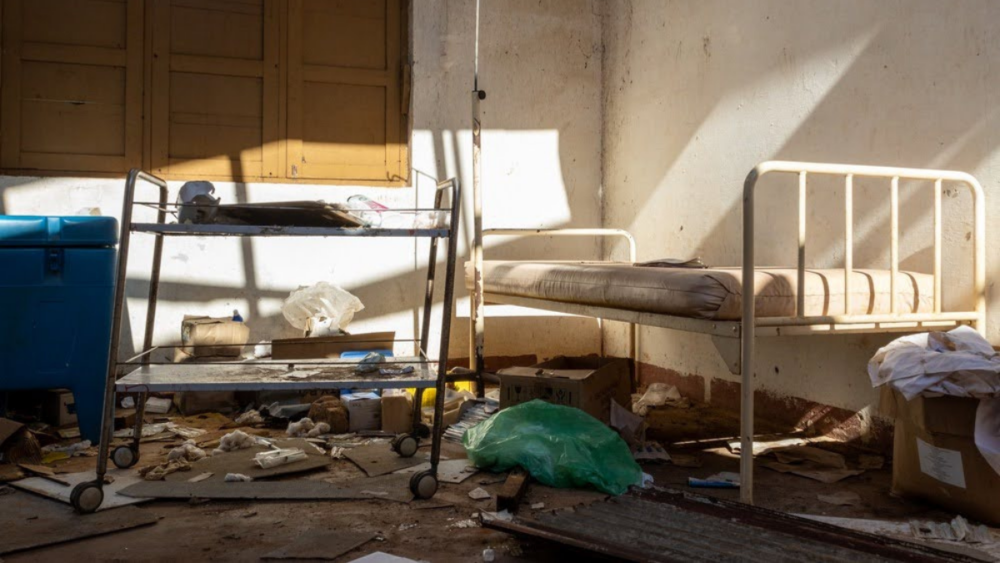
“In Mocímboa da Praia only four of eight health centres are functional. In Macomia, just one of seven health centres remains open and in Palma the main health centre was looted and destroyed in 2021,” he says and MSF would know this, as it has long-term projects in all three of these places.
Before the government, MSF or anyone else can provide any healthcare, especially secondary services, “you need to get the roof back on the clinic and the hospital.
“After that you need clean water and sanitation. Only then can health services properly resume,” Mwangombe says, adding that MSF has increasingly had to invest in repairs and infrastructure in recent years.
Facilities that remain open often lack staff, medicines, testing, basic medical consumables and equipment. Chronic shortages of health workers are worsened by displacement, insecurity, unpaid salaries and repeated strikes.
And as the health system shrinks, new demands are added: outbreaks of malaria and cholera follow in the wake of storms and violence gives rise to mental health disorders, ranging from acute to moderate.

Mwangombe tells an illustrative story about a humanitarian disaster in April 2024, in neighbouring Nampula province — a story about the complex ways in which conflict and climate change conspire to produce tragedy and illness.
“After cyclones and heavy storms we typically see cholera outbreaks and although cholera is endemic here, there is great stigma attached to it, due to the area’s complex history of conflict,” he says, referring not to the ongoing insurgency but rather the Mozambican Civil War (1977–1992).
In the war’s mistrusting aftermath, a rumour spread that cholera was being used by the Frelimo-led government as an agent of destruction in the north, where Renamo, which fought the government, was and remains strongly supported.
In fact, Mozambique’s index case was a person who had travelled from the Indian sub-continent in the early 1970s, but the connection with government, embodied by healthcare workers in protective gear, has proven stubbornly popular.
In April 2024, driven by cholera fears, several terrified families from coastal villages on Nampula’s coastline boarded a boat bound for the presumed safety of the nearby Island of Mozambique. There were more than 130 people on board when the boat capsized. Nearly 100 drowned, many of them children.
“When we came there we found people who had lost their entire families — severely traumatised people in high numbers,” says Mwangombe. As with all major disasters in the country the government led the response, but lacked the ability to respond to the mental health needs.
With the help of psychologists working in a private mental health clinic called Psicosapi, MSF undertook to provide counselling to shocked survivors and grieving family members.
In the absence of mental health support and in the presence of stigma and a lack of understanding about mental health, untreated psychological wounds can progress from moderate to acute, a process that MSF mental health coordinator Paulina Antitur Seguich calls “the chronification of symptomatology”.
“Typically what happens is that people only come to hospitals when they are very decompensated — very sick — and needing to see a psychiatrist, of which there are very few in the country.
“Or more likely they will wait to see a mid-level mental health professional, who is likely to be overworked and running around the district; and if a diagnosis is made of psychosis, schizophrenia or severe agitation there really is just one tool available for treating it and that’s an inexpensive anti-psychotic called haloperidol,” she says, adding that if people were to be seen earlier, it could stall progression.
Minding the mental health gap
Very little research has been done on the impact that northern Mozambique’s “multi-layered shocks” are having on people’s mental health — nothing at all on the impact of cyclones — although research conducted elsewhere, including sub-Saharan Africa, has demonstrated that extreme weather events significantly impact the mental health of populations.
With regard to the impact of conflict on Mozambican lives, a single 2023 study found post-traumatic stress disorder (PTSD), depression and anxiety to be highly prevalent in a group of 750 people that had fled conflict in Cabo Delgado.
Three out of four people had symptoms relating to PTSD, which the World Health Organisation (WHO) says can manifest through intrusive memories, nightmares or flashbacks in which someone re-experiences the event or by avoiding anything that reminds them of what happened.
The researchers concluded that screening for common mental disorders should become part and parcel of the response to humanitarian emergencies in the area but added a caveat: “Screening is effective only when combined with high-quality services for mental wellbeing.”
This is a problem. Among the many gaps in northern Mozambique’s bare bones health system, it is arguably mental health services that are scarcest, to say nothing of quality.
According to WHO’s 2024 country mental health profile for Mozambique, there are only 0.1 psychiatrists per 100 000 people, or more tellingly, 15 psychiatrists for a population of about 36 million. Almost all of those psychiatrists are based in Maputo.
In Cabo Delgado, there is one.
Before travelling to Cabo Delgado, I had met with Vasco Cumbe, one of a handful of Beira-based psychiatrists and the current director of Beira Hospital’s health research and training centre.
Cumbe noted that Mozambique’s mental health response had been neglected historically, but says there has been positive advancement in recent years.
“It used to be that Mozambican psychiatrists trained in Portugal or Brazil, but today an increasing number are trained at home.
The government has also invested in training a cadre of mid-level mental health professionals known as técnicos de psiquiatria [psychiatric technicians], who take a 30-month course that is lectured in three provinces, in the north, centre and south of the country.
“After that they are able to perform many of the basic functions of a psychiatrist, including prescribing medicines,” says Cumbe, adding (not without pride) that the government has been able to place at least one psychiatric technician in every one of the country’s 135 districts.
“It isn’t enough, but it is progress,” he says.
There are thousands of community health workers working within the health system, but both the government workers, known as Agentes Polivalentes Elementares, or those working for NGOs (some of who are known as Mãe Mentora, or Mothers’ Mentors) were trained primarily to support the country’s HIV programmes (12.5% people are living with HIV in Mozambique) and not to identify and support people with mental health disorders.
Cumbe, who, with others, has successfully tested tools for identifying alcohol dependence in a primary care setting in Sofala province, says he hopes that clinics and health centres in Mozambique will someday be able to proactively identify mental health disorders.
“Until then, the country’s mental health response will remain reactive, and largely blind to the needs of communities, especially in contexts like Cabo Delgado, where there are ongoing human emergencies. You should go up there,” he urged.
A view from the ground
In Alúa, Pereira and her daughter have been able to sit down individually and in groups, with MSF psychologists like Vânia Paulino Luciano.
Luciano knew as a schoolgirl that she wanted to work in mental health and ultimately enrolled to study educational psychology in Montepuez.
Before graduating she applied for a mental health promoter position advertised by MSF and after getting the job was immediately sent to the district of Mueda, to Eduardo Mondlane, where thousands of people fleeing the 2021 attacks on Palma and Mocímboa da Praia had temporarily resettled.

“It was my first time seeing suffering like this, and the main issue was loss of property, and for some loss of family members,” she recalls.
In the initial phase of the emergency, the main problem was that people lacked a frame of reference for the mental health services MSF was offering.
“When people came to us for help it was never for their mental health, only just for physical issues and we would explain the package of mental health services we offer but you could see there was no understanding at all.
“When people develop serious mental disorders, like schizophrenia or epilepsy, the first person they see is a curandeiro (traditional healer), who might give them bafo (an inhalation of resinous leaves), or might tell them not to bathe for seven days, and then they must come back and wash in herbs.
“But there is no understanding of poor mental health and so we needed to spend a lot of time sensitising people,” said Luciano, who led group sessions in which concepts of mental health and healing, were introduced through drumming, beadwork, diaphragmatic breathing and games like Ludo.
“For the children we used the colour monster,” she says, referring to the book of that name by Anna Llenas, which is used as a therapeutic tool around the world to help children with their mental health and emotions, by assigning a specific colour to each feeling.
“The main emotion was fear. Some recalled seeing their father beheaded, or men arriving with weapons.”
After “about three months”, Luciano says that people started looking for them.
“Some came for themselves, and others came to say they have a nephew, or cousin, who needs us. In the groups, people started expressing themselves, some of them crying. We were very much famous,” says Luciano, adding that the men were the hardest to get through to.
“Initially the men were busy, building houses and going out to find food and by the time they had some time there was an impression that these groups were for women only, so we brought in some balls, and games men enjoy like Ntxuva [a traditional board game], and the men began to participate, but it took time,” she says.
One of the benefits of working in a resettlement area like Eduardo Mondlane was time. The camp, which was opened in 2021, remains open today, with many inhabitants having lived there for years.
“We knew where people stayed, and people knew where we were located. It enabled people to come back to us repeatedly, to work through their emotions and heal from those experiences,” says Luciano, explaining that MSF’s emergency programmes in Alúa are very different.
“There is no camp — people have been absorbed into the community, and this makes it harder to access people who need support. About 10% of the people I have counselled returned for a second session,” she says.

Language and culture are also big issues, both in the way that people experience displacement and in how they engage with emergency mental health services.
“Here in Alúa the IDPs [internally displaced people] are all Muslim and the local community is also Muslim, so they understand each other, and this makes it easier to access shelter, work and food.
“In Mueda, which is dominated by Makonde people, a lot of the displaced were Mwani, from the coast. There is history between the two groups, such that a Makonde landlord might choose not to rent a place to a person simply because they are Mwani,” says Luciano, chuckling at the memory of her Mwani clients’ disdain for Makonde cooking.
“The Makonde eat snails, which the Mwani refuse to even think about, and one of the main foods for Makonde is moringa, which most Makonde don’t like but in Mueda they had to eat it because there was nothing else.
“I heard a story of some IDPs returning home to Mocímboa da Praia after being in Mueda for a long time, and one of them asked the driver to stop just so that he could get out and spit at a Moringa tree, as way of saying farewell to that habit of eating!”
In Mueda, Luciano was able to speak to most of the IDPs in Portuguese. In Alúa, where most people speak Makua, she required a translator, which she said was limiting, but never less than fascinating.
“I enjoy learning about the different cultures and practices that people follow. Among the women I have seen in Alúa, for example, the biggest issue that comes up is not the fear of Mashababos [Al-Shabaab], or storms, but the practice of men taking more than one wife. They hate it,” says Luciano, who becomes serious after some mirth.
“People have a bad experience from many things, but I think the violence is worst. In Macomia, Palma, Mocímboa da Praia and other [places] people are very social, they live in networks that have been built forever, but with this violence people stop trusting their neighbours,” she says.
It’s like there’s a break in the community, and this is something very, very painful, which I don’t think many have actually begun to accept, even after five or 10 years.”
This is the latest in our series of articles about the impact of climate change on mental health. Read the previous stories here: first, second, third, fourth and fifth. Also view our Health Beat TV programme on the mental health impact of floods in KwaZulu-Natal. Bhekisisa is a collaborator on a Wellcome Trust-funded project, which the Africa Health Research Institute at the University of KwaZulu-Natal is leading. Bhekisisa, however, operates editorially independent of the project.
This story was produced by the Bhekisisa Centre for Health Journalism. Sign up for the newsletter.
Northern Mozambique has been absorbing what humanitarian groups call “multiple shocks” for years. Conflict, cyclones, cholera, displacement; each arriving before the last has been processed, each landing on a health system already buckling. What happens to people’s minds in conditions like these? And who is there to help?