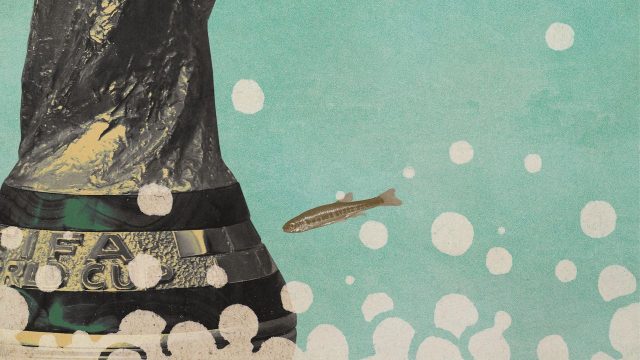
“Just happy to be here.” That is the category assigned to a host of footballing nations, including Haiti, Panama and newcomers Curaçao and Cape Verde, by the San Francisco Chronicle ahead of the men’s 2026 World Cup.
Unlike the established national teams coming into the competition with “high expectations”, these unlikely contenders have spent decades on the fringes of international football.
“One of the most topsy-turvy weeks in World Cup qualifying history” saw a handful of heavyweight footballing nations fail to qualify, while several “tiny nations reached the finals for the first time”, said ESPN.
Punching above their weight
Fifa’s decision to expand the World Cup finals from 32 to 48 teams has created more pathways for smaller countries to qualify, including first-timers Curaçao, Cape Verde, Jordan and Uzbekistan. Many of these nations have spent years building a footballing infrastructure that punches well above their demographic weight.
Despite having a “land mass smaller than the Isle of Man” and a population of 156,000, the southern Caribbean island of Curaçao has relied on “well-drilled organisation” to help its team reach the finals, said the BBC. The team – nicknamed the Blue Family and led by “vastly experienced” Dutch coach Dick Advocaat – is “hard to break down and dangerous in transition”.
Meanwhile, “the Blue Sharks of Cape Verde are swimming in uncharted waters”, but “you wouldn’t want to bet against them” either, said The Guardian. “Physical and happy to defend”, this “eclectic” group of players has worked together “for the best part of half a decade”. Two years ago, they were joined by Rotterdam-born forward Dailon Livramento, who has proven “the missing piece for a team who have a host of talented wide players, but lacked a central presence up front”. Racking up four goals in the qualifying stages, he “has already cemented his status as a legend”.
There is cause for optimism even among the smallest participating nations, said The Athletic: when the women’s World Cup expanded its own group stage in 2023, there were predictions of drubbings, but “the underdogs fared much better than expected”.
Most of the “minnows” are likely to focus on defence against the stronger sides in their group and aim to “keep the scorelines respectable”, before taking a more aggressive stance against their weakest rival, “in the knowledge that a single win in the group stage may take them through”.
‘Real hope’
“For the football-mad boys of Port-au-Prince, the next month promises to be one of unparalleled excitement,” said ITV. Haiti have qualified for first time since 1974, long before the majority of its citizens were born.
Haiti is the poorest country in the tournament and its citizens are the subject of a US travel ban, so attending matches in person is out of the question for most of them. But regardless the nation “is entering the tournament in a spirit of optimism”. For many Haitians, the tournament is a chance to show the world that, “despite its profound challenges, this country can compete on a global stage”.
In Cape Verde, there is a sense of “real hope” that is “widely shared” among the islanders, said Reuters. Bars, restaurants and cafes are “gearing up” for the tournament of a lifetime. One bartender said the World Cup would help Cape Verde gain “more visibility in the world”.
The tournament also presents a significant earning opportunity: “about $10.5 million” (£7.85 million) for getting to the finals, said NPR. Such a cash injection could strengthen “youth development” opportunities and expand “scouting across the diaspora”.
And football is, perhaps “more than most sports”, known for its “shocks”, including when Saudi Arabia beat Lionel Messi’s Argentina, the eventual champions, in a 2022 group match, said Joshua McLeod and Hunter Fujak, sports lecturers at Deakin University, on The Conversation. “Could we see Cape Verde or Curaçao produce an even greater World Cup upset?”
Curaçao and Cape Verde among the newcomers cast into the spotlight on world football’s biggest stage