
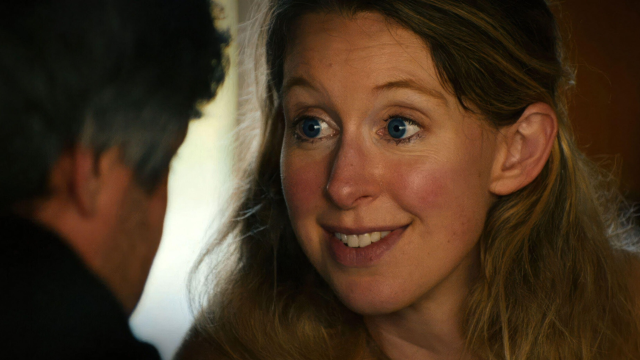
“You Can See Everything” has already taken more than $100 million (£77 million) worldwide, and smashed UK box-office records for the opening weekend of a non-music documentary. Nathan Fielder and Lance Oppenheim’s “outsize and outrageous” film about Elizabeth Holmes, the disgraced founder of health-tech company Theranos, “deserves every accolade it has received, and every one it will”, said Travis M. Andrews in The Washington Post.
And it’s arrived at a time when documentaries are very much having a moment. Maybe worldwide audiences are flocking to “NAZA” or “Musk” (due for its UK release in January) for the “emotional pull” of real people’s experiences and a “desire to search for the truth”. Or maybe this year’s non-fiction movies are just better than usual. “Genre be damned.”
‘Best picture’ material
“You Can See Everything” is “every bit as slippery and manipulative as its subject”, said Wendy Ide in The Observer. The film’s “mind-melting” journey makes for “easily the most compulsive three hours you will spend in the cinema this year”. Calling it a “documentary” fails to capture just how “provocative and bracingly weird this genuinely singular film is”.
It certainly isn’t “your standard documentary”, said Coleman Spilde in Salon. Fielder, “the film’s ringmaster”, is known for playful projects that blur fiction and reality. In his docu-comedy series, “The Rehearsal”, he helps prepare people for tricky real-life conversations or events by using actors to stage a series of chaotic practice runs. In his new film, Holmes’ “enigmatic psyche“ leaves him “no choice but to forgo conventional documentary tactics and seek detours”. Thanks to its “capricious subject” and “unpredictable experimentation with form”, “You Can See Everything” has sparked “endless conversation”, and even “chatter about whether it might be the first documentary nominated for best picture at next year’s Oscars”. That would be a “watershed moment” for the genre.
Nothing ‘plain and simple’
Documentaries used to be seen as “boring and dry”, said Andrews in The Washington Post, and mainstream audiences “tended to avoid them”. It wasn’t until the late 1980s, when filmmakers like Michael Moore and Errol Morris started making “poppier” and “more artistic” documentaries, with songs, animations and recreations, that people began watching them in cinemas.
Then film executives realised there was an “endless cash cow to milk in true crime and tawdry scandal”, and a “deluge of rushed, ineffective documentaries” hit streaming platforms, said Spilde in Salon. But “You Can See Everything” has “taken a sledgehammer to this era of cobbled-together documentaries”.
And it’s “far from the only” documentary generating talk of Oscar honours: there’s also “NAZA”, a “harrowing” uncovering of “the extent of Israeli surveillance and war crimes”, as well as “Musk” Alex Gibney’s unvarnished portrait of the US tech billionaire, and “Once Upon a Time in Harlem”, a “funny, moving and pertinent” film using unseen footage of a “gathering of Black luminaries” in 1972’s Harlem Renaissance.
None of these non-fiction films deliver “plain and simple” facts or the “whole picture”; their “reality exists somewhere in the middle, in the opaque”. And the “thrill” for the viewer “comes from the squint – the desperate, reflexive need to make out something in the haze”.
You Can See Everything leads an inventive new wave of non-fiction movies