What happened
U.S. policy on Iran whipsawed last week, with President Trump telling Tehran to accept a peace deal or face a new wave of bombing, soon after he’d hailed “great progress” in talks and halted a military operation to reopen the Strait of Hormuz. Trump had announced that, in a “humanitarian gesture,” the U.S. would guide merchant ships through the strait, a key oil export route that has been effectively shuttered by Iran since the start of the nine-week-old war. Any interference with “Project Freedom” would be met “forcefully,” Trump said. But as U.S. warships escorted two commercial vessels through the strait, Iran launched a barrage of missiles and drones. None of the ships were damaged, and U.S. attack helicopters sank six Iranian military speedboats; Iranian strikes hit a major oil hub in the United Arab Emirates and at least two commercial ships in the Persian Gulf. Trump declined to say Iran had violated a four-week ceasefire, calling the clash a “mini war.” A day later he paused Project Freedom, citing movement toward a “complete and final” agreement with Tehran.
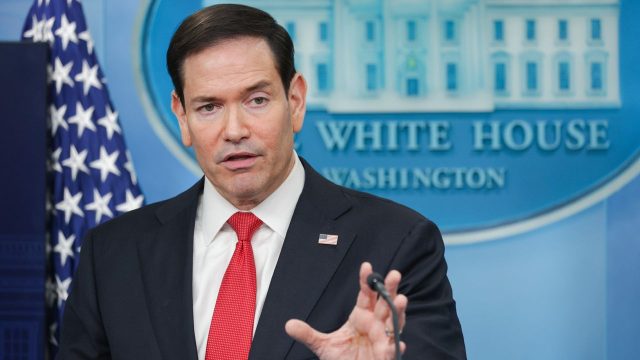
Trump’s U-turn came hours after Secretary of State Marco Rubio told reporters that “Operation Epic Fury is concluded” and that the war’s objectives had been achieved, despite Iran’s continuing choke hold on the strait and the lack of any deal over its nuclear program. Axios reported that U.S. officials believe they are nearing an agreement with Tehran on a one-page “memorandum of understanding” to end the war and set the stage for detailed negotiations. The war will end “assuming Iran agrees to give what has been agreed to,” Trump posted online, “which is, perhaps, a big assumption.” If they don’t, he said, bombing will resume, “at a much higher level and intensity.”
What the columnists said
Both sides are working with mediators to craft a 14-point “framework,” said Benoit Faucon in The Wall Street Journal. The working version calls for Iran to begin opening the strait and the U.S. to wind down its blockade of Iranian ports during 30 days of talks. Iran is said to be willing to discuss a possible halt to uranium enrichment and the removal of some of its stockpile of near-weapons grade uranium to a third country—but not the U.S. Divisions within Iran’s leadership could prove a roadblock, said Barak Ravid in Axios. Given the challenge of uniting disparate factions, some U.S. officials are “skeptical that even an initial deal will be reached.”
Project Freedom had two objectives, said Chas Danner in New York. One was to pressure Iran to fully open the strait and free 1,600 commercial ships stuck in the Persian Gulf, which failed miserably. The other was “a cynical attempt to rebrand the war,” which became illegal once it hit 60 days without congressional authorization. The administration wants the public to believe the offensive has ended and that the U.S. is now engaged in an entirely different “defensive” operation to open the strait.
The administration can say whatever it wants, but that “does not make it true,” said David E. Sanger in The New York Times. The war is not over. And its objectives have not been met. Trump cited five at the outset, including regime change and ensuring Iran can “never have a nuclear weapon.” Only one goal, disabling Iran’s navy, has been achieved. But the war has become a “political crisis,” and the White House is anxious to put it “in the rearview mirror.”
Americans can see the cost of this war everywhere, said Scott Waldman and Ben Lefebvre in Politico. Gas hit an average of $4.54 a gallon this week, up $1.56 since fighting began in February, and diesel hit $5.67, up $1.91. The spike in diesel, which powers trucks and trains, “in turn is expected to drive up prices for everything from groceries to postage.” Trump’s disapproval rating is climbing as well, hitting a record 62% in a new poll, said Scott Clement and Dan Balz in The Washington Post. Americans disapprove of his handling of the war by 66% to 33%, and his approval rating on the economy has dropped to 34%.
“There are now only two outcomes to the conflict,” said Scott Anderson in The New York Times. With Iran not about to cave, Trump can resume hostilities. But that seems unlikely, and “no amount of bombing” will change the fact that Iran has gained control of the strait and the ability to “paralyze the global economy.” The alternative is a settlement that will leave the “empowered” Iranian regime intact and “a blustering American president humiliated.” Operation Epic Fury is now looking more like “Operation Colossal Blunder.”
Mediators from both sides are working on a way to end the war