The Supreme Court has authorized Republican-run states “to disenfranchise Black voters,” said Adam Serwer in The Atlantic. A 6-3 majority, split along ideological lines, ruled two weeks ago in Louisiana v. Callais that a Louisiana redistricting map that created two majority-Black districts out of six, in a state whose population is one-third Black, was an “unconstitutional racial gerrymander.” The decision effectively gutted Section 2 of the 1965 Voting Rights Act, “which prohibits racial discrimination in voting.” Justice Samuel Alito’s majority opinion was steeped in “reactionary color blindness”—pretending to be neutral about race in order to preserve an unjust racial hierarchy. Alito argued that states are only in violation of the VRA if they draw districts to intentionally disadvantage minority voters. If states seek partisan advantage in redistricting, Alito said, that’s constitutional under a 2019 Supreme Court ruling—as if disadvantaging Democrats doesn’t also disadvantage Blacks. In other words, according to Chief Justice John Roberts and his allies, “preventing Louisiana from disenfranchising Black voters is racist.”
As a result of this “mind-boggling piece of judicial overreach,” said The New York Times in an editorial, red states like Louisiana, Alabama, and Mississippi can “slice minority voters into small and powerless slivers,” so long as they claim race isn’t the reason. Once again, the court obviously “acted more like partisan legislators than like impartial judges”: Its six conservative justices, all nominated by Republicans, “have most likely made it easier for the party that chose them to hold power in Congress.
“The Voting Rights Act was a landmark of American liberty that helped to break Jim Crow,” said The Wall Street Journal, but it’s not 1965 anymore. As Alito noted, “Black voters now participate in elections at similar rates as the rest of the electorate.” This ruling will finally help end Democrats’ “partisan abuse of race to carve up congressional districts.” In the name of preventing the “dilution” of Black votes, Louisiana was compelled to draw up a preposterous majority-minority district that snakes 250 miles across the state. In their dissents, said Jason Willick in The Washington Post, the three liberal justices conflated the right to vote with the “right to have the satisfaction of voting for the winner.” Sometimes—say, for Republicans in San Francisco or Democrats in Wyoming—our preferred candidates lose, and we have to “accept the outcome of the legislative process anyway.” In a representative democracy, being “outnumbered” is not the same as being “disenfranchised.”
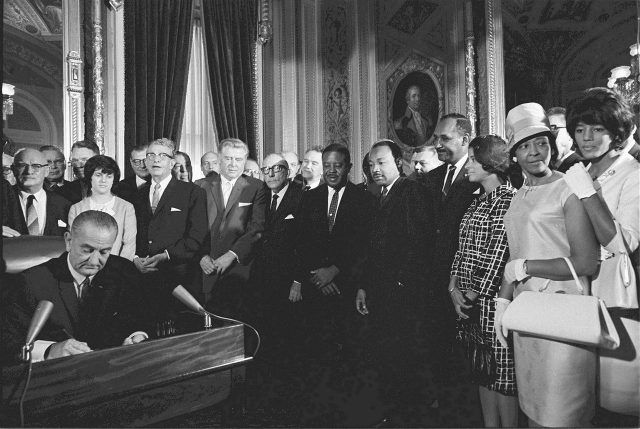
The reality is that Callais “will be devastating for communities of color,” said Ari Berman in Mother Jones. During the Jim Crow era, Black Americans had essentially no representation in Congress, even in Southern states with large Black populations. But with the forceful support of the Rev. Martin Luther King Jr. and the civil rights movement, the VRA put an end to decades of “white supremacy and one-party rule” across the South. As Justice Elena Kagan put it in an anguished dissent, the law “was born of the literal blood of Union soldiers and civil rights marchers.” She pointed out that the VRA has proved so essential in “bringing this Nation closer to fulfilling the ideals of democracy and racial equality” that Congress has reauthorized it five times—including in 2006, when the Senate voted 98-0. By rendering the law toothless, the court will likely “trigger the largest drop in Black representation since the end of Reconstruction.” And legal recourse will be all but impossible, said Erwin Chemerinsky in the Los Angeles Times. In theory, states can still be sued if they draw districts to discriminate by race. But as Kagan put it, without “smoking-gun evidence of a race-based motive”—a prospect she deemed “almost fanciful”— the law is now moot.
The court’s ruling will trigger an all-out redistricting war, said Ian Millhiser in Vox. “Callais is such an effusive love letter to the concept of partisan gerrymandering” that states will have no fear of rigging districts to favor the party in power. Louisiana, with the Supreme Court’s blessing, has already delayed its primaries so it can redraw its map, while Tennessee’s GOP governor called a special session to discuss doing the same. Republican-controlled Alabama may follow suit. Democrats will respond in kind, said Andrew Egger in The Bulwark. Many in the party are “pledging to continue the fight-fire-with-fire approach they’ve carried out successfully over the last year” in California and Virginia. By 2028, both red and blue states may eliminate most or all congressional seats held by the minority party. How is this absurd “gerrymandering tit-for-tat” good for democracy? Will anyone in Congress dare “to find some anti-gerrymandering measures on which there’s an appetite for bipartisan agreement”? If Americans are sick of this partisan race to the bottom, they should demand it.
Section 2 of the 1965 Voting Rights Act has been gutted