The 1970s, when the post-WWII consensus finally fell apart in the United States, are remembered as a decade of groundbreaking movies with breathtakingly disillusioned themes. The ideas were embodied in the “New Hollywood” movement, as well as in the birth of the summer blockbuster. There are more classics than could possibly be named here, but these eight masterpieces epitomized the decade’s social and political trajectory like no others.
‘The Last Picture Show’ (1971)
A quiet and devastating character study, “The Last Picture Show” is set in a dying North Texas town in 1951. It’s a coming-of-age story, about two high school seniors and best friends, Sonny (Timothy Bottoms) and Duane (Jeff Bridges), who are both in love with Jacy (Cybill Shepherd).
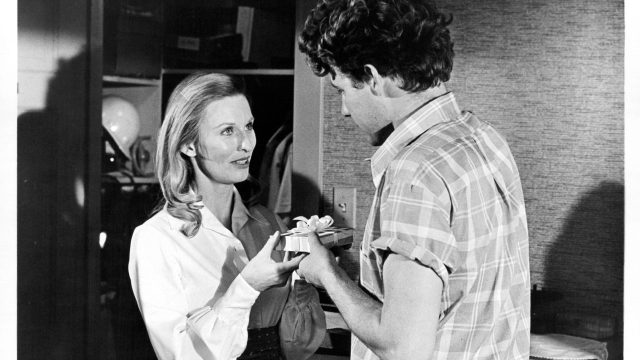
The forlorn Sonny takes up with his football coach’s wife, Ruth (Cloris Leachman). The town and its way of life meanwhile is collapsing around them. A movie with “strong and uncommon (for the time) affinity for female characters and actors,” the “beauty and brilliance” of director Peter Bogdanovich’s second feature is “found in its attentiveness to the lived detail of the recent past,” said Adrian Danks at Sense of Cinema. (Prime Video)
‘The Godfather’ (1972)
Director Francis Ford Coppola’s gangster epic, an adaptation of Mario Puzo’s best-selling 1969 novel, offers a sweeping look at the travails of the Corleone mafia family. Michael (Al Pacino), a WWII hero who had kept himself aloof from the desultory family business, is reluctantly drawn into it when his father, Don Vito (Marlon Brando), is gravely wounded in a shooting.
Michael’s brother Sonny (James Caan) becomes the de facto crime boss as the Corleones prosecute a turf war against their rivals, and Michael eventually emerges as the new, and much more ruthless boss, much to the horror of his wife, Kay (Diane Keaton). The movie “dramatizes how the American Dream has failed, leaving only raw capitalism, epitomized by the brutality of the Corleones,” said Brian Eggert at Deep Focus Review, and the film’s “unchartable reach has ingrained its mythological place in our culture and history.” (Paramount+)
‘One Flew Over the Cuckoo’s Nest’ (1975)
Jack Nicholson is R.P. McMurphy, an Oregon prisoner who feigns a mental illness to get transferred to a psychiatric institution, where he finds himself immersed in a battle of wills with the cold, clinical Nurse Ratched (Louise Fletcher). Danny DeVito, Will Sampson and Brad Dourif costar as fellow patients who are inspired by McMurphy to rise up against the conformity and cruelty of the institution, an obvious stand-in for the social upheaval of the time period.
“Inspired casting,” as well as “Forman’s naturalistic direction,” helps the film succeed as both an “anti-authoritarian parable and as an affecting reminder of the psychiatric practices of the past,” said the British Film Institute. While the film’s attitudes about mental illness may seem dated, it’s important to remember that this movie is as old to us in 2026 as the silent film era was to the mid-70s. (Prime Video)
‘Jaws’ (1975)
Director Steven Spielberg’s first massive box office hit, “Jaws” still maintains its ability to shock and terrify audiences and turned shark attacks into a widespread fear. When a body washes ashore in the Long Island vacation town of Amity, police chief Martin Brody (Roy Scheider) tries to close the beaches only to be overruled by the mayor, Vaughn (Murray Hamilton), who fears the loss of tourist revenue.
But when a boy is killed, and with throngs of beachgoers en route for the July 4th holiday, Brody teams with oceanographer Hooper (Richard Dreyfuss) and shark hunter Quint (Robert Shaw) to track down and kill the marauding Great White Shark. “Jaws” remains “simply put, one of the absolute masterpieces of populist cinema.” Its “vivid character details” are one of the reasons it is “still better than any other monster movie or summer blockbuster ever made,” said Tim Brayton at Alternate Ending. (Netflix)
‘Network’ (1976)
Network anchor Howard Beale (Peter Finch) unravels on air after he is fired, promising to kill himself on live television, and turns himself into a kind of prophet of capitalist anomie and populist frustration. Backed by the ruthless executive Diana Christensen (Faye Dunaway), his show is soon moved to the entertainment division, where he becomes the “mad prophet of the airwaves,” in a preview of the way that cable news would be taken over by angry talking heads.
He soon has Americans taking to their windows to shout the film’s most memorable line: “I’m mad as hell, and I’m not going to take this anymore!” This “terrifically well-made, well-written” film begins presciently as a “five-seconds-into-the-future satire” and eventually “becomes an anatomy of American discontent,” said Peter Bradshaw at The Guardian. (Prime Video)
‘Close Encounters of the Third Kind’ (1977)
Roy (Richard Dreyfuss) is an Indiana utility worker who witnesses a swarm of UFOs one night and becomes obsessed with recreating a persistent vision of a mountain-like structure. His increasingly strange behavior strains his marriage to Ronnie (Teri Garr) and his three children and culminates in an unforgettable meeting with an alien craft.
Director Steven Spielberg’s film is buoyed by a sense of wonder and remains a sharp contrast with many of the decade’s more cynical cinematic themes. As in many of Spielberg’s movies, “transcendent or threatening forces enter ordinary existence,” and “Close Encounters” is a film that is “unparalleled in its combination of scary and funny ideas,” said David Denby at The New Yorker. (Prime Video)
‘Apocalypse Now’ (1979)
Director Francis Ford Coppola’s Vietnam War film is loosely based on Joseph Conrad’s 1899 novella “Heart of Darkness.” Captain Willard (Martin Sheen) is dispatched on a mission to bring a rogue commander, Colonel Kurtz (Marlon Brando), to heel.
Kurtz has established an outpost in Cambodia, where he commands an army of locals and refuses all orders to return. A kind of road movie, much of the film depicts Willard’s journey with Lt. Colonel Kilgore (Robert Duvall) and his men through the war-ruined landscapes of Vietnam and features some of the most unforgettable scenes in cinematic history, including an aerial assault on a Viet Cong-controlled village set to “Ride of the Valkyries.” It remains the “best Vietnam film, one of the greatest of all films, because it pushes beyond the others, into the dark places of the soul,” said Roger Ebert in 1999. (Plex)
‘Monty Python’s The Life of Brian’ (1979)
The British sketch comedy troupe Monty Python loved taking aim at contemporary foibles through its twisted and liberal reading of history. Skewering everything from leftist factional infighting to religious zealotry, the movie follows Brian (Graham Chapman), born in the same stable as Jesus and initially mistaken for him.
As a young adult, he falls for Judith Iscariot (Sue Jones-Davies), an anti-Roman rebel and member of the fictional People’s Front of Judea, who draws him into a kidnapping plot. The movie “ignited religious protests when it first released” and “contains many gut-bustingly funny scenes” while still continuing to “hold up to repeated viewing after repeated viewing,” said Simon Brew at Den of Geek. (Peacock)
From gangsters, aliens and sharks to decaying small towns and the agony of mental illness, a decade loaded with legendary films