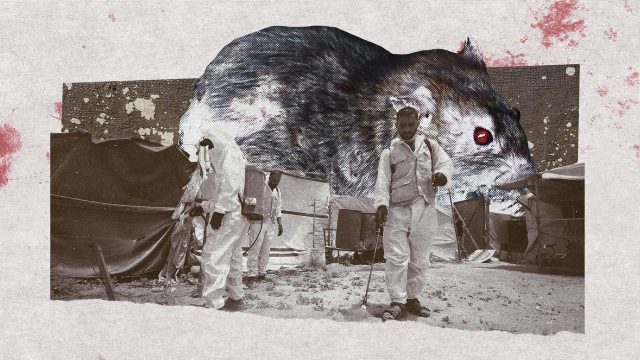
For the people of Gaza, “fear is no longer linked only to what falls from the sky”, but also to “what crawls from below”, said Prospect.
Rats and other rodents have “taken over everything in a frenzy” and, with summer approaching, their numbers are expected to soar even higher.
Physical and psychological threats
A “plague” of rodents is “terrorising” the area, said the Financial Times, as rats and weasels “chew their way into tents, biting children and contaminating food”. A Unicef spokesperson who visited Gaza this month said rodents are becoming “a huge, huge problem because of accumulated rubble everywhere”.
The threat they pose is more than psychological. Rats transmit diseases through urine and waste, causing fever and other illnesses. Diabetic patients are particularly vulnerable to rodent bites, as they may not feel it happening and serious complications can occur.
More than 72,000 Palestinians have been killed in Israel’s war in Gaza, and rats began “eating human bodies under the rubble”, Samah al-Dabla, who was displaced from Beit Lahiya in northern Gaza, told Al Jazeera.
Rats are now appearing in the tents where many Gazans live. Al-Dabla has tried to buy rat poison but the prices are too high and she already struggles to afford enough food for her family. Any food she manages to obtain tends only to attract more rats.
Mounting problem
Dr Ayman Abu Rahma, director of preventive medicine at Gaza’s Ministry of Health, told Al Jazeera that the problem has three main causes: damage to sewage systems, decomposing bodies under the rubble, and the amount of rubbish building up in the territory. Gaza City’s main landfill site is a “breeding ground for rodents in a densely populated area”, said Al Jazeera.
Local officials want to convert waste into organic fertiliser, but the war has destroyed much of the equipment needed for such a process.
The urgency is clear: rubbish dumps are located close to tents in displacement sites, creating serious “health hazards that will increase as summer temperatures rise”, humanitarian officials and residents told the Financial Times.
Cogat, the Israeli Ministry of Defence body that monitors aid access to Gaza, said that “nearly 170 tons of pesticides and thousands of traps for rats, mosquitoes, and other pests have been brought into the Gaza Strip in recent weeks”.
But Salim Oweis, the Unicef spokesperson who visited Gaza, said the amount allowed in is “barely enough for a few weeks” and “the whole of Gaza” is affected.
A surge in rodents is compounding Gaza’s humanitarian and public health crisis