As an introduction to this article by Howard Mandel (NPR Music), I would like to share a poem by Michael O’Neal (remembering Sonny Rollins, saxophone colossus of Virgin Islands heritage, and his classic composition, “St Thomas.”):
“Jazz Is”—a found poem—Michael O’Neal
“Life changes every minute. A different sunset every night, that’s what jazz is about.”
Sonny Rollins knew what jazz is about.
Read excerpts from Mandel’s article and watch the video of Rollins playing “St. Thomas” below. For full article, see NPR Music.
The way some musicians play, you think they’ll never die. Theodore “Sonny” Rollins was such a man: A saxophonist revered for his huge tone and seemingly inexhaustible improvisations. Rollins died Monday afternoon at his Woodstock, N.Y. home at the age of 95.
Rollins was a National Endowment for the Arts Jazz Master, a recipient of a Kennedy Center honor and a recipient of the National Medal of the Arts. And he was the very incarnation of a modern jazz musician. His art was his life.
“All these prizes are nice, I appreciate them,” he told NPR in 2007. “I don’t go crazy about them — you have to do your work whether you’re recognized or not. The real deal is doing it the best you can do it and that’s it. That’s its own reward.”
For Rollins, the real deal was playing the tenor saxophone. He became beloved internationally as the last man standing, the reigning star of the generation that turned jazz from bluesy entertainment into a personally expressive, ever-changing art form — without losing its bluesy, entertaining side.
He was born Sept. 7, 1930, in New York City and grew up on Sugar Hill, Harlem’s “strivers’ row,” where some of the most successful and daring jazz men of the era lived, with neighbors such as Jackie McLean, Art Taylor and Kenny Drew. Rollins was drawn to the experimentation and new style developing around him. Sonny’s parents, who were from the Virgin Islands, were uneasy about his interests. But he was already on his way to one of the greatest careers in jazz history.
Rollins looked commanding, with a hearty build, strong features and a mohawk haircut long before it became a punk fashion. He was on the cutting edge of music — at the peak of the jazz world.
But in the late 1950s, Rollins withdrew. Seeking a new direction, he practiced his horn by himself, at night, on the city’s Williamsburg Bridge. His return in 1962 — with an album titled The Bridge — was welcomed as a cultural event.
Rollins was no elitist or purist. He enjoyed blowing on calpysos as much as extending himself in unaccompanied cadenzas. He composed a jaunty theme for the movie Alfie, sat in with the Rolling Stones and recorded an exuberant version of Stevie Wonder’s “Isn’t She Lovely.” [. . .]
For full article, see https://www.npr.org/2026/05/25/519445169/sonny-rollins-colossus-of-the-saxophone-has-died-at-95
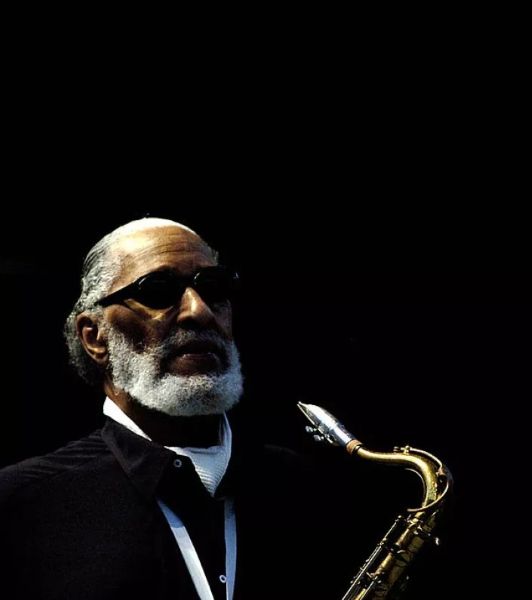
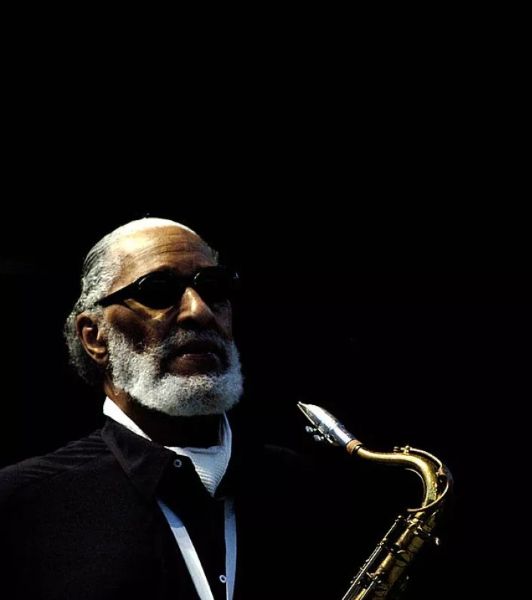
[Shown above, detail from photo by Jeff Pachoud/AFP via Getty Images: US musician Sonny Rollins performs, 29 June 2006 in Vienne, southeastern France, during the opening of the Vienne Jazz Festival.]
As an introduction to this article by Howard Mandel (NPR Music), I would like to share a poem by Michael O’Neal (remembering Sonny Rollins, saxophone colossus of Virgin Islands heritage, and his classic composition, “St Thomas.”): “Jazz Is”—a found poem—Michael O’Neal “Life changes every minute. A different sunset every night, that’s what jazz is about.”