What happened
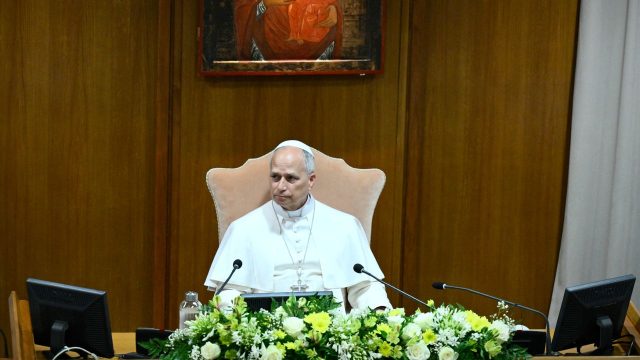
Pope Leo XIV on Monday released his first encyclical, “Magnifica Humanitas” (“Magnificent Humanity”), making a practical and moral case for “safeguarding the human person in the time of artificial intelligence.” AI “needs to be disarmed” as “an instrument of domination, exclusion and death,” the pope told a packed hall at the Vatican. “It must be at the service of all, and of the common good.”
Who said what
Addressed to “all people of good will,” Leo’s “methodical” teaching document traced the Catholic Church’s established “social teaching and applied its core concepts,” including solidarity and the dignity of work, “to the digital revolution,” The Associated Press said. The document’s title “says it all,” The New York Times said: Leo is “less interested in technology than in humanity.”
“Technology should not be considered, in itself, as a force antagonistic to humanity,” Leo wrote, but “the pursuit of greater profits cannot justify choices that systematically sacrifice jobs.” AI’s growth needs to be guided by “robust legal frameworks, independent oversight, informed users and a political system that does not abdicate its responsibility,” he said. “A more moral AI is not enough if that morality is determined by a few.”
What next?
Tech and religion experts said Pope Leo’s encyclical “will likely become a benchmark in the debate over AI, a point of reference for policymakers, researchers and ordinary folk alike,” the AP said. The pope is “really doing the Lord’s work here, and I say that as an atheist,” humanist Harvard chaplain Greg Epstein told the Times.
AI “must be at the service of all, and of the common good,” the pope said