
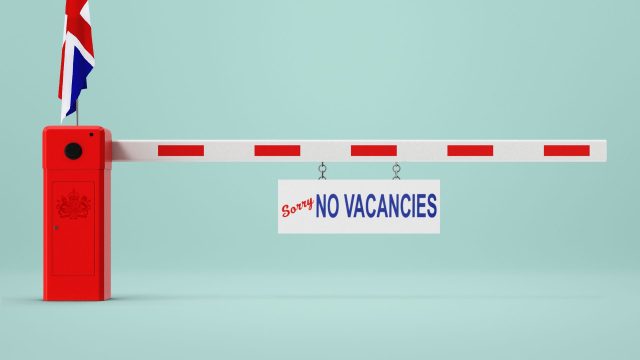
“For 34 years, more people have moved to Britain each year than have left,” said John O’Neill in The Spectator. “That could be about to change.”
Net migration fell to 77,000 over the year to June, according to the Office for National Statistics. That is the lowest total outside the Covid period since 1997 and marks a sharp reversal of a post-Brexit surge in immigration “that prompted a political backlash and sweeping new restrictions”, said the Financial Times.
After decades of outrage and concern, the question “is whether immigration will now shrivel as a topic of widespread worry”, said the BBC’s political editor Chris Mason.
What did the commentators say?
Despite some resistance from within the Labour Party, Shabana Mahmood, the home secretary, “has seen her approach vindicated on an issue frequently ranked second only to the economy in terms of what troubles British voters”, said The Times in an editorial.
But even though “immigration is a top concern for the public, most people haven’t noticed the change”, said Bobby Duffy, director of the Policy Institute at King’s College London in The New Statesman. A new survey for the Policy Institute found that only 4% of the public knew that net migration fell significantly between 2024 and 2025, while nearly two-thirds thought it had gone up.
One reason for this is that the “relentless focus in much of our media, social media and politics on the perceived threats from migration helps shape views”. But we “should maybe have some sympathy with the public for not registering the huge drop in net migration” as the migrant share of the population is still increasing, “just significantly more slowly”.
“The number of people immigrating to Britain remains extraordinarily high,” said The Telegraph in an editorial. While lower overall net migration “should be welcomed”, the public “will not be fooled into thinking the issue is somehow closed”.
The problem the country faces is that “British immigration policy simply does not respond to reasoned analysis”, said Ian Dunt in The i Paper. In my lifetime, the government, whether Labour or Tory, “has spoken with two faces – publicly calling for a reduction in immigration while secretly making sure it doesn’t fall because it knows the economic cost is too high”.
What we require now “is an honest conversation about this subject”. We need to talk about the “reality of our demographic problems, the economic benefit of immigration, the cultural value of diversity, and – yes – the acknowledgement of public concerns”.
What next?
Having proved “that the lever to control immigration can work”, said The Times, Mahmood’s challenge “is to deploy it in a subtler way that better serves the national interest”.
We as a country, “if not everyone individually”, have “exuded an anguish, sometimes an anger at the scale of immigration”, said Mason. It has been “one of the standout demographic, social and so political issues of recent times. Perhaps now that conversation turns to a new chapter.”
Some say generationally low levels vindicate Shabana Mahmood’s hardline approach but will the topic ever really go away?