“Our season continues exactly as planned, uninterrupted and at full throttle,” wrote LIV Golf’s chief executive, Scott O’Neil, in an email to staff on Wednesday night, hours after an emergency meeting in New York over a “seismic” funding announcement.
“But what about beyond this season?” said The Telegraph. O’Neil’s email was an “attempt to calm ferocious speculation” that the Kingdom of Saudi Arabia’s Public Investment Fund (PIF) is “pulling the plug” on the franchise, a project into which it has already sunk $5 billion (£3.7 billion).
With the future of the controversial tour under threat, a change in Saudi Arabia’s investment priorities could spell the beginning of the end for its sporting soft power.
‘Dying days’
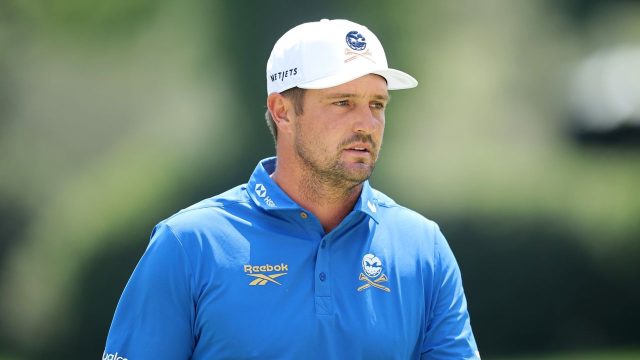
“Farewell, LIV Golf, we hardly knew ye,” said The Independent. Four years after initiating a “prolonged and ultimately pointless civil war” with the PGA, “LIV is dead, or at least in its dying days”. There had been “signs of creaking” for some time now, with major stars like Brooks Koepka and Patrick Reed departing, and “more would surely have followed, given time”. Fundamentally, though, the tour couldn’t ever quite “shake” the sense that the players were “doing it for the money”.
LIV Golf was “supposed to be the breakaway tour that changed golf as we know it”, said BBC Sport. Though it “certainly managed to disrupt the status quo” with the help of an “eye-watering” amount of money from the PIF, it has failed to make returns. The tour’s net losses have totalled more than “more than $1.1 billon (£810 million) since it was established in 2021”; even O’Neil admitted that the tour would not be profitable for another “five-ten years”.
If they ever make a documentary about LIV, “it will look a lot like the one about that calamitous Fyre Festival,” said Sean O’Brien on TalkSport. The dominant narrative is of Saudi Arabia trying to buy “disruption, influence, and a seat at the table with professional golf’s establishment”. Some of the game’s big names who rejected offers to join the tour, such as Tiger Woods, Scottie Scheffler and Ryder Cup and recent Masters winner Rory McIlroy have been shown to be “on the right side of history”. McIlroy, in particular, was thought to have turned down an offer in excess of Jon Rahm’s reported £500 million contract. In the end, the tour’s only purpose was to “make rich men absurdly richer”.
Changing world
The change in Saudi Arabia’s stance comes as the PIF announced a new five-year strategy on Wednesday to make up a budget deficit of $73 billion. It is expected to “narrow” its funding focus and take stock of a “decade-long spending splurge”, said the Financial Times. One thing’s for sure, the Kingdom’s apparent coldness towards LIV Golf “will reverberate through professional sport”.
The focus for Riyadh has always been money, and diversifying its economic interest away from oil, said The i Paper. Though there was enthusiasm from “golf-mad” PIF governor Yasir al-Rumayyan, “all that matters” to Saudi sovereign Mohammed bin Salman – “who wouldn’t know a five-iron from gridiron” – is return on investment.
For a while, the soft power of sport was a “critical driver” in Saudi Arabia’s repositioning, but the “world has changed since then”. Criticism of the country’s approach to human rights has, “if not washed clean off”, then at least “shunted down the list of global concerns”, while the Iran war has “reinforced the strategic and diplomatic importance of Saudi Arabia in the Middle East”.
This is unlikely to mean a complete retreat from the sporting world, however. The Kingdom is still a major investor in F1 and football, including as hosts of the 2034 men’s World Cup. For now, Riyadh will focus on events that “serve a PR purpose” or “promise a return on investment”. “Golf falls outside both metrics.”
Rumours of the withdrawal of ‘eye-watering’ Saudi funds from the tour will ‘reverberate across professional sport’