The UK is considering spending £450 million a year to give students from the EU discounted university fees, said The Guardian. But it wants access to the bloc’s “Made in Europe” protectionist industrial scheme in return.
What is ‘Made in Europe’?
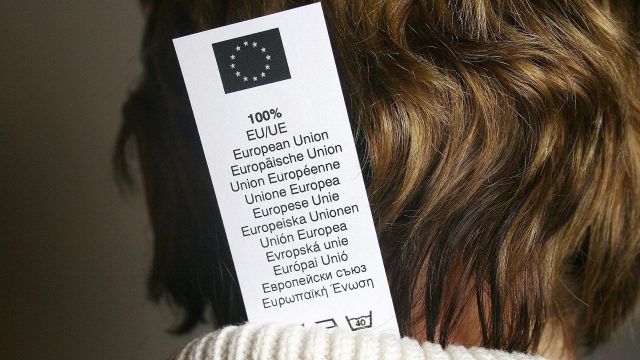
The European Commission’s proposed Industrial Accelerator Act (IAA) is designed to help stimulate demand for European-made clean technologies, while reducing reliance on producers from abroad, most notably China but also the US.
Covering strategic sectors such as steel, aluminium and cement, electric vehicles, batteries, solar and wind power, hydrogen technology and nuclear energy, the law aims to use the €2 trillion of member states’ public procurement to shore up struggling domestic industries and push into newer growing sectors. Supporters of the scheme say rivals such as the US, China, and India already have similar rules in place and this would merely bring the EU in line with much of the rest of the world.
“If we do nothing, then it’s quite clear that very soon, 100% of clean tech technology will be produced in China,” said Stéphane Séjourné, an EC executive vice president, in March. “It’s quite possible that our cement, steel industries will be offshored completely in the next few years.”
Will it work?
The problem is that “EU governments disagree over where Europe ends”, said Euronews. France has been pushing for a strict EU approach while Germany wants a more open model, allowing products made “with” Europe, provided those countries grant European companies equivalent access in return.
Last month, Germany and France reached a compromise that would allow suppliers from non-EU members like the UK, Norway and Switzerland to qualify for “European origin” status.
This is “causing deep concern among other allied carmaking nations” such as Japan, South Korea and Turkey, which will still be shut out from the scheme, said Deutsche Welle. Excluding Turkey, which has enjoyed seamless access to the EU market since the mid-1990s, would also harm European car production rather than strengthen competitiveness against China, said Ayhan Zeytinoglu, from the Turkish think tank the Economic Development Foundation.
Will the UK be able to join?
The “Made in Europe” scheme has become a major obstacle to the UK’s long-hoped-for Brexit “reset” with the EU. Wrangling over rules affecting British businesses has twice delayed a UK–EU summit, which is finally due to take place on 20 November.
Andy Burnham said in September that he would make the case for Britain to be considered a “trusted partner” under the scheme, warning that excluding the UK could damage the British car industry.
The UK and EU have already agreed a draft deal on removing post-Brexit checks from food and agriculture exports. Burnham’s government now hopes the promise to subsidise EU students could be enough to win over EU negotiators in the “Made in Europe” talks.
“We are willing to give the Europeans what they want on fees, but we will have to get something significant in return,” a source told The Guardian. “The biggest prize we are pushing for right now is access to Made in Europe, so there is a deal to be done there.”
UK seeks access to EU’s protectionist industrial programme aimed at reducing reliance on China and US