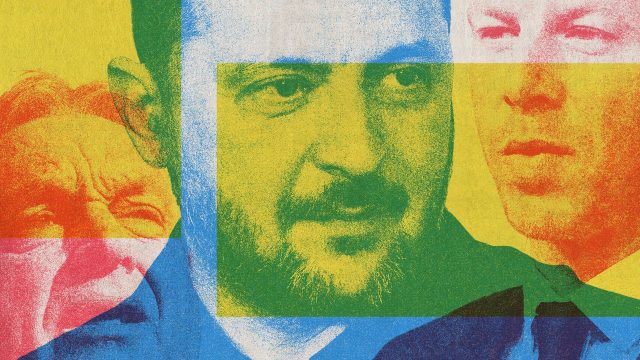
Hungary’s ousting of longtime Prime Minister Viktor Orbán this month sent shockwaves across Europe and beyond. In Moscow, Hungary under Orbán had been a rare ally amid an adversarial EU. In Kyiv, Orbán’s intransigence had scuttled various European initiatives to aid Ukrainian President Volodymyr Zelenskyy’s government in its war with Russia. But with Orbán out, Hungary will seemingly focus on repairing and normalizing EU ties. Ukraine stands to benefit from this emerging era in Eastern Europe, even as it faces a host of risks.
What did the commentators say?
Over the past four years of war with Russia, Hungary has been a “persistent source of irritation” for Ukraine, The New York Times said. Orbán’s government “maintained friendly relations” with Vladimir Putin’s Kremlin while “blocking critical European Union funding” for Kyiv’s war effort and “stalling Ukraine’s path toward integration into the bloc.” Orbán’s ousting means “this sort of Trojan horse for Russia within the EU may disappear,” said Andreas Umland, a policy fellow with the European Policy Institute in Kyiv, to the Times.
Orbán’s “vociferous recalcitrance” toward Ukraine allowed him to cast himself as “virtually the only opponent of aid to Ukraine in the entire EU,” said the Carnegie Russia Eurasia Center. “In reality,” Orbán was “simply willing to wield his veto and absorb all the backlash,” allowing other antagonists to “remain in the shadows.”
The victory of Hungary’s incoming Prime Minister Peter Magyar “clears the way for greater European support for Ukraine,” said the Council on Foreign Relations. Already, that shift has seen Hungary lift a hold it placed on a 90 billion euro loan to Kyiv, which Orbán coupled with what he claimed was Ukraine’s destruction of the Druzhba oil pipeline (Ukraine contends the pipeline was damaged in a Russian strike). The “spat” over the Druzhba pipeline also blocked a round of Russian sanctions the EU had hoped to “adopt to mark the fourth anniversary” of Moscow’s invasion of Ukraine in late February of this year, CBC said.
With Orbán’s hold lifted, Ukraine is expected to make short work of the initial EU loan payments, the first of which are supposed to arrive in Kyiv “as soon as next month,” said The Telegraph. To date, Ukraine has been “reliant on donations from allies to plug the gap left by the Hungarian veto,” and will use the newly released funds toward “U.S.-made Patriot air-defense interceptors to protect against incoming Russian ballistic missiles, new-fangled drone technologies produced in Ukraine and other legacy weapons, such as British Storm Shadow missiles.”
Ukraine is also taking Orbán’s ousting as an “opening to expand its energy footprint in Europe and displace Russian crude oil in Eastern Europe,” said Politico’s E&E News. Ukraine’s state-owned Naftogaz oil company is “eying plans to ship about 100 million barrels of oil a year” from a Black Sea port to neighboring countries, including Hungary, which could “supplant the Russian deliveries.”
What next?
Although the “dramatic change in tone” from Hungary is “certainly encouraging,” Ukrainians are “well aware that Hungary is not likely to become a major supporter,” said the Atlantic Council. Incoming Hungarian leadership has already “ruled out” arming Ukraine and “underlined” opposition to “fast-tracking the country’s EU accession process.”
While Magyar is “expected to take conciliatory steps toward Ukraine,” said the Russia Eurasia Center, “expectations may be overstated.” Ukraine’s inclusion in the EU is “increasingly unpopular in the bloc’s eastern part,” where countries like Poland and Bulgaria see Kyiv as a “direct competitor for European subsidies, jobs and agricultural markets.” Ukraine is also seen by some of its neighbors as an “obstacle to accessing Russian energy supplies.”
Removing Hungary’s vetoes on Ukrainian aid improves the EU’s “decision-making capacity,” said Zsuzsanna Vegh, an analyst at the German Marshall Fund think tank, to The Telegraph. But Hungary won’t contribute to the EU funds directly, as Magyar’s Tisza party is “unlikely to embrace expansive military support.”
Ukrainians saw Orbán as the “hostile actor,” said Kyiv Independent reporter Tim Zadorozhnyy to the Lowy Institute, “not Hungary itself.” With Magyar’s promises of eased tensions and EU backing, he “now has all the cards in his hands.”
Both countries look forward to a future beyond ousted authoritarian leader Viktor Orbán