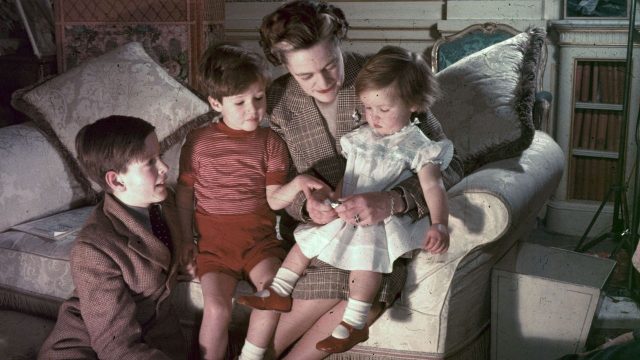
“Having an older sibling can be a mixed blessing,” said The Times. You have a “ready-made playmate”, but younger siblings must endure hand-me-downs, while sharing toys and the attention of their parents.
But a new study shows that birth order could also affect the likelihood of developing certain conditions. Research led by the University of Chicago has analysed data from more than 10 million siblings in the largest ever study of its kind. It found associations between the order of birth and susceptibility to autism, anxiety, hay fever and migraines, among other health conditions.
Though the findings should not be read deterministically, and have not yet been peer-reviewed, more than a third of medical conditions (150 out of 418) showed “birth order associations”, according to the study. “Of these, 79 were more common in firstborns, while 71 were more common in those born second,” said New Scientist.
What it shows
Previous studies have been criticised for “cherry-picking data or failing to control for confounding factors”. And more research has been done on the links between birth order and IQ. For example, a “landmark” study in 2015 analysed data on 20,000 children and found that birth order had “almost no bearing on personality and only a small association with IQ”. It recorded a “drop of about 1 to 2.5 IQ points between oldest and youngest siblings”.
The latest study, however, focused on the “likelihood of developing different conditions”, said New Scientist. In order to “mitigate some confounding factors”, such as the “influence of how parents might treat their first and second children differently”, researchers first compared 1.6 million pairs of siblings by “coupling firstborns from one family with those born second from another family”. They were matched on sex, birth year, parental age and sibling age gap.
The study analysed more than 10 million individuals from more than five million families, and found that elder siblings were more likely to be diagnosed with “neurodevelopmental conditions”, such as autism, ADHD and allergies, as well as acne and childhood psychoses, said Scientific American. Second-born siblings, on the other hand, were more likely to be diagnosed with “substance use disorders, shingles and gastrointestinal disorders”.
How far siblings are born apart also “appears to matter”. If the age gap was less than four years, siblings were associated with a lower rate of asthma and other allergies. This aligns with the “hygiene hypothesis”, which suggests that “lower exposure to allergens in early life” can lead to them overreacting to allergens later.
Strengths and limitations
“Overall, this seems like a really rigorous study,” Rohrer told New Scientist, though the associations are modest. Additionally, “we will only observe every person in one birth-order position” and “never know how their life would have played out differently in another position”.
The study’s “strength” is in its “large sample size and design”, which allowed cross-comparison between different families to “control for socioeconomic status and genetics”, said Scientific American.
However, a limitation was that researchers used “administrative insurance claims data” instead of “reviewing the prevalence of health conditions”. Parents could be more likely to seek diagnoses for their firstborn than any subsequent children. “You can’t get a diagnosis if you don’t seek it,” said Rodica Damian of the University of Houston, who was not involved in the study.
Though the variations between siblings identified in the study are small, “they can have an effect” at the “population level”. As Rohrer said: “It could be that all of these small effects of birth order come together to make a difference.”
Researchers show that firstborns are more likely to have ‘neurodevelopmental conditions’ such as autism and ADHD as well as allergies