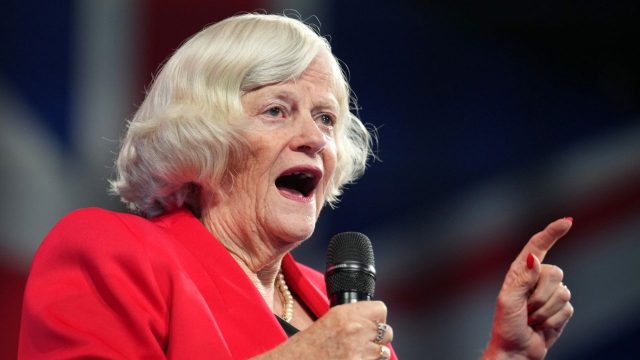
“Westminster is reeling” from the news that, it seems, Ann Widdecombe was murdered, said Tim Shipman in The Spectator. “At this stage it is the done thing to urge people not to jump to conclusions” – but “the leaping has already begun”. Nigel Farage declared on Saturday that it was “premeditated murder”; Reform UK clearly believes she was targeted because she was its migration spokesperson.
Targeted attack
Devon and Cornwall Police had declared on Sunday that there was “nothing to suggest” the killing was “politically motivated”. On Monday, though, there was an about-turn. Counterterrorism police took over the investigation; a 28-year-old man, who had reportedly driven 300 miles from his home in Rotherham, South Yorkshire, to her village on Dartmoor on the day she died, was arrested. The crime was described as a “targeted attack”, perhaps linked to extremism. If the police don’t know what happened, said The Daily Telegraph, it’d “be better for them to say so”. Official speculation and obfuscation only fuels “mischief”.
Once again, MPs found themselves considering the question of their own safety, said Chris Mason on BBC News. The veteran Tory Sir Bernard Jenkin, recalling the deaths of Jo Cox and David Amess, claimed that as a member of Parliament “you are more likely to meet a violent death than a member of His Majesty’s Armed Forces or a member of the British police forces”. MPs need to remain both “accessible and safe”. This, today, is a massive task. Farage believes the Royal and VIP Executive Committee, which is responsible for MPs’ security, has not taken his own safety seriously enough. And Widdecombe’s death suggests that not only the 650 sitting MPs, but also former members, may need help
‘Parasocial fixations’
Her death is shocking, “not just for its brutality”, said Mary Harrington on UnHerd. It’s shocking because it highlights “how much better, kinder and more trusting a country Widdecombe believed Britain to be, than the place we actually live in”. She was a traditional “British battleaxe”: a staunch conservative who never shied away from controversy, but was open, warm and courteous to those with whom she disagreed.
Britain, sadly, has grown “more fractured, skint, alienated and online” than the world she grew up in. “Parasocial fixations” on public figures are more and more common; harassment, and serious violence, often result. This baleful trend seems to have pursued Widdecombe to her home in a sleepy Dartmoor village – the last place on Earth, you’d imagine, “something so horrifying might happen”.
Police are still investigating the motive for the murder of former Reform UK politician and TV personality