
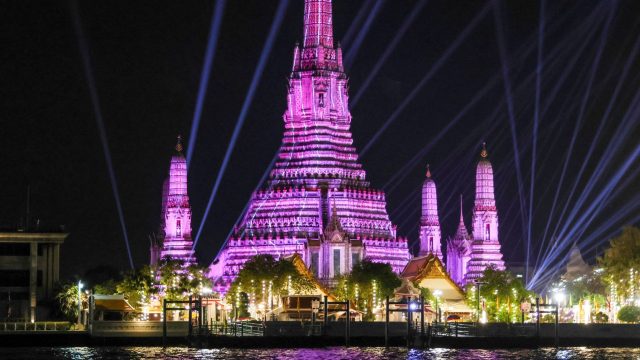
It was largely due to Bangkok’s position on the Chao Phraya River that King Taksin of Siam moved his court there after his old capital, Ayutthaya, fell to the Burmese in 1767. And for almost two centuries, the river was the great artery around which the city grew.
“Golden-roofed” temples sprang up on its banks, said Tony Perrottet in Condé Nast Traveler, followed in the 1800s by the “legations, warehouses and hotels” of European powers. From the 1950s, however, development shifted east, where most of the “glass skyscrapers, shopping malls and neon lights” of Thailand’s “teeming futuristic metropolis” now lie.
The old riverfront districts declined, and became shadows of their former selves – but in the past decade, locals have been drawn back by their “serene” atmosphere, and have opened new restaurants, galleries and shops. To discover the soul of Bangkok means returning to the Chao Phraya once more. Like its most “majestic” temples, the city’s best-known hotel, the Mandarin Oriental, sits by the water.
Now celebrating its 150th anniversary, it has hosted such “literary lions” as W. Somerset Maugham and Graham Greene. Elsewhere, “long-derelict” riverside buildings have been renovated – the 1940 General Post Office as a design centre, the 1888 Custom House as a hotel, and so on. Among the vendors selling duck noodle soup and stewed pork-leg jelly in and around the Talat Noi district – once the city’s “commercial hub” – old storehouses have been transformed into Warehouse 30, a complex of “chic” furniture boutiques and “playful” cafe-galleries.
Chinatown is an even “more extreme mix of old and new”, with the Opium Bar (“a gorgeous homage to Old Bangkok”) and Potong (a Michelin-starred Thai-Chinese restaurant) emerging alongside a raft of “hip” shops. The squares and alleys of these districts are “overgrown with tropical foliage”, and yet more “verdant” spaces can be found on islands nearby.
Locals are returning to banks of the Chao Phraya, drawn by ‘serene’ atmosphere and ‘majestic’ temples