“It’s well known that pregnancy and childbirth affect women’s brains and hormones,” said Camilla Cavendish in the Financial Times: so profound is the impact of “baby brain” that “a computer can tell a mother from a non-mother just by looking at a scan”.
How parenthood affects men is less well understood; but in her new book, Darby Saxbe, a professor of psychology at the University of Southern California, “fills an important gap in our understanding”.
Saxbe herself carried out one of the world’s only studies into how men’s brains are altered by having a child, and it revealed that men undergo many of the same changes as women, “though not quite as dramatically”.
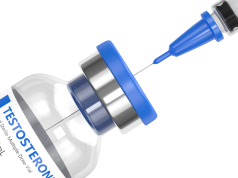
In men, the “volume of grey matter shrinks”, enabling a “temporary tuning-up of the parts of the cortex that connect us to others’ emotions”. New fathers also suffer a drop in testosterone, which facilitates bonding with their infant, as well as making a “dad bod” likely.
Combining academic data with “stories about the men in her own life”, Saxbe’s book is a “refreshing” call to “bust the stereotypes of fathers as clueless or uncaring”.
Kierkegaard described becoming a father as a transition from the “aesthetic stage, which is mainly about yourself, to the ethical stage, which is mainly about other people”, said Thomas W. Hodgkinson in Literary Review. “Dad Brain” engagingly explores how such a “massive life change” manifests itself physically. The fact that it is about such an under-investigated area is both its “USP” and a weakness: Saxbe’s account of the “science of fatherhood” inevitably ends up feeling frustratingly patchy. New fathers lose 1% of their brain matter. Is that a lot to lose or a little? I’m still not clear. Still, “anyone due to become a dad” could do a lot worse than this accessible, “nicely done primer”.
Buy “Dad Brain” for £19.99 from The Week Bookshop
Darby Saxbe’s book combines academic data with ‘stories about the men in her own life’