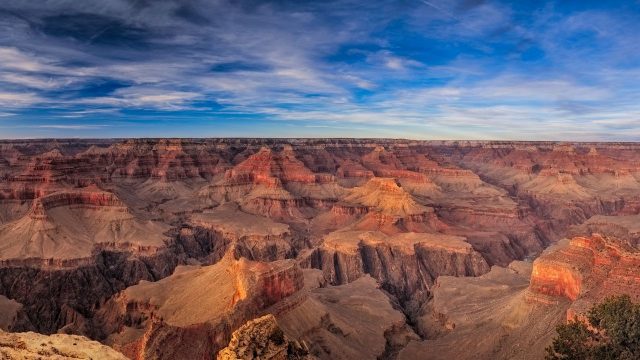
Arizona’s three national parks show off the state’s beauty in different ways. Grand Canyon National Park offers jaw-dropping views of this massive geological wonder, while Saguaro National Park celebrates the iconic native cactus and Petrified Forest National Park showcases ancient fossils and vibrant badlands. Each one has its own story, millions of years in the making.
Grand Canyon National Park
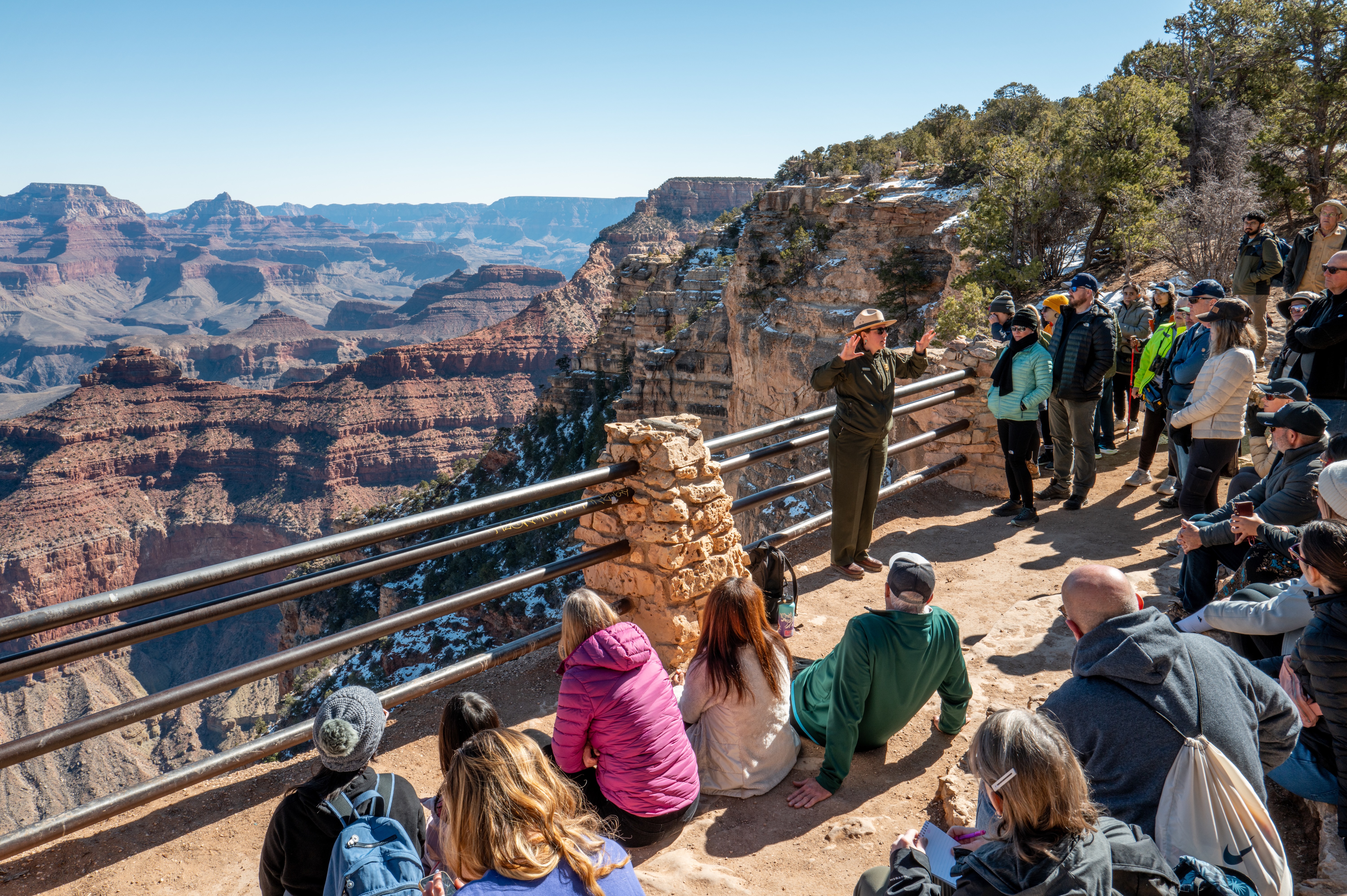
Until you see the Grand Canyon in person, it can be difficult to comprehend just how immense it is. The mile-deep canyon is 278 river miles long, and 18 miles across at its widest point. Visitors can explore the park across different avenues, with the South Rim the most popular.
The South Rim is open year-round and has the “greatest number of viewpoints, visitor services and hotels,” said Afar. Mather Point, extremely popular at sunrise and sunset, has a stunning perspective of the canyon, and on clear days you can see at least 30 miles to the east and 60 miles to the west. Hundreds of bird, mammal, fish and amphibian species live at the park, and visitors might see mule deer, elk, javelina and squirrels.
Day hikers can also set on several journeys from the South Rim, with top picks including the scenic South Kaibab Trail, Rim Trail and interpretive Trail of Time, which gives “detailed explanations” on the “colorful layers that give the canyon walls their candy-stripe appearance.” Those who prefer to learn about the canyon indoors can watch two 24-minute films inside the South Rim Visitor Center: “We Are Grand Canyon” and “Grand Canyon: A Journey of Wonder.” Before leaving, visit Hopi House to purchase Indigenous arts and crafts.
The less developed and “more rugged” North Rim is much quieter than the South Rim, and due to its remoteness only sees about 10% of the total annual visitors to the park. It’s also 1,000 feet higher, and because of heavier snow in the winter, is only open from mid-May to mid-October. The North Rim is “covered in forests of aspen, fir and spruce trees,” and “memorable views” can be found on the North Kaibab Trail, which “descends 14 miles to the Colorado River.” A devastating fire ripped through the North Rim in July 2025, which destroyed the Grand Canyon Lodge and more than 100 other structures and burned countless trees and shrubs.
The West Rim, or Grand Canyon West, is on Hualapai land and is known for the Grand Canyon Skywalk, a glass-bottomed bridge. The East Rim is part of the Navajo Nation and includes “numerous smaller canyons carved by the Little Colorado River.”
Where to stay: The historic El Tovar has been welcoming guests since 1905, providing a comfortable place to stay right on the South Rim. This is one of the “grandest” National Park lodges, and guests enjoy the rustic charm of the lobby and dining room filled with Hopi, Apache, Mojave and Navajo murals.
Best time to visit: The Grand Canyon is busiest during the summer months, when the weather is also hottest. If possible, plan a trip during the late spring, when it’s still warming up, or September through November to enjoy cooler temperatures and beautiful fall colors. Rangers recommend that hikers bring plenty of water and sun protection year-round, and pack at least four liters of water during the hottest months.
Petrified Forest National Park
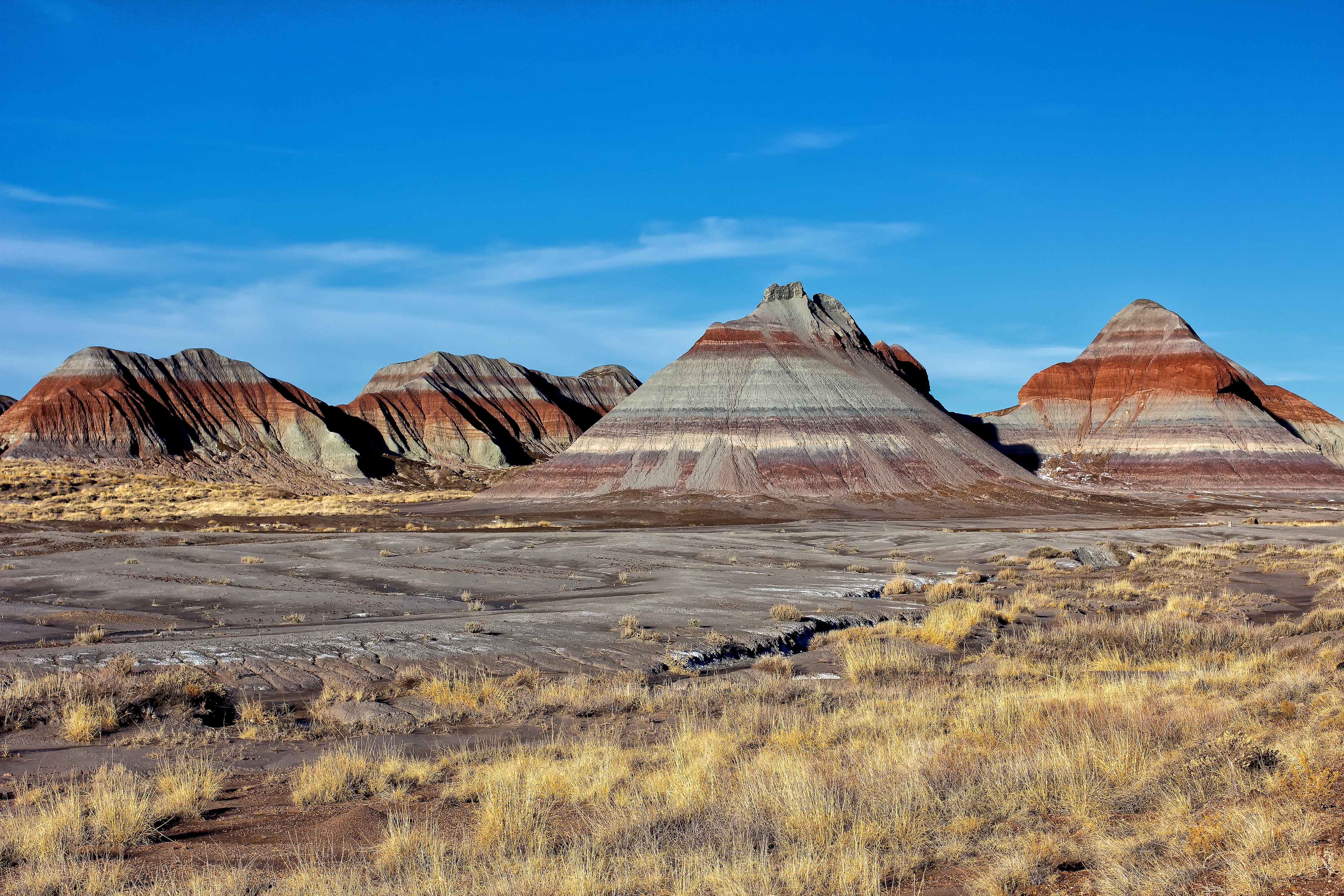
The 200,000-acre Petrified Forest, part of the greater Painted Desert, provides a “remarkable example” of how this region, a primeval tropical forest, has “radically evolved through the ages,” said National Geographic. Badlands, grasslands, ancestral Pueblo sites and petrified logs — tons and tons of them — make up the park, along with an “amazing array” of wildlife like bobcats, pronghorn antelope, rattlesnakes, coyotes, migratory birds and salamanders.
The short Giant Logs Trail gives hikers the chance to see petrified wood up close, and the beautiful Blue Mesa Trail showcases the Painted Desert’s colorful cones. Another way to see the park is by car. There are two audio tours that go into great detail about dozens of stops along the Petrified Forest Scenic Drive (one tour is for drivers entering from the north, the other is for those entering from the south). Highlights include Puerco Pueblo, dating back to 1100, and the Newspaper Rock site. Ancestral Puebloans etched more than 650 petroglyphs onto rocks in this area, and the “high concentration” of markings likely mean this was a “hugely significant” place, said the National Parks Service.
Where to stay: There are no accommodations inside the park, and only backcountry camping is allowed with a permit. It’s worth driving 60 miles from the park’s main entrance to the city of Winslow to stay at the nearly 100-year-old La Posada Hotel. Designed by architect Mary Jane Colter, this estancia has been revitalized, with a substantial art gallery and rooms featuring Southwestern decor.
Best time to visit: The park is open year-round, except for Thanksgiving and Christmas. It’s most crowded during the summer, when temperatures can soar to triple digits. The coldest time to visit is during the winter, and visitors should plan for it to drop down to below 0 Farenheit at night. Milder temperatures — and clearer skies — prevail during late spring, October and November.
Saguaro National Park
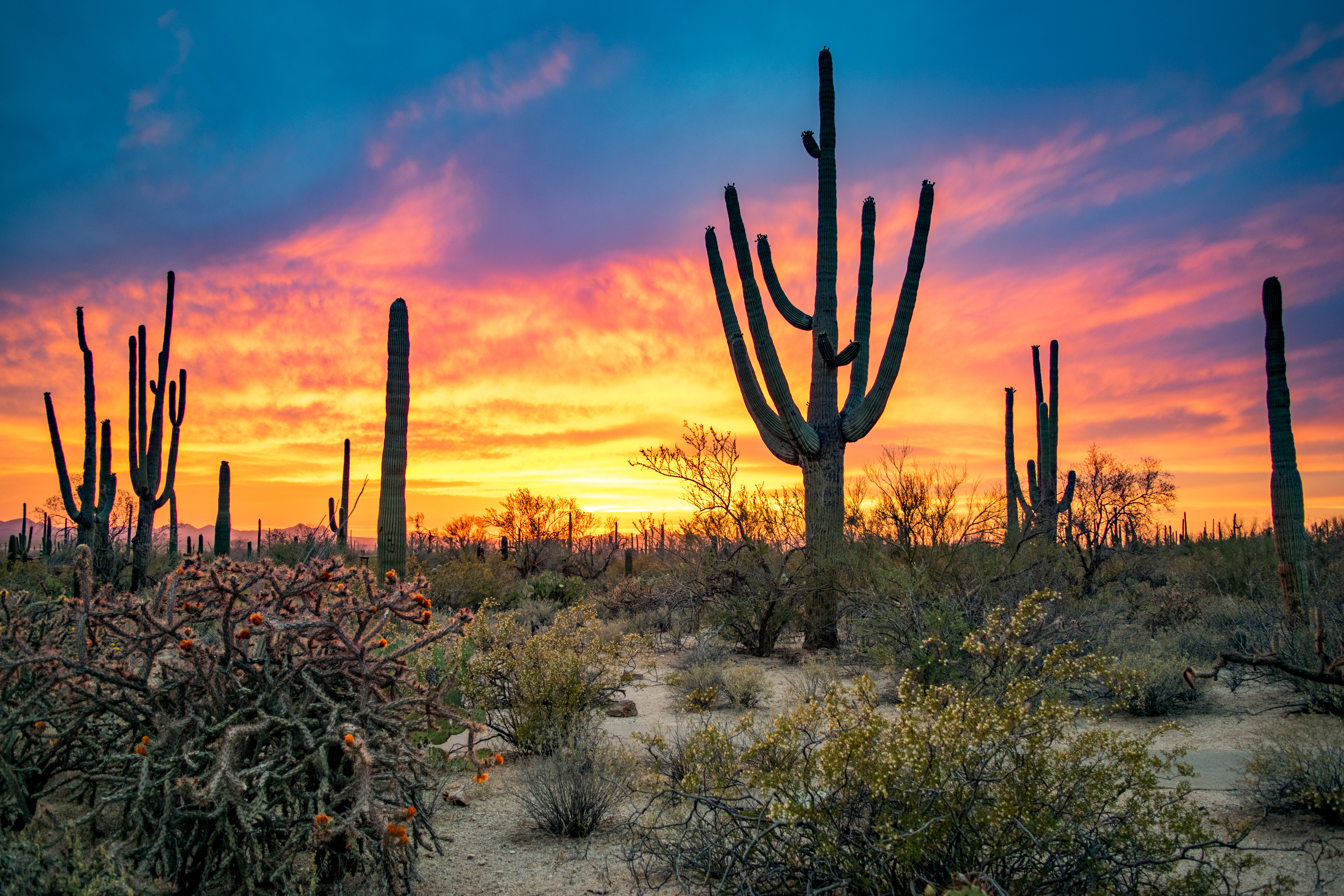
The saguaro cactus is native to the Sonoran Desert, and more than 2 million can be found spread across Saguaro National Park West, in the Tucson Mountains, and Saguaro National Park East, in the Rincon Mountains. The two districts are “nearly an hour’s drive apart,” but both have “towering cacti, captivating desert scenery and outdoor recreation opportunities,” said Travel and Leisure. The saguaro forest is “denser” in the west, and the east provides access to a “plethora of mountainous backcountry trails.”
Saguaros might reign supreme in the park, but cholla, prickly pear and barrel cactus also have a presence. See them while on a ranger-led tour or while gliding by on a bike. The most accessible trail in the west park is Signal Hill, which passes boulders covered in Hohokam petroglyphs. In the east park, the Freeman Homestead Nature Trail passes through a saguaro grove and doubles as an educational experience, with signs “informing visitors about the area’s history and flora.” Desert sunsets are spectacularly colorful affairs and are best viewed from Tanque Verde Ridge Trail and Javelina Rocks. Plan on staying once the sun goes down for “incredible” stargazing.
Where to stay: There are no hotels within either district, but there are six wilderness campgrounds in Saguaro National Park East. For a more luxurious experience, go glamping at Solana Guest Ranch and Spanish Villas. The property, near Saguaro National Park East, offers villas that are perfect for bigger groups, as well as four Conestoga wagons with pillow-top beds, air conditioning and access to the ranch’s amenities.
Best time to visit: The park is open year-round, except for Thanksgiving and Christmas. The busiest time of year is from November to March, when temperatures are typically in the high 50s to mid 70s. To see cactus and wildflower blooms, visit between late February and late April.
Enjoy canyons, cacti and petrified fossils