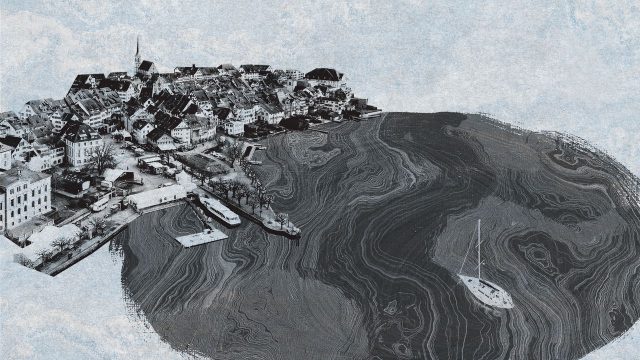
As conflict continues to destabilise the Middle East, the Gulf States elite are seeking solace in European alternatives that offer comparable financial benefits with a far lower risk of war on the doorstep. One such destination is the small Swiss town of Zug, which is becoming a “bolt-hole” for Gulf-based wealth, said the Financial Times.
‘Swiss Monaco’
Switzerland’s reputation as a magnet for the world’s financial elite is nothing new. In 2025, the country recorded the “densest concentration of millionaires” with an estimated 146 per 1,000 adults last year, said The Times. Now home to around 135,000 people, Zug’s canton – also named Zug – used to be the “poorest corner of Switzerland” until it lowered its tax rates in the 1950s. “Now it has corporate tax rates of 16.2% compared with 40% in the US and 33.3% in France.”
“In almost all ways Zug is unremarkable”, with its traditional Swiss architecture and cobbled waterfront lanes. But if its “Alpine lake water is clear”, the financial scene is more “murky”. Many credit Marc Rich and Pincus “Pinky” Green, founders of metals and minerals trading firm Glencore, with the transformation of Zug from a “Swiss backwater” to its status as the “Swiss Monaco”. The multinational is headquartered just outside Zug, and has made the town a “global powerhouse for trading crude and refined oil products”. It should be “no surprise” that the “1% of the world’s 1%” are taking shelter there, and at the same time, hoping to still “keep a hand in the oil business”.
“Industry estimates suggest that tens of billions of dollars could flow into Switzerland depending on how the current conflict evolves,” said the Outbound Investment Group. The “immediate trigger” for the “surge in interest” from Gulf-based investors is the war in the Middle East. However, Switzerland’s underlying appeal is its unwavering “Swissness”: “political neutrality”, “strong legal frameworks”, and reputation for wealth preservation. It’s a safe bet with no sign of slowing.
‘Availability tightening’
There are some drawbacks, said the FT. For “would-be arrivals”, the appeal of the region for Middle Eastern residents comes with “practical constraints”. Those outside the EU “face a higher bar”. Usually, the condition of residency is “tied” to employment or company formation. For the “very wealthy”, there is the added option of “negotiated lump-sum taxation agreements with cantonal authorities” that allow individuals to “pay a flat annual tax based on living expenses rather than global income”.
Even if they are holders of EU passports, the “main bottleneck” is the availability of property. Competition is “intense” and “rental supply is extremely limited, with properties often snapped up within days”. With Zug’s “availability tightening”, other cantons in the region with similar tax arrangements could benefit, such as Lugano, an Italian-speaking city in the Ticino region.
The uncertainty of the duration of the conflict is one of the most pressing concerns, said Bloomberg. The recent breakdown of ceasefire talks risks “forcing a reckoning for the professional and expat classes considering options after putting down roots in the Middle East”.
The short-term benefits of physical safety from leaving the Gulf are clear, but changing tax residency “takes time” and practicalities such as finding schools and “conforming to national requirements such as opening local bank accounts” is often “complicated and time-consuming”. The region’s ultra-wealthy are facing “uncomfortable decisions on whether to make the move permanent, especially with the end of the school year in sight”.
Historic town has earned the title ‘Swiss Monaco’, as Middle Eastern mega-rich flock to the lakeside haven