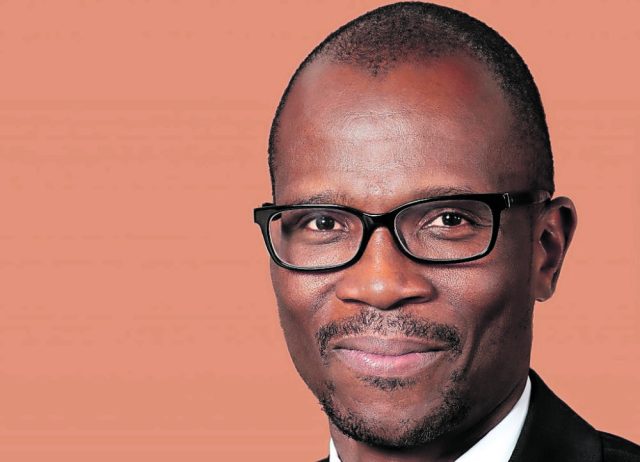
Deputy Finance Minister and Public Investment Corporation (PIC) chairperson David Masondo has struck a firm tone on companies failing to service PIC loans, even as the asset manager reports strong growth, with assets rising from R2 trillion to R3.7 trillion over the past five years.
His comments come amid renewed scrutiny of the PIC, with civil society organisations and the Bantu Holomisa-led United Democratic Movement calling for parliament to convene urgent public hearings into “ongoing governance failures, ethical breaches and poor investment decisions”.
Holomisa has also called on the Auditor-General of South Africa and the Special Investigating Unit to conduct a forensic probe into the PIC’s Isibaya Fund and its broader Unlisted Investments Division, with a focus on politically connected deals, loss-making projects and compliance with the Mpati Commission recommendations.
Business sentiment on the PIC remains divided. Business Unity South Africa chief executive Khulekani Mathe said decisions on loan approvals or rejections were ultimately matters between individual businesses and their financiers.
The Black Business Council has urged restraint, warning against what it described as a coordinated campaign targeting the PIC’s unlisted investments, particularly the Isibaya Fund.

In an interview with the Mail & Guardian, Masondo pushed back against criticism, expressing confidence in the government’s efforts to stabilise and reform the institution. He said that from 2022 to date, the PIC had funded 29 businesses with black ownership exceeding 50%.
“Since I joined the PIC, the corporation’s debtors recovery book has totalled R19.3 billion, with R10bn having been recovered in the PIC bank account. The organisation is undergoing legal processes to recover the remaining R9.3bn, with R8.9bn recovered from Steinhoff.”
He said the PIC’s transformation-focused investments had continued to expand.
“The total value of these investments has amounted to R13.4bn. When we consider businesses with black ownership greater than 25%, 35 businesses have been funded with the value of investments totalling R18.1bn.
“If we combine businesses that are 50% plus and with 25% and 35%, the PIC has spent R18bn since 2022.”
Black businesses funded by the PIC included Lona Group, Mahlako Energy Fund, Reimagine Fund, Southern Farms, Bambili Energy, SA SME Fund, Hlayisani Venture Capital Fund, Solcon Capital, IDF Capital and Trenstar, Infinite Partners, among others, he said.
With more than R3 trillion in its asset portfolio, the PIC, which primarily serves the Government Employees Pension Fund — about 95% — has been under public scrutiny, with the Mpati commission having found that in many instances, sound policies, processes and frameworks were not adhered to.
The commission, which convened in 2018 and 2019, was established to investigate “surprising” investment decisions at the PIC, revealing failures in due diligence and a tendency to ignore risks in favour of questionable deals.
Other scandals to rock the PIC have included a Daybreak Foods investigation, which found that PIC-appointed directors engaged in mismanagement that led to financial distress at the poultry company.
Former chief operating officer Vuyani Hako was suspended after being implicated in receiving funds linked to suspicious transactions, including for personal property. Former chief investment officer Kabelo Rikhotso was also suspended after whistle-blower allegations of misconduct.
In another case, the PIC was defrauded of about R100 million through investments in Enable Capital, again pointing to lapses in due diligence.

Masondo promised that regardless of whether debt defaulters were private companies or state-owned enterprises (SOEs), they would be held to account. “This is not government money that we’re managing but it belongs to pensioners, nurses, teachers, police officers and other public servants.”
It has been estimated that about R30bn in PIC loans is tied up in financially distressed entities, among them Steinhoff, VBS, Erin Energy, Daybreak and Levoca–Metro Fibres Networx.
The deputy minister did not mince his words about defaulters. Describing them as “thieves and robbers”, he said: “If you are not paying your PIC debt, you are stealing from South African nurses, teachers and cleaners employed by the government.”
He said the PIC did not invest purely for financial returns but with broader developmental objectives in mind. “We are mindful of the fact that if a company collapses, lots of jobs are on the line. We are investing to create jobs, making an impact on the economy.” However, he warned that companies that misused funds would face tighter oversight.
“We are tightening the screws on those companies which, when they get PIC loans, instead of the money going to the business, decide to go on a spending spree and not service the debt. They spend PIC loans on buying mansions, expensive holidays, cars and pricey alcohol. That is why we constantly demand documents and information reflecting business performance — looking at cash flows and demanding that money be paid back,” said Masondo.

He said the PIC had a responsibility to invest in assets that were resilient, well governed and capable of delivering long-term value.
He pointed to Waterfall City in Midrand as one of its stronger-performing investments. The mixed-use precinct had generated more than 23 000 jobs and accommodated more than 500 commercial, residential, retail and green infrastructure tenants.
The development sat in Attacq Limited, with 70% held by Attacq Waterfall Investment Company and 30% by the GEPF, which had committed R2.7bn to the project.
As one of the largest institutional investors on the Johannesburg Stock Exchange, the PIC controlled more than 10% of total market capitalisation. About 80% of its listed equities portfolio was managed internally on an enhanced index or “passive” basis, allowing clients to benefit from lower management fees without sacrificing performance.
The remaining 20% was managed by external asset managers, enabling a more active investment approach aimed at maximising returns.
On funding small businesses, Masondo said the PIC deliberately avoided small, high-volume deals.
“The reason for this approach is that if you’re going to have a lot of small businesses that you’ve got to invest in, that requires a lot of personnel. If anything goes wrong in one small entity, you require the same amount of time to turn it around.
“We, therefore, prefer to invest in big transactions, because smaller transactions can go to the NEF [National Empowerment Fund], IDC [Industrial Development Corporation], other government entities and the private sector. It doesn’t mean that we don’t support small businesses but we allocate money to companies that are best capable to invest in small companies.”
Reflecting on the Mpati commission’s findings, Masondo said the PIC’s governance reforms were largely on track. He said one set of the recommendations was on the governance of the PIC. The other set was on people alleged to have been implicated in criminal acts — on whether something had been done.
“On issues that are related to the governance in the PIC, we’ve done everything to correct wrongs. We’ve put out a report and our report, which has been audited, makes sure that we’re not misleading on what we promised to correct. We have shared the report with Finance Minister Enoch Godongwana, who will share it with President Cyril Ramaphosa.”
Masondo said governance changes had been implemented, including restructuring leadership roles and strengthening oversight mechanisms.
“There has been an issue about the governance of the PIC, which included how you constitute the board and the shareholder has implemented the recommendations. In terms of people implicated in wrongdoing, those matters are being followed by the criminal justice system.
“We have also addressed the finding about power being concentrated in the CEO, through decoupling. We’ve had the CEO and the CIO, having now decoupled the position of the CIO into three. One will be responsible for the listed and the other for the unlisted.”
He said the unlisted referred to the private market, property and infrastructure. After the report’s recommendations, an ethics committee had been established.
“Investments are now no longer being done by just one person; you now have a number of assurance providers. Regarding ethics on investment, you’ve got ESG [environmental, social and governance] with there being a very clear threshold on each committee — at management and board committee level.”
While acknowledging progress, Masondo said the work was incomplete. “There’s been an issue about the governance of the PIC, which included how you constitute the board and the shareholder has implemented the recommendations,” he said, adding that the shareholders “still need to audit us on whether we’ve done all the things that we said we should do”.
Despite asset growth to R3.7 trillion, questions persist over distressed loans and legacy investment scandals