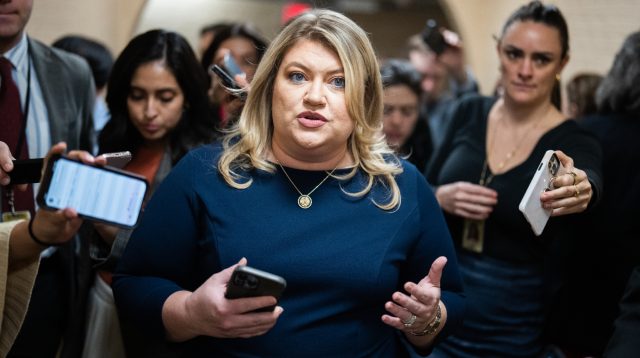
When Republican Rep. Kat Cammack (Fla.) checked into a Florida hospital in the spring of 2024, her goal was to obtain a vital dose of methotrexate, the drug needed to expel the nonviable ectopic pregnancy actively threatening her life. But with the state’s six-week abortion ban newly on the books, it took hours before doctors worried about their legal liability would agree to prescribe Cammack the medication. Their apprehension, Cammack said to The Wall Street Journal on Sunday, was the result of “absolute fearmongering at its worst” on the part of liberals and pro-choice activists. But with ongoing confusion over liability and medical responsibility, medical care for ectopic pregnancies remains in an uncertain state.
What does the law say?
On June 3, the Trump administration rescinded President Joe Biden’s 2022 directive to hospitals that ordered them to provide abortion services in instances of extreme medical necessity for the life and well-being of the mother. Despite withdrawing the order, which was issued in the wake of the Supreme Court’s Dobbs decision ending the federal right to abortion access, the Trump administration said it would “continue to enforce” the Emergency Medical Treatment and Labor Act. Treatment under the act includes “identified emergency medical conditions that place the health of a pregnant woman or her unborn child in serious jeopardy.”
The rescinded order, coupled with the continued enforcement of the underlying law, has “thrown into doubt” the government’s “oversight of hospitals that deny women emergency abortions,” said The Associated Press. Early pregnancy in particular is a “medically complicated space,” said American College of Emergency Physicians President Alison Haddock at The Guardian. Doctors now need to worry “whether their clinical judgment will stand should there be any prosecution.”
Abortion rights advocates argue Florida’s restrictive reproductive laws are what “created the problems” faced by Cammack and her physicians. That’s in part because the law doesn’t overtly define how doctors should identify ectopic pregnancies, said Molly Duane, a senior attorney at the Center for Reproductive Rights, to The Wall Street Journal. Blaming healthcare providers for the confusion, rather than ambiguous laws and political statements, comes from the “playbook of antiabortion extremists that for decades have been blaming and villainizing doctors,” Duane said.
While it’s the current administration that has rescinded care requirements, Trump Medicaid official Dr. Mehmet Oz said on X that the Biden administration “created confusion” around the issue for both patients and physicians. Under the Trump administration, Oz said, “women will receive care for miscarriage, ectopic pregnancy, and medical emergencies” nationwide.
What’s next for doctors and patients?
Apprehension surrounding ectopic pregnancies and the potential legal liability for diagnoses thereof has already prompted one of the country’s largest crisis pregnancy center organizations to advise member clinics not to perform prenatal ultrasounds that could confirm the condition. The National Institute of Family and Life Advocates (NIFLA) has already fought, and ultimately settled, lawsuits stemming from misdiagnosed ectopic pregnancies in what the group called the “greatest medical and legal risk for clinics,” NBC News said. Crisis pregnancy centers will often talk about ectopic pregnancies in their advertising and outreach efforts to “engage and try to motivate people to come in for an ultrasound,” said University of Georgia Reproductive Health Epidemiologist Andrea Swartzendruber to NBC.
Fears about misdiagnoses and legal ramifications aside, at least some medical health professionals have called for the administration to regulate in cases where there remains confusion on the issue. “Hospitals need more guidance, not less, to stop them from turning away patients experiencing pregnancy crises,” said Nancy Northup, President and CEO at the Center for Reproductive Rights, in a statement.
Despite being a staunch supporter of President Donald Trump’s MAGA agenda, Rep. Cammack seems to agree. “I would stand with any woman — Republican or Democrat — and fight for them to be able to get care in a situation where they are experiencing a miscarriage and an ectopic” pregnancy, Cammack said to the Journal.
Rep. Kat Cammack’s accusations of ‘fearmongering’ are the latest example of how mixed messages are complicating the debate around abortion