West Texas is not the first place you would expect to find a French aristocrat suspected of murdering his family and going on the run for 15 years.
But last week the Sheriff’s Office of Brewster County posted a request for information about Xavier Dupont de Ligonnès on its Facebook page, following a tip-off from an investigative news team that he had been seen in the south of the county in 2020, accompanied by a black Labrador. Ligonnès “had previously travelled to Brewster County and reportedly claimed it was one of his favourite places”, the sheriff said he’d been told.
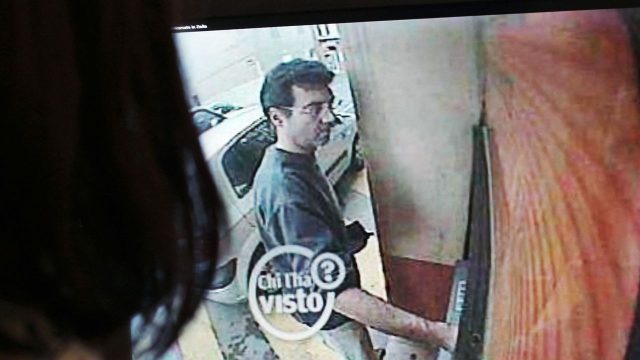
The post, which included the most recent known images of Ligonnès, was “enough to stir a frenzy” among French “amateur sleuths and crime fans”, said The Times. Their “favourite mystery, involving multiple supposed sightings over the years, is equivalent to” the enduring controversy around the UK’s “elusive Lord Lucan”.
‘Fantasy life’
Xavier Dupont de Ligonnès was 50 when the bodies of his wife, Agnès, and his children – Arthur, 20, Thomas, 18, Anne, 16, and Benoît, 13 – were discovered under the patio at their home in Nantes in April 2011. They had all been shot, wrapped in sheets, covered in quicklime and buried, along with the two family dogs. The last confirmed sighting of Ligonnès was at a motel near Saint-Tropez two weeks after the bodies were discovered. His car was later found abandoned in the car park.
Initial investigations revealed that, in the days before the killings, Ligonnès had bought cement, digging tools and four bags of lime in various locations in the Nantes area. He also owned a .22 rifle similar to the one used in the killings, had recently bought ammunition and gone to practise at a local shooting club.
Ligonnès, who had an aristocratic lineage, was a “failed businessman”, said The Times. By the time of his death, had accrued significant debts and was struggling to maintain his family’s outwardly comfortable lifestyle. He “lived a fantasy life in which he claimed he was, among other things, a US intelligence agent”.
Following his disappearance, reports emerged that Ligonnès had written to friends up to a year before the killings warning that, crippled with debts, he was contemplating “suicide, alone or collective” and “shooting up the house while everyone is sleeping”.
Red herrings and false leads
In the months and years following the murders, hundreds of sightings of Ligonnès were reported to police, “all proving to be false leads”, said France 24.
Then in July 2015, a photo of two of Ligonnès’ sons was sent to an Agence France-Presse journalist, with the words “I am still alive” scrawled on the back, along with his name. Handwriting analysis failed to ascertain if it was genuine.
In 2018, police raided a monastery in Roquebrune-sur-Argens (the Provençal town near Saint-Tropez where his car was abandoned) after a witness reported seeing a man who resembled Ligonnès, but this again proved to be a dead end. A year later, a man was arrested at Glasgow airport and held in custody before tests confirmed it was another case of mistaken identity.
The case then went cold for years, until a new book published earlier this year by Gilles Galloux, a former police investigator on the case. He claimed Ligonnès “boarded a flight from Nice airport using fake ID documents” and has been hiding out in the US, “a place he had long admired”, said The Connexion. It was this lead that drew attention to Brewster County, which Ligonnès visited in the 1990s.
Ligonnès’ sister, Christine, maintains her brother’s innocence, believing the murders “were staged by a foreign intelligence agency, and that the family is living in witness protection in the US”, said The Times. Prosecutors in Nantes remain “sceptical” of such theories. Their somewhat more pedestrian hypothesis is that Ligonnès “probably killed himself in the rocky hinterland of Provence”.
Aristocrat suspected of murdering his family in 2011 may be hiding in the US, new book claims