
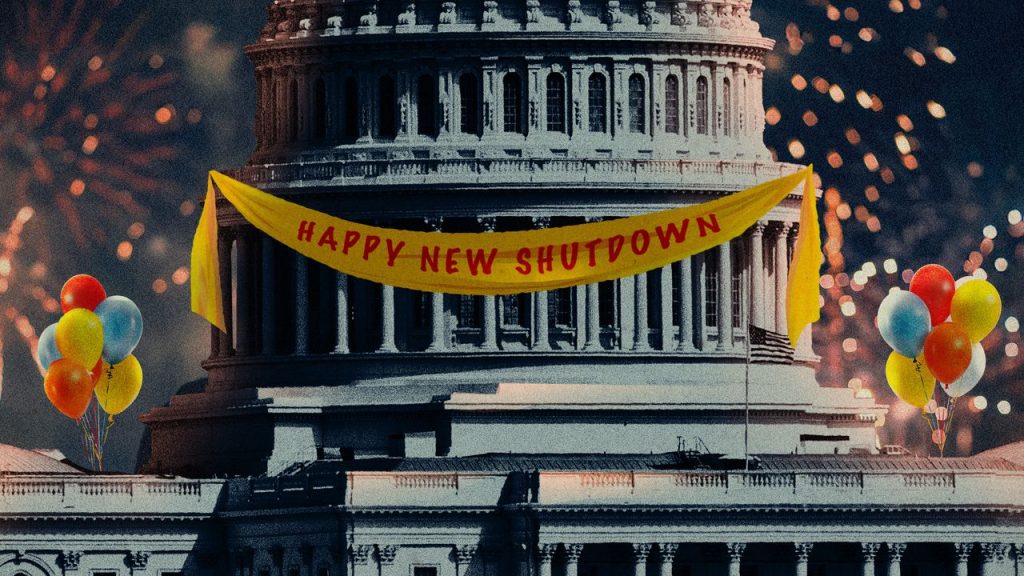
The last federal government shutdown ended just a few weeks ago. The next may start just a few weeks from now.
Congress’ deadline to avoid another shutdown “will be here sooner than you think,” said Politico. Despite a month of work to find a deal that can appease both sides, the Senate last week “gave up on passing a spending package” and adjourned for its holiday recess ahead of the Jan. 30 funding deadline. The usual dynamics are at play. GOP hardliners in the House want to hold the line on spending and “could start making threats” to Speaker Mike Johnson (R-La.) if they do not get their way. “This is people’s political livelihood on the line,” said Rep. Tony Gonzales (R-Texas).
Democrats say they want to get a deal. Senate Minority Leader Chuck Schumer (N.Y.) is setting a “very different posture for his party” than he did before the 43-day shutdown that consumed much of the fall, said Punchbowl News. There will be some Democrats who want to use the deadline as “leverage in the Obamacare fight or something else.” But Schumer believes there “aren’t enough Democrats willing to plunge into another shutdown.” The party is “trying to work with the Republicans to get it done,” he said. The problem is that “both chambers are far behind schedule” on full-year funding bills for 2026 and “key disagreements remain.”
What did the commentators say?
“Congress has learned nothing,” said The Boston Herald editorial board. Lawmakers should have learned from the recent shutdown the “level of pain it inflicted on the American people.” The suspension of SNAP benefits left families “panicked and scrambling.” A “kick-the-can-down-the-road mentality” meant Congress avoided dealing with the issue of healthcare subsidies for a few years until the issue became “leverage” for the latest round of funding fights. American voters “deserve better than this.”
Government shutdowns are a “relatively recent phenomenon” created by a “broken political environment,” said Scott Minkoff and Josh Ryan at The Hill. Shutdowns also “disincentivize thoughtful lawmaking” in favor of a “warped” legislative process. The fix may be a two-year budget cycle with “automatic funding when legislators fail to act.” That will not solve all of Congress’ budgeting problems because “deficits, spending priorities and taxation” are always going to spark debate. But the rush of constant deadlines is too easily weaponized. A two-year budget cycle “would restore some sanity.”
What next?
There is “little appetite for another government shutdown,” but Democrats are weighing their demands anyway, said NOTUS. Appropriations bills in the Senate need 60 votes to pass, which means that seven Democratic votes are necessary for any successful bill. That gives those Democrats leverage “in theory,” but they forced the fall shutdown for the fight over Obamacare subsidies and ended up “with very little to show for it.” Some senators are keeping their options open. “We got a long list” of priorities, said Sen. Chris Van Hollen (D-Md.).
A January deadline could bring the pain all over again