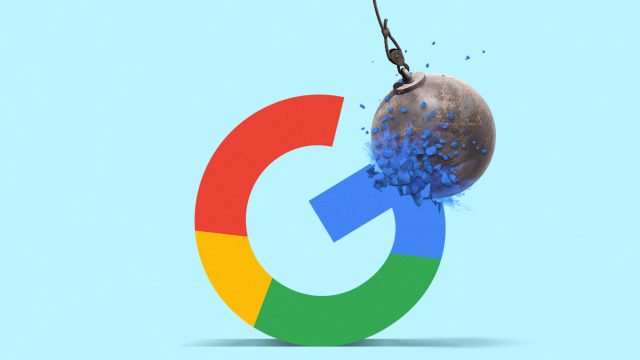
Google’s big defeat in a federal antitrust case “could change how you search the internet,” said USA Today. Judge Amit P. Mehta on Monday ruled that the tech giant “illegally monopolized online search and advertising” by paying hardware companies like Apple and Samsung to make its search engine the default option on phone and computer web browsers. Those practices gave more than 90% of the search market. Now? “The court will have to decide whether Google should be broken up in some way,” said one analyst.
“Very likely there will be a remedy that changes the way that we engage with search on our phones and on our devices,” Vanderbilt Law School’s Rebecca Allensworth told PBS NewsHour. It’s possible the judge could impose the “nuclear option” of breaking Google into smaller chunks, said the BBC, separating the search business from other products like its Chrome browser and Android smartphone line. But it’s “easier to imagine” a future where internet users simply see a “choice screen” asking whether they’d like to use Google or Bing search when they open a browser.
What did the commentators say?
“The ruling threatens to alter one of Apple’s most lucrative business arrangements,” said The New York Times’ DealBook newsletter. The iPhone maker received $20 billion from Google in 2022 alone to give its search engine preference on Apple devices. That’s a revenue stream that could now go away. “Would Apple look to Microsoft’s Bing or someone else to power search on the iPhone?” Or could it create its own search engine? Whatever happens, the ruling “threatens to disrupt one of the most valuable businesses in modern history, and Big Tech more broadly.”
“The court’s decision was the correct one, but it came way too late to make a real difference,” Dave Lee said at Bloomberg. The case took six years to come to fruition, and it’s likely the ultimate result might dent Google’s market share “by a percentage point here and there.” But it’s hard to see a real competitor on the horizon: Microsoft added artificial intelligence functionality to its Bing search engine and it “didn’t make the faintest bit of difference.” Even with an adverse ruling, Google might still be too big to fail. “Whatever window may have been open for a Google competitor to arise was sealed shut firmly long ago.”
What next?
“It’s hard to imagine something different” from the current Google-dominated internet, Shira Ovide said at The Washington Post. Now there’s an opportunity. One possibility: Google could be forced to share its “secret sauce” — built from the data of all those users — with other search companies to let those rivals “make more appealing search engines.” But it’s also possible that nothing much will change, at least from a user standpoint. “That’s what happened after Google was found to have broken the European Union’s anti-monopoly laws.”
The rise of artificial intelligence could render this week’s ruling irrelevant, The Wall Street Journal said. “People can get answers from ChatGPT and other AI applications,” making search engines less important for internet users. The ruling could also speed the shift to AI: Without Google as the default option, “more people could turn to AI as they seek alternatives.” Judge Mehta, for one, doesn’t think that’s quite yet the case. “AI,” he wrote Monday, “has not supplanted the traditional ingredients that define general search.”
And what does that mean for users?