
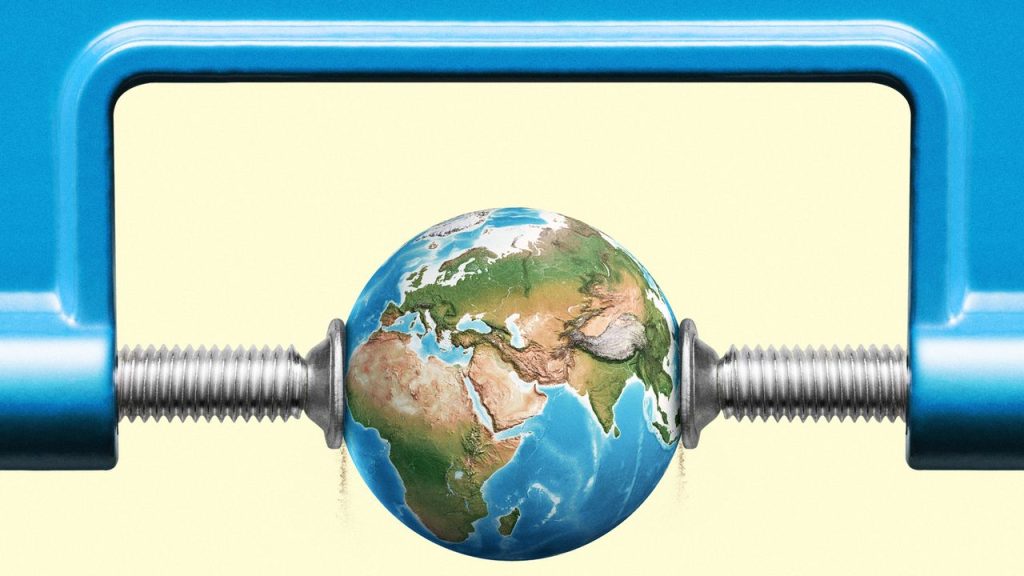
If the price of oil continues to rise, it could trigger a “steep and stark” global recession, said Larry Fink, CEO of US financial giant BlackRock. There will be “profound implications” for the world economy if Iran “remains a threat” and oil prices hit $150 a barrel.
The BlackRock boss has a “unique insight into the health of the global economy”, said the BBC’s business editor Ian Jack, because of his investment management company’s colossal “size and spread”, controlling assets worth £11 billion across the world.
What did the commentators say?
“The Iran war is metastasising into a global economic calamity,” said the Financial Times’ editorial board. Until now, financial markets have been “lulled by the belief that the conflict would not last long” but, as hostilities enter a fourth week, the Strait of Hormuz remains closed, “lasting damage” has been inflicted on critical energy infrastructure in the region, and “the worst-case scenarios for investors and policymakers are coming into view”.
If this crisis continues, “no country will be immune to the effects”, said Fatih Birol, head of the International Energy Agency on Monday. The global economy faces a “major, major threat” as the Iran war has a worse impact on energy prices than the twin oil shocks of the 1970s and the Russia-Ukraine war.
“Prepare for the price of oil to reach $200 a barrel,” said Ebrahim Zolfaqari, spokesman for Iranian militias last week. And what seemed then “like bravado” is now “closer to becoming reality”, said Jesus Servulo Gonzales in El Pais. Were prices to rise above $150, let alone near $200, there would be “an inflationary crisis”: “the world would become poorer, and economic activity would grind to a halt until the situation recovered”.
The current oil-price “ructions” would have “to get much worse” to trigger a global recession but “less happily, they will almost certainly further stoke popular anger over the cost of living”, said The Economist. The price of Brent Crude is currently around $100 a barrel (it was $60 at the start of the year); two months at $140 “would push parts of the global economy” into a slump. Consumer confidence is already “close to an all-time low in America and scarcely higher elsewhere”, given many countries “seemed primed” for an economic downturn “even before the Middle Eastern chaos began”.
In the US, “many economists believe” the country “will scrape through this year without a recession”, said John Cassidy in The New Yorker. “But this is simply guesswork.” Federal Reserve chair Jerome Powell has said the surge in oil prices is “an energy shock” that has created so much uncertainty, “we just don’t know” what will happen.
What next?
We urgently need to get the Strait of Hormuz opened, oil market expert Rory Johnston told The New Statesman. It’s “too important” to the global economy to remain closed. The most likely path “is that the Trump administration and Israel pull back on their attacks in Iran, and Iran says, OK, we’ll re-allow” tankers down the waterway. But even if the strait “reopened to 100% of its prior flow” today, it would take two to three months “to renormalise the global system”.
Under the “doomsday scenario”, in which the strait stays closed indefinitely, “we’re not talking recession; we are talking depression”.
Soaring oil prices could squeeze the world’s economies into crisis but it’s ‘guesswork’ how soon – or even if – that will happen