
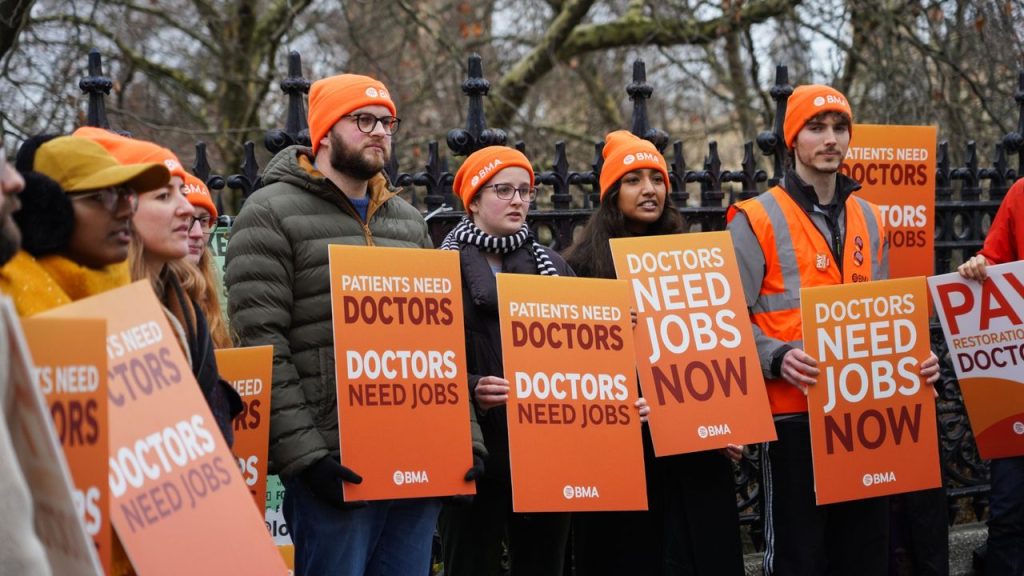
Britain’s resident doctors are embroiled in ongoing industrial action over an intractable pay dispute, which has been running since March 2023. Average pay for resident doctors (previously junior doctors) has risen, in total, by 28.9% since then, with a pay rise of 8.8% awarded by the last government, and three separate rises given by Labour since. But the doctors’ union, the British Medical Association, is demanding “full pay restoration”, arguing that the value of resident doctors’ pay has been eroded heavily by inflation since 2008/09, and that an additional 26% pay increase for members “over the next few years” is needed.
The dispute isn’t only about pay, however: there are long-standing gripes among resident doctors about working conditions. The BMA also complains that there are insufficient numbers of training posts. It is now demanding that UK medical graduates are prioritised for training posts in future.
Who are resident doctors and what do they earn?
They are the workhorses of the NHS, providing most day-to-day medical care in hospitals. There are 79,000 of them across the NHS, making up about half the doctors in secondary care (hospitals). They range from newly qualified “foundation” doctors to “core trainees” and specialised registrars, all working under the supervision of more senior doctors.
The government’s average full-time basic pay figure for resident doctors is £54,000. But this covers quite a range, from £38,830 for the newly qualified, to registrars who can earn as much as £74,000. Also, in practice they earn between a quarter and a third more than their basic salary from overtime, unsocial-hours pay, and so on.
Do they have a point about pay?
Doctors certainly suffered real-terms pay cuts between 2008 and 2024. The BMA says that pay remains a fifth lower than it was then, despite recent pay rises. (Pay for most UK jobs is about the same or slightly less than in 2008.) The exact proportion is, though, contested: the BMA uses the RPI measure of inflation for pay calculations, while the government uses the CPI, which is typically lower.
The proportion of UK doctors, particularly those trained abroad, leaving or considering leaving the UK has been rising, in part because of money. The independent pay review body found that resident doctors in Australia are paid 23%- 48% more; in Canada they are paid almost twice as much. In Ireland, France and New Zealand, though, they are paid about the same or less.
What is the government position?
Health Secretary Wes Streeting accepted the review body’s recommendation of a 5.4% rise for 2025/26. The government recognises the need to improve pay over time, but it doesn’t accept unconditional pay restoration claims, deeming them unrealistic when the NHS and public finances are struggling: besides, Streeting says resident doctors have received the highest pay rise of public sector workers in the past three years.
What about the other issues?
The BMA complains that supply of posts for core and speciality training has not kept pace with numbers. This is hard to dispute: figures for last year showed as many as 33,000 doctors chasing as few as 10,000 places. This means that many are stuck in lower-level roles and unable to progress.
Beyond this, resident doctors consistently report a range of workplace problems: excessive workload; staffing shortages; high levels of stress and burnout; poor access to basic facilities, such as rest areas and canteens.
What is Streeting’s response?
In December, the Health Secretary made an offer that included a rapid expansion of training posts, and emergency legislation to give UK medical graduates priority for the posts; before this they had competed on equal terms with foreign-trained doctors. He had earlier offered to pay resident doctors’ exam fees, and cover mandatory membership costs for medical royal colleges, which add up to several thousand pounds while doctors train to become consultants.
Streeting has also said that NHS trusts need to be “better employers”, and that he is open to negotiation on working conditions – but not on pay.
Why is the dispute so bitter?
Historically, strikes by NHS doctors have been extremely unusual. Before 2016, resident doctors hadn’t staged a national strike since 1975. But in 2022, a hardline group calling themselves “Doctors Vote” gained control of the BMA’s resident doctors committee, and there have since been 14 strikes – evidence of deep anger and disillusion. (Doctors Vote’s grip on the union has weakened to some extent in recent months.)
Labour, for its part, feels that it has committed fully to resolving this dispute – Streeting’s first meeting as Health Secretary was with the BMA – and has made generous offers. A war of words has escalated between the two sides. Streeting described the decision to strike during December, when flu was at record levels, as “morally reprehensible”, “reckless” and a threat to patient safety.
The BMA has accused the Health Secretary of “emotional blackmail”, “scaremongering” and “grandstanding”.
Can a resolution be reached?
We shall see, when the results of the latest BMA ballot on whether industrial action should continue over a further six months are revealed on 2 February. The two sides appear to be deadlocked. Streeting seems to have won the public argument. Polling suggests that support for the strikes had fallen from a majority in 2024 to around 30% by December; several high-profile doctors, including Sir Robert Winston, have quit the BMA in protest at its strategy.
However, he has not so far won over those who matter most: the resident doctors. The last ballot, in December, on a turnout of 65%, saw 83% of doctors vote to continue striking. Last week, negotiations were reported to be planned between the two sides. But at this stage, further walkouts over the coming months look likely
How strikes affect the NHS
During strikes, consultants are drafted in to “act down” and cover their more junior colleagues’ shifts. Non-urgent appointments are routinely postponed. At least 1.7 million appointments have been rescheduled owing to industrial action since the end of 2022, according to data from August – dealing a blow to the government’s efforts to cut waiting lists. The strikes also carry a large financial cost, as consultants are expensive (this is notoriously hard to estimate, but between April 2023 and May 2024 it is thought to have exceeded £1.7 billion). This diverts resources away from other parts of the health service, and potentially impacts patient care. It also places additional burdens on staff and morale.
However, NHS England has got better at dealing with walkouts. During the most recent 17-22 December strike, NHS figures indicate, over 90% of planned operations, tests and procedures were maintained – though that still meant that tens of thousands of procedures were disrupted. It was even reported that strikes by younger doctors before Christmas helped to forestall a winter crisis in the NHS, because senior medics are more confident in their decision making: they admitted fewer patients, were quicker to discharge them, and ordered fewer diagnostic tests.
Resident doctors working for NHS England are currently voting on whether to go out on strike again this year