Japan could soon be selling more arms overseas after it lifted a ban on exporting lethal weapons, including fighter jets. It’s the country’s biggest overhaul of defence export rules for decades and a “major shift” to Japan’s “post-World War II constitution”, said Al Jazeera.
Pacifist nation no more
“Pacifist restraints” have “shaped” Japan’s post-war security policy, said Reuters. The previous rules, introduced in 1967 and enacted in 1976, restricted military exports to non-lethal arms, such as those used for surveillance and mine sweeping.
There was a partial easing in 2014, when then-Prime Minister Shinzo Abe lifted the self-imposed ban on arms exports and defence industry cooperation. Then, last year, Australia sourced advanced frigates from Mitsubishi Heavy Industries, a deal that meant Japan began to emerge as a “major arms exporter”, said Newsweek.
Now, the five export categories that had limited military exports to rescue, transport, warning, surveillance and mine-sweeping equipment, are being removed. Instead of banning exports of lethal arms outright, ministers and officials will assess the merits of each proposed sale.
Some export principles will remain: strict screening, controls on transfers to third countries, and a ban on sales to countries involved in conflict. But the government said exceptions could be made when deemed necessary for national security.
It’s thought that nations interested in buying Japanese-made weapons include Australia, New Zealand, the Philippines and Indonesia. Sources told Reuters that warships for the Philippines may be among the first exports.
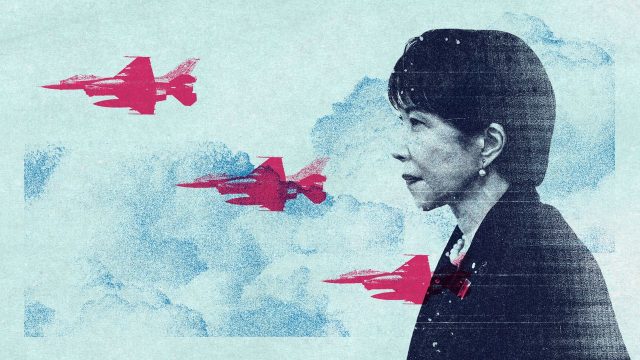
“With this amendment, transfers of all defence equipment will in principle become possible,” the PM, Sanae Takaichi, posted on X, adding that “recipients will be limited to countries that commit to use in accordance with the UN Charter”.
New rules for a new world
Explaining the shift in policy, Takaichi said that “in an increasingly severe security environment, no single country can now protect its own peace and security alone”.
Takaichi, who is regarded as a China “hawk” and often referred to as Japan’s “Iron Lady”, is among a number of recent Japanese leaders to have “pushed back against the country’s pacifist stance”, said Al Jazeera.
There is an “increasingly severe security environment”, said the Japan News. So her government feels that the regional environment has become significantly more dangerous, because of China’s growing military power and tensions over Taiwan, North Korea’s missile and nuclear programs, Moscow’s activity in the region, and the knock-on effect of tensions in the Middle East.
So it wants to deepen military cooperation with friendly countries and share the burden of regional security, instead of relying almost entirely on Washington. There’s also an economic dimension: Japan hopes to scale up production, attract revenue, innovation and investment.
We “shouldn’t underplay how important this will be”, William Yang, a senior analyst on north-east Asia at the International Crisis Group think tank, told The Telegraph, because “over the last few decades, Japan has been secluded from the global defence and arms supplies markets”.
The prime minister is tearing up pacifist rules in an ‘increasingly severe security environment’