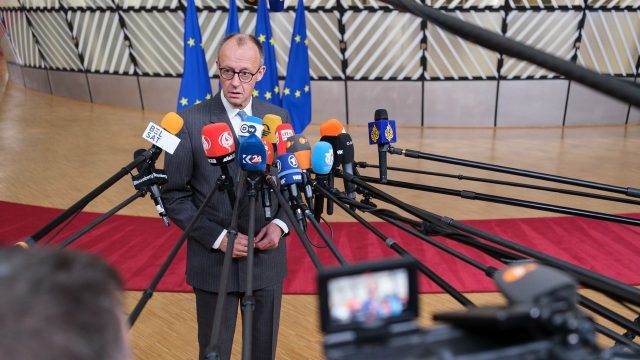
EU leaders have chosen to raise €90 billion in joint debt to fund the Ukrainian war effort for the next two years after German-led proposals for a “reparations loan” secured against frozen Russian assets fell apart in the face of internal dissent.
Notably, Hungary, Czechia and Slovakia will not participate in the joint debt scheme, meaning an “EU of 27 member states turned into a gang of 24” at the summit in Brussels last night, said Politico.
What did the commentators say?
Europe has undoubtedly shown commitment to Ukraine, but the decision “hardly sends an unequivocal message”, said the Financial Times. A “failure to find the cash” at all would have been a “terrible indictment of European weakness” when it “desperately needed to show resolve”.
But the bloc “blinked” when it came to the sterner step of using seized Russian assets to do so. Germany’s Chancellor Friedrich Merz “forcefully advocated” for the “reparations loan”, which he had framed as “the only option”, said Euronews.
But was Belgian PM Bart De Wever who clearly came out on top. With the majority of the frozen Russian funds held by Belgium-based financial services firm Euroclear, De Wever “played hardball”, refusing to accept a deal that could “leave his country exposed to Russian retaliation”. His demands for unlimited protection from any legal complications arising from the use of the assets made the proposal “unpalatable for the rest” of the EU countries.
The joint debt arrangement means there is no guarantee that the funds will ever be paid back. The loan would be “interest-free” and Kyiv would pay it back with “reparations cash from Moscow”. However, it is “by no means guaranteed Russia will ever pay reparations for its invasion and the loan is likely going to become a grant”.
“Arguably, it didn’t need to be so messy,” said Politico. Ukraine’s European allies “have the resources to beat Putin if they really want to”. The EU’s financial position as an “economic superpower” is already strong compared to Russia, with the bloc’s combined GDP standing at €18 trillion against Russia’s €2 trillion.
What’s concerning “for Ukraine’s allies” is the dwindling support among the public in Europe’s biggest economies for Ukraine and its war effort. French and German respondents to a Politico poll “were even more reluctant to keep financing Ukraine than people in the United States”. By deciding on the €90 billion loan deal, “Europe’s leaders opted for the easiest answer this week. And even that was almost too hard.”
What next?
The defeat of the Merz plan in favour of the joint debt funding arrangement was undoubtedly a “fumble”, but from Ukraine’s perspective “there is little difference in the outcome”, said the Financial Times. The loan and the likelihood of it never being paid back relieves any further pressure on Ukraine’s “already aggravated finances”.
As for the Russian assets, EU leaders emphasised that the frozen funds “will remain immobilised and the union reserves its right to make use of them to repay the loan”. But in the meantime, it seems more likely that “successive EU budgets will absorb the cost”.
Kyiv secures crucial funding but the EU ‘blinked’ at the chance to strike a bold blow against Russia