
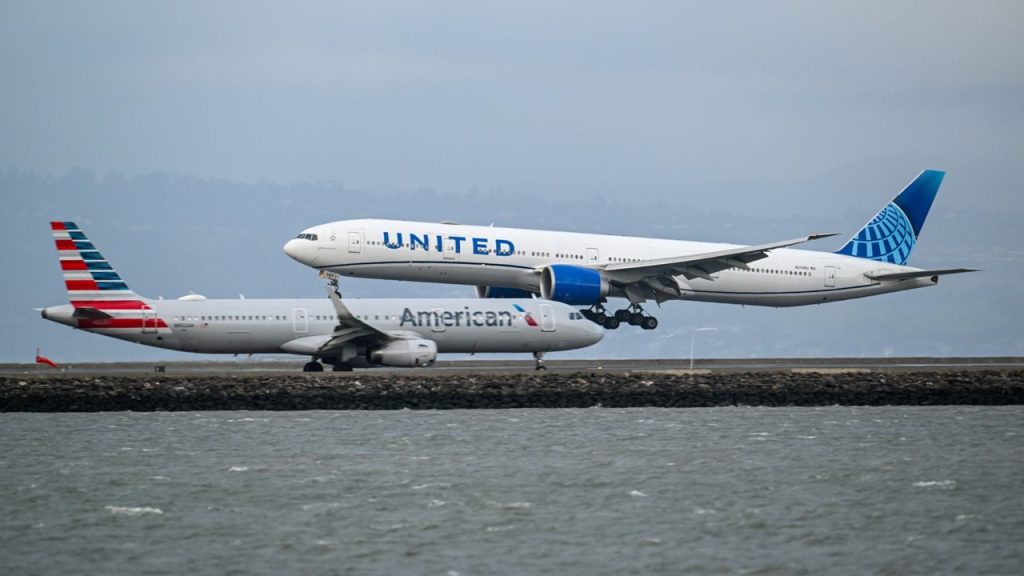
What would happen if two of the world’s largest airlines combined? This prospect may not be merely hypothetical, as United Airlines and American Airlines have reportedly discussed merging into one company. While experts say this type of move is likely to face antitrust scrutiny, many are also wondering what it would mean for the aviation industry. More specifically, insiders are concerned about what a merger could do to airfares in a market that is already seeing rising prices.
What did the commentators say?
United CEO Scott Kirby has allegedly spoken with Trump administration officials about getting clearance for a merger. If United and American were to combine, it would “create an unprecedented concentration of power in the commercial aviation industry,” said CNN. The joint company would “control roughly 40% of U.S. capacity when the available seats are adjusted for miles flown.” This has aviation analysts worried about a potential monopoly.
The “idea that we would have one airline responsible for four out of 10 flights every day is beyond horrific,” William McGee, an aviation and travel fellow at the American Economic Liberties Project, said to CNN. But airline consolidation has long been a part of the aviation business, and the White House “has shown a warmth toward mergers in the industry,” said CNBC. Combining companies “allows carriers to better control capacity.” Consolidation could also create a lifeline for American, which has fallen behind United and Delta as it “struggled to capitalize on higher-spending customers who are driving major airlines’ revenue in recent years.”
The potential merger may create a problem for customers, with the “main concern” being “higher fares,” said MarketWatch. Fares have already been climbing due to fuel shortages from the war in Iran, and “your next plane ticket and the pile of unused miles sitting in your account could both take a beating” if United and American joined, said Money Talks News. The two airlines “overlap heavily in Chicago, Los Angeles, New York and Washington,” which means customers should “expect higher fares on a lot of the routes you actually fly.”
When it comes to the less-traveled routes, airline consolidation means “secondary hubs tend to get thinned out,” said Money Talks News. It would put “pressure on cities like Philadelphia, Phoenix and Charlotte — places where American currently runs big operations,” and locals would “pay for it in both schedule choices and ticket prices.” People who take advantage of frequent flier miles may especially lose out, as “when airlines merge, the combining loyalty programs almost always end up repricing awards — upward.”
What next?
The details of the new proposed company are not yet clear. Any deal would “invite extraordinary scrutiny from regulators, labor unions and consumer advocates,” said Reuters. Prior governments have stopped smaller mergers in the past; the Biden administration “blocked JetBlue’s attempt to acquire Spirit Airlines, arguing it would eliminate a low-cost competitor.”
The talks are also coming at a time when the Trump administration is “concerned about affordability issues,” and such a deal would “reduce choices and give the airlines more pricing power,” antitrust lawyer Andre Barlow told Reuters. “I would think this would get a rigorous review.”
Experts say a merger is unlikely but talks are reportedly happening