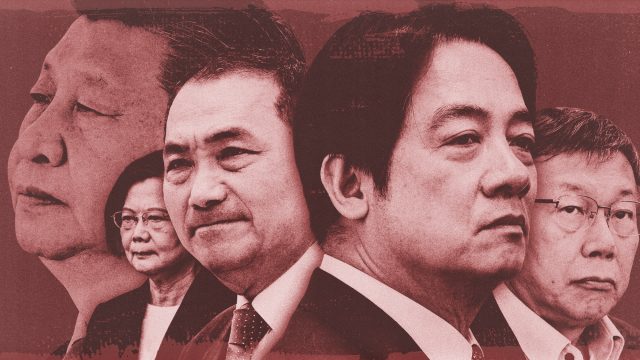
Taiwan is due to hold a presidential election on 13 January and nations around the world will be awaiting the outcome with keen interest.
The current president, Tsai Ing-wen of the Democratic Progressive Party (DPP), must step down after completing two terms, and whoever wins the race to succeed her will have major implications for both domestic and global politics.
The overarching issue remains China’s claim of sovereignty over the island and its 23.5 million population, something all the “major parties running for president reject”, said The Guardian. But there are “key differences between them” and the relationship they would form with Beijing, and that could lead to “vastly different climates next year”.
What the papers said
The election will determine Taiwan’s “cross-strait policy for the next four years” and comes after “ramped up military pressure” from Beijing. This was summed up by President Xi Jinping’s direct New Year message, in which he said the island would “surely be reunified” with China, said the BBC.
For the Chinese government, the “priority” is to ensure the ruling DPP is “kicked out of office”, said The Guardian. The party and President Tsai have “bolstered cooperation” with the US, said Al Jazeera, welcoming numerous American politicians to the island.
Her potential successor, the current vice-president Lai Ching-te, who has also visited the US, is likely to continue this trend and could “further distance Taiwan from Beijing”. He is the current favourite to win the election, and a victory for him could “rankle” Xi’s government and increase pressure in the form of military activities around the island.
Beijing sees the DPP as a “radical separatist group”, said The Economist, and has sought to influence Taiwanese citizens and be seen “as a liberator, not an invader”. Opposition parties too have criticised the DPP, particularly by suggesting the party is “trying to stamp out Chinese culture” and “de-sinicise” school students. This was after footage of an angry teacher of Chinese literature in Taipei went viral, accusing the government of cracking down on the “classical Chinese texts in the high-school curriculum”.
The DPP currently leads the polls, but remains only just ahead of the “Beijing-friendly Kuomintang (KMT)”, said Politico. The KMT is keen to “shake off a reputation of being reflexively pro-China” but wants to maintain an “accommodating relationship” that will potentially lead to better prospects for Taiwan. It accuses the DPP of “widening distrust” due to its frosty relationship with Beijing.
The KMT’s candidate for the election, Hou Yu-ih, has said a vote for him is a “vote for peace over war”, according to The Guardian, with Beijing saying the same.
Meanwhile, Ko Wen-je of the Taiwan People’s Party is running on the “largely undefined” middle ground, claiming he would “be better at talking to both the US and China” and would improve Taiwan’s defences.
What next?
Foreign minister Joseph Wu wrote in The Economist that Taiwan is documenting China’s alleged attempts to interfere in the election and will publish its analysis soon after the vote.
“Should China succeed in shaping the outcome of voting in Taiwan, it will apply the same tactics to other democracies to promote its preferred international order,” Wu wrote.
He urged international observers to pay more attention to China’s efforts to undermine Taiwan’s democracy through influence and disinformation campaigns, as well as cyberattacks.
No matter the outcome of the election, the US will “stress the need for dialogue and avoiding military confrontation” with Beijing, said Al Jazeera. President Biden has verbally committed that the “US would defend Taiwan” in an instance of military conflict with Beijing, but has likewise made comments to “reiterate” the “status quo”.
It has led to Taiwanese citizens “asking questions about US commitment” in the event of war, with a sense that trust in its Western ally has “declined”, potentially pushing voters towards favouring a more cooperative approach with Beijing. Either way, it leaves the Taiwanese people firmly “in the crosshairs of two superpowers”.
The identity of the new Taiwanese president will have major implications for domestic and global politics