
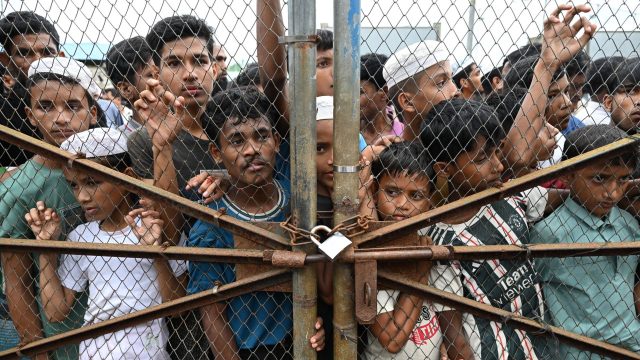
Myanmar’s Rohingya Muslim minority has welcomed the International Court of Justice’s ruling that the country committed genocide against it, a historic decision that could pave the way for wider changes in international law.
The UN’s top court found that Myanmar acted with the “intention to destroy” a substantial part of the Rohingya population and had engaged in “extensive destruction of evidence” to conceal its crimes. It is the first time a state has been found guilty of committing genocide, rather than failing to prevent it.
“I celebrated with tears of joy,” a Rohingya woman living in a Bangladesh refugee camp after fleeing Myanmar told Al Jazeera. “For the first time, the world acknowledged what happened to us.”
What did the commentators say?
On the face of it, the ruling offers a lot to the Rohingya, said University of Adelaide lecturers Juliette McIntyre and Adam Simpson on The Conversation. The ICJ ordered Myanmar to “allow the return of displaced Rohingya”, ensure that destroyed or confiscated property is replaced or restored, and offer “physical and psychological rehabilitation to victims”.
But “despite the legal victory”, the Rohingya “remain in perilous conditions”. More than a million live in “worsening conditions” in refugee camps in Bangladesh. Those still in their homeland in Myanmar’s Rakhine State “continue to experience torture, abuse and discrimination” both from the military and from the Arakan army, a separatist militia that Myanmar considers a terrorist group.
It is unlikely that the Myanmar government will “quietly” accept the ICJ verdict, and the court “has no mechanism to enforce its rulings”, said Jeremy Bowen, the BBC’s international editor. The judgment vindicates the suffering of the Rohingya minority but it will not automatically alleviate “the miserable and dangerous living conditions they have been forced to endure for almost a decade”.
Nevertheless, “for refugees who have spent nearly a decade waiting for justice”, the ruling raises their hopes of “accountability for those responsible for the atrocities”, the “restoration of their rights”, and, most of all, “a safe and dignified return” to their homes.
The Rohingyas’ “long struggle for justice isn’t over” and will need “global support to succeed”, said Preeti Jha in Prospect. The international community’s “response” will be an interesting “test”, said The Guardian in an editorial. There are already “grave concerns” that the US will impose sanctions on the ICJ’s judges, as it did on the International Criminal Court.
What next?
The ICJ judgment will “send a shiver through Israel’s legal and military establishment”, said Paul Nuki and Sarah Newey in The Telegraph. The court is also considering a genocide case brought against Israel for its actions in Gaza and, notably, its Myanmar ruling blows apart the “assumption” that a “single smoking gun” is required to establish genocidal intent. Israel rejects the allegation.
Legal experts in Israel and beyond had long thought the burden of proof to classify the state’s actions in Gaza as genocidal was “insurmountable” in the absence of a Nazi-style “final solution” document. However, an ICJ ruling on Gaza is thought to be “still a decade or more away”.
ICJ cannot enforce its rulings so victims will need global support to gain justice