
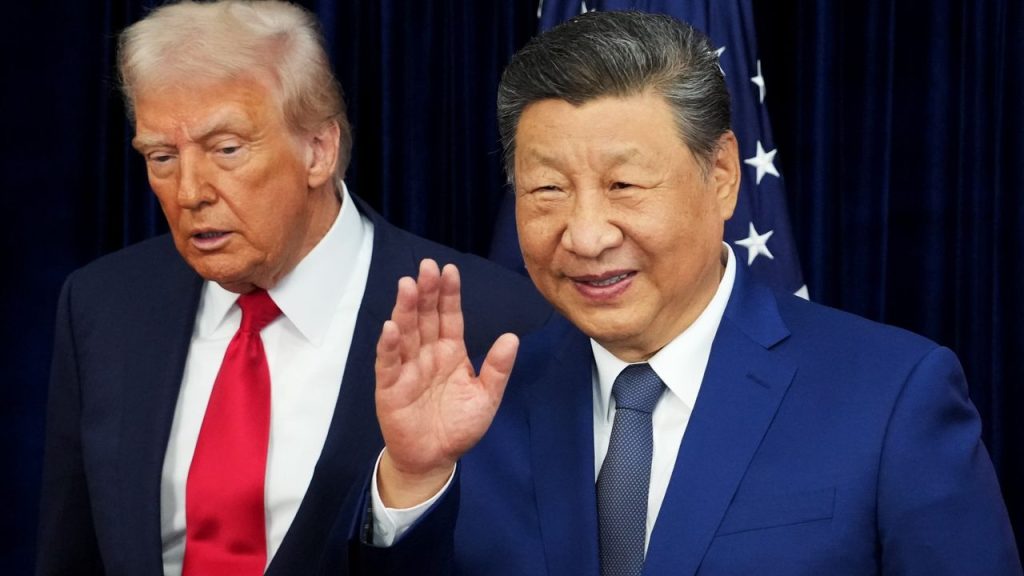
Plans for a summit between President Donald Trump and Chinese leader Xi Jinping were underway before America went to war with Iran. That war delayed the meeting, now set for next week, and will overshadow other issues the two leaders planned to discuss.
The war has “significantly altered” the agenda for the Trump–Xi summit and could be a “major obstacle” to resolving trade issues between the two countries, Lyle J. Goldstein said at Responsible Statecraft. The “tensions are palpable” in part because China has reportedly shared weapons and intelligence with Tehran, but both countries want to keep the world economy “from careening off the looming cliff.” Trump and Xi may be forced to work on “pragmatic compromise in order to keep their rivalry under control.”
Trump “may want to temper his expectations” for the summit, Jacob Dreyer said at The New York Times. China once saw presidential visits as “global validation” for its rise but now has “begun to chart its own course” as its leaders realize their country has “learned all it can from America.” Trump wants to improve the U.S.-China relationship but “maintaining a tense stability is about all he can hope for.”
‘A creditor-debtor dynamic’
The president has “fewer cards to play” at the summit, Brahma Chellaney said at The Hill. His choice to go to war against Iran has “boomeranged” into a “global energy shock,” with the result that a meeting intended as a “show of strength” for the U.S. president may end up being more about “damage control.”
The war has depleted American munitions and weakened the economy, accelerating a shift in the U.S.-China relationship from a “rivalry of near-peers” to “something closer to a creditor-debtor dynamic.” Trump’s question in Beijing is “not whether he can strike a deal,” but rather “what he will give up to get one.”
Trade issues “will take center stage at the summit,” Patricia M. Kim said at Brookings. Trump and Xi likely will continue the “trade truce” between their countries, with the U.S. getting Chinese exports of rare earth minerals and sales of American farm products, while China gets tariff and regulatory relief from Washington. A summit “focused on stability” could lead to more cooperation on security and trade or could turn the Washington-Beijing relationship more frosty if “Trump walks away dissatisfied with the results of the trip.”
Breakthroughs unlikely
The number of Americans with favorable views about China has “ticked up,” said Pew Research Center, nearly doubling since 2023 to 27%. Fewer Americans say China is an enemy, but most “still see it as a competitor.”
The summit is “unlikely to deliver decisive breakthroughs” between the U.S. and China, Yingfan Chen and Dingding Chen said at The Diplomat. Its significance will not be a “transforming” of the dynamic between the two countries but instead “maintaining a minimum level of predictability” in the relationship so the competition between China and America can continue “within constraints the system can absorb.”
Iran war will overshadow the meeting with Xi