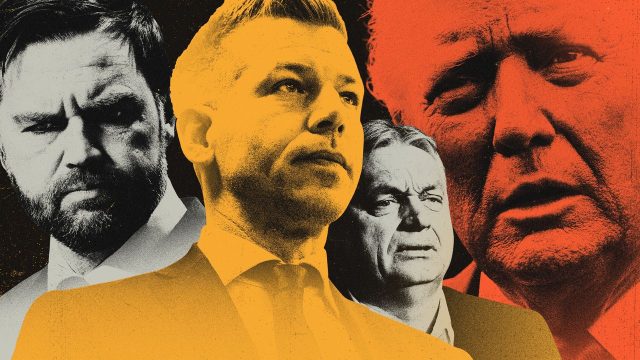
Viktor Orbán once described Hungary under his premiership as “petri dish for illiberalism”. The end of his 16-year reign is, for many in the West, a sign that his Maga-style politics is on the way out. But Hungary’s future under new prime minister Peter Magyar, once a staunch Orbán loyalist, is far from certain.
Magyar only joined the centre-right Tisza party in 2024. “He has built an opposition movement at amazing speed,” Gábor Győri of Budapest think tank, Policy Solutions, told The Guardian. “Never”, since the fall of Soviet-based communist rule in 1989, has Hungary “seen a party rise this quickly”.
What the commentators said?
“Short of offering a bonanza of free oil,” it’s hard to see how Donald Trump could have done more to “shore up” Orbán, his “closest ideological ally in Europe”, said Oliver Moody and Michael Evans in The Times. He promised to strengthen Hungary with “the full economic might” of the US, and even parachuted J.D. Vance into Budapest to stand at Orbán’s side. But Hungary’s rejection of Orbán is a reflection of the broader sentiment across Europe, as “the populist right is either distancing itself from Trump or suffering by association with his brand”.
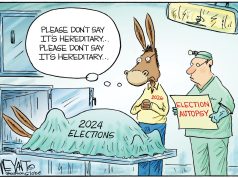
“There is no question that Orbán’s downfall is a loss for Maga-style politics,” said Alexander Burns on Politico. But “the sharpest message from Budapest should be for the Democrats” in the US. Orbán’s defeat is “a new triumph for a particular brand of disruptive politics”, in which reformists “launch new parties and blow up old ones, winning elections by rendering traditional political structures obsolete”. Currently, “there is no equivalent figure among Trump’s American opponents”.
There are warnings, too, for those in Europe who see Magyar’s win as a victory for liberal politics. Orbán’s fall “does not mean that Hungarian voters have rejected his tough-on-immigration, pro-natalist or Brussels-critical policies”, said The Telegraph’s deputy comment editor Michael Mosbacher. A former member of Orbán’s Fidesz party, Magyar is a social conservative who “on effectively every issue” comes down “firmly on the right of European politics”. Orbán may have been the EU’s bête noire over financial support for Ukraine, but his successor has said in the past that he is against sending weapons to Kyiv and opposes Ukraine’s push to join the EU.
What next?
“Despite more than two years of campaigning and a 240-page election manifesto, the details of what exactly Magyar will do remain vague,” said The Guardian. “He is very much a dark horse,” Győri told the paper. “We don’t know much about him.”
“There are both question marks and exclamation marks” about the consequences of Magyar’s victory, said Ákos Hadházy, an independent Hungarian MP and a long-time critic of Orbán. “But Hungarian society has accepted this.”
Assuming it a rejection of Maga-style politics might be too simplistic