Yassin El-Moudden (The Guardian) writes about another sign of resilience in the face of adversity. Offering a lucid view of the healthy trajectory of Cuban cinema, El-Moudden states, “With the island back in Washington’s sights, the Screen Cuba festival is taking UK audiences beyond the blockade.” [ Screen Cuba runs until 28 March in London and will be on tour in England and Wales.] Read the full article at The Guardian.
At a packed trade union meeting in Havana, one of the workers calls out management’s delays in sending a technician to repair faulty machinery. Perhaps, he suggests, the required specialist has yet to be born. Another labourer called Lina – one of the few women employed at the site – stands up to criticise the dilapidated state of the dockyard.
All the while, a bourgeois theatre director named Oscar looks on in search of characters for his next creative project. This is Hasta Cierto Punto (“Up to a Certain Point”), Tomás Gutiérrez Alea’s 1983 film interrogating the state of gender relations in post-revolutionary Cuba.
If the extent of sold-out screenings at the Screen Cuba film festival is anything to go by – of which Hasta Cierto Punto is one – then popular interest in the Caribbean country shows little sign of abating, not least in the current context of aggressive US intervention here and elsewhere. [. . .]
Washington’s ire toward its island neighbour is, of course, nothing new. Last October, for the 33rd year in a row, the UN general assembly once again adopted a resolution condemning the US embargo on Cuba. These sanctions have been in place since the early 1960s, making them some of the longest-running in modern history.
In the shadow of an imperial hegemon and with severe restrictions on its ability to trade and access resources, Cuba may appear as an enigma to audiences curious about the type of cinema that has emerged from such conditions. [. . .]
Now in its third year, Screen Cuba hopes to draw the attention of UK audiences to a film culture that nurtured such works as Humberto Solas’s 1968 triptych epic, Lucia, in which three big historical events are presented through the lives of a female protagonist in differing formats, but with the same name.
Dodie Weppler, one of the organisers of Screen Cuba, acknowledged that “it’s very rare for people to be able to see the films” and described the US blockade as a “catastrophic siege”.
“It has affected us [with] getting films sent electronically. You have outages in electricity [so] you start having a discussion on WhatsApp and then [the] electricity is out.”
Restoration and distribution are also at the forefront of the festival’s engagement with Cuban film-makers, with the latter being a particularly underrated point of consideration in cinema more generally. [. . .]
Tania Delgado, the director of the Havana film festival and a former vice-president of ICAIC, said: “I like to think that Cuban cinema is a very honest one, but at the same time, very poetic. When you see Cuban cinema, it’s very strong in terms of images, in terms of topics.” [. . .]
As Delgado puts it: “We have a very hard embargo – blockade – and it affects everything, cinema is not an exception. We are a very resilient people and if anything, we are looking for solutions, and we are looking for maintaining the creation … [of] cultural life in Cuba … and what we cannot lose right now is the hope.
“The world is in a very complex situation and Cuba is not an exception. I like to think about all the solidarity that we bring to everybody that needed us, to be there to do something, and art and culture is not an exception within that.” [. . .]
For full article, see https://www.theguardian.com/film/2026/mar/24/cuban-cinema-comes-out-fighting-trump-threats-screen-cuba-festival
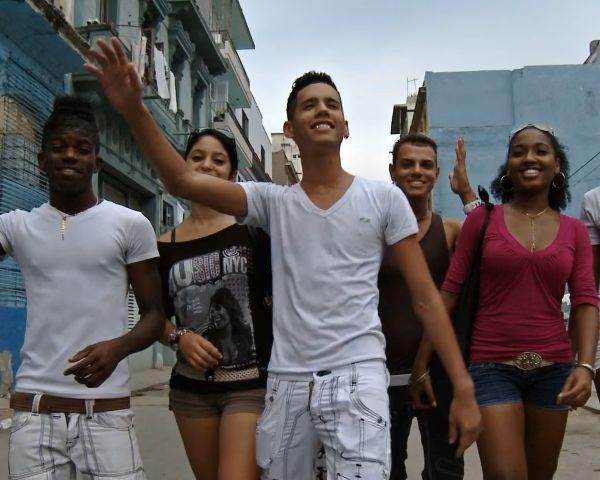
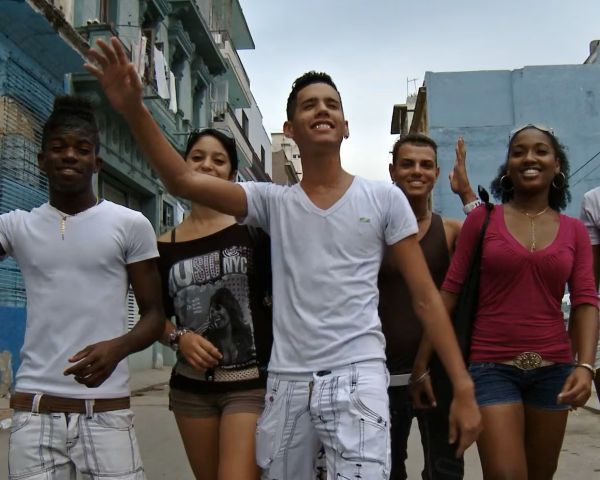
[Image above by Eirene Houston: a still from Life Is Dance, directed by Eirene Houston and Hugo Rivalta.]
Yassin El-Moudden (The Guardian) writes about another sign of resilience in the face of adversity. Offering a lucid view of the healthy trajectory of Cuban cinema, El-Moudden states, “With the island back in Washington’s sights, the Screen Cuba festival is taking UK audiences beyond the blockade.” [ Screen Cuba runs until 28 March in London and will