
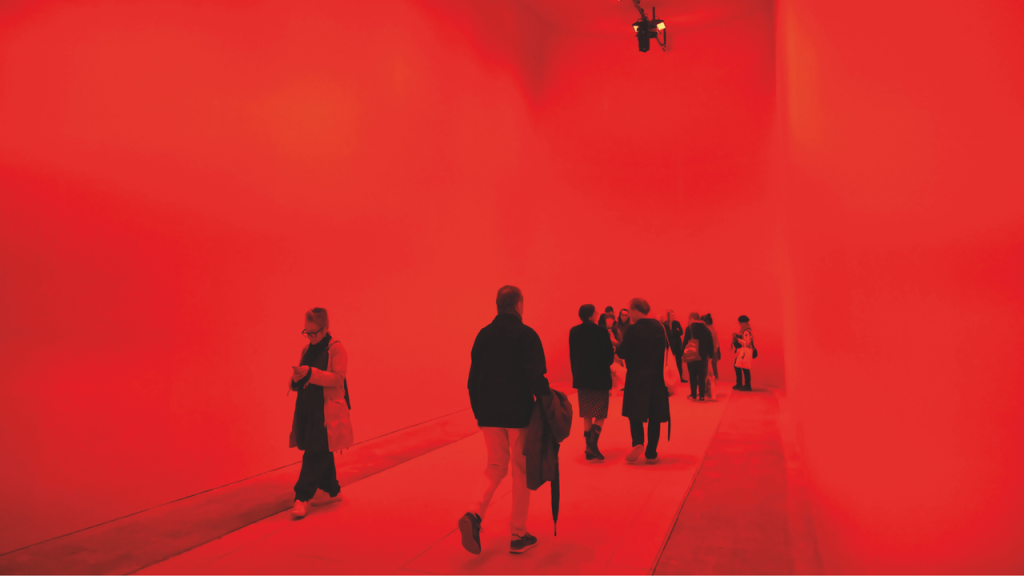
“The Venice Biennale is the world’s most prestigious international art exhibition,” said Katrin Bennhold in The New York Times. Every other year, a colossal central show aspires to distil the current state of contemporary art, while the nations of the world stage individual exhibitions in designated pavilions, each competing for the coveted top prize. Elsewhere, a host of satellite exhibitions take over the city’s museums and public spaces.
In 2026, however, the art has been overshadowed by “everything else”. For one thing, the main event’s curator, Cameroon-born Koyo Kouoh, died unexpectedly last May. Then Russia – absent since 2022 – returned to the fold. In response, the biennale jury said it wouldn’t award prizes to countries accused of war crimes – there were protests against Israel too – and resigned in protest.
Yet some of the exhibits at this “massive mess” of a biennale still deserve a visit, said Eddy Frankel in The Guardian. The national pavilions are often interesting, and “some of them are even quite fun”. Denmark’s offering incorporates “a hi-tech sperm bank”; “a singing turd” is featured at Luxembourg’s; the Japanese show encourages visitors to carry around “fake babies”; and Malta’s features “a life-size chocolate Russell Crowe”.
Weirdest of all is Florentina Holzinger’s Austria pavilion, “a confrontational, stomach-turning” performance piece, in which naked female performers swim in urine and circle an artificial lake on jet skis. Ridiculous as it sounds, it’s “brilliantly obscene and vile” – and, beneath the wackiness, a scary portent of ecological catastrophe.
Russia’s display, on the other hand, is “wretched”, said Jackie Wullschläger in the Financial Times. I went in expecting a “whitewash” and was greeted with a “limp” display of flowers, some “embarrassed folk music performers” and insistent “offers of alcohol”. Nor is Lubaina Himid’s British pavilion up to much. Her paintings of “generic black figures characterised by profession (chef, tailor, gardener)” feel “lacklustre” and “predictable”.
The central exhibition, In Minor Keys, which foregrounds artists from the “global south”, aims to celebrate quiet pleasures and beauty in the face of tragedy, said Wullschläger. The idea is nice, but the overall quality is “poor”. Some exceptions aside – not least Theo Eshetu’s uprooted olive tree mounted on a revolving plinth, “superimposed with a film showing its earlier fullness” – it’s the same old melange of “identikit hanging textiles” and anti-colonial railing. I left feeling “alienated, hectored, patronised and bored”.
It’s not all bad, said Hettie Judah in Apollo. The Chilean artist Alfredo Jaar has his own room, “a vast lozenge of space flooded with disorienting red light”; at its end is a tiny metal cube forged from rare minerals necessary for modern technological gadgets. It’s “a temple to callous, extractive greed” and its “catastrophic human cost”. There are other highlights – but, true to its title, this is a show of “minor encounters” not “revelations”. And its very scale, alas, drowns out the “subtleties”. The show could have done with more “editorial rigour”.
‘Confrontational’ works drawing attention at this ‘most prestigious’ international exhibition