“So, about all that Venezuelan oil,” said Rogé Karma in The Atlantic. In recent days, President Trump has settled on a new rationale for ousting
Nicolás Maduro, that his primary goal is not to liberate Venezuela’s people from tyranny but to liberate the estimated 300 billion barrels of crude oil sitting beneath their country. Trump promised that American oil firms will soon “go in” to Venezuela—which he will “run” for the foreseeable future—and start generating great gobs of money. Setting aside the morality of using military force to plunder a weaker nation, Trump’s plan is “delusional” on its own terms.
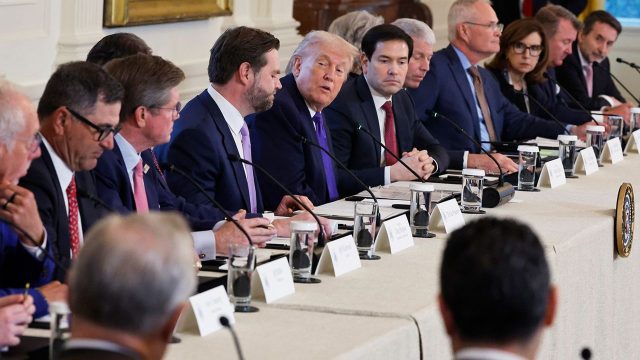
Venezuela’s oil sector lies in ruin after two decades of kleptocratic rule. As top oil executives gently explained in a White House meeting this week, rebuilding it would cost perhaps $200 billion over 15 years, and most of Venezuela’s oil is “thick, low-quality petroleum” that costs about $80 a barrel to extract and refine. That’s a problem with oil now selling for about $60 a barrel. Perhaps those hurdles could somehow be cleared, but “unlocking a trove of foreign oil” would drive prices even lower, shrinking U.S. producers’ profits and pushing some into bankruptcy. Let’s hope someone in the administration has a clearer vision of what we’re doing in Venezuela, because Trump’s own “obsession” with grabbing its oil “makes little sense.”
If Trump wants Venezuela’s crude, said Thomas L. Friedman in The New York Times, then he has to “revive Venezuela’s democracy.” As Exxon CEO Darren Woods put it this week, Venezuela is simply “uninvestable” in its current state of political instability. Trump, predictably, threatened to “keep Exxon out” of Venezuela as punishment for Woods’ impertinence, but why would any company invest in a nation where the people who stole the last election—and who nationalized Exxon’s assets in 2007—“are being kept in power?” Seventy percent of Venezuela’s 30 million citizens supported the opposition in the last election, said Heather Williams in The Hill, and they share Americans’ fondness for guns. If U.S. oil companies were to swoop in, with the acquiescence of Maduro henchwoman turned interim president Delcy Rodríguez, they’d meet “resistance, sabotage, and violence.”
Trump is wise to take a “go-slow approach,” said Jason Willick in The Washington Post. For now, yes, Rodríguez is Venezuela’s head of state. But Trump will soon meet with opposition leader María Corina Machado, and Rodríguez is already releasing political prisoners—likely because Trump warned that she’ll pay “a very big price, probably bigger than Maduro,” if she defies U.S. wishes. It’s “too early to say” if our “new leverage” can by itself fulfill the plan Secretary of State Marco Rubio outlined last week: first stability, then recovery, and finally a transition to democracy. But it’s a “sober and judicious” approach, given that the alternate would likely be a full-scale, Iraq-style military occupation.
It’s “delusional” to think the regime’s thugs will “meekly” cooperate, knowing Rubio’s plan ends with their destruction, said John Bolton in The New York Times. Indeed, pro-regime militias were setting up roadblocks this week to hunt for Americans and dissident Venezuelans. Unless Trump wants these abuses to continue, all with his implicit backing, he needs to “reverse course” and push for full “regime change.” Would this destabilize the country, requiring further U.S. military involvement? Probably. But “some level of turmoil” is inevitable, and Trump needs to realize that his “grand design” of seizing Venezuela’s oil while shirking the work of rebuilding Venezuela’s society was “simply fantasy” from the start.
Oil and democracy are both on the table