
A R4.7-billion green hydrogen project promised jobs, industrial development and investment for communities in the Vaal Special Economic Zone (SEZ).
But more than two years after it was announced as part of South Africa’s evolving energy transition, the site where the Hydrogen Valley Innovation Hub was meant to rise remains undeveloped.
When Oxpeckers visited the earmarked site in Rietspruit, about a kilometre from Sebokeng, in February and March 2026, there were no construction vehicles, fencing or signs of development. Instead, the land lay open and undisturbed, with crops growing where the flagship green-energy facility had once been promised.
The project forms part of the government’s broader Hydrogen Valley strategy, which aims to position South Africa as a global player in green hydrogen (GH2 ), a zero-carbon fuel produced via electrolysis powered by renewable energy.
The innovation hub was widely publicised in 2023 as a “first on the African continent”. It forms part of a government-led SEZ in Gauteng designed to revitalise the Sedibeng district – including Emfuleni, Midvaal and Lesedi municipalities – into a green-energy industrial and agricultural hub.
It was expected to begin operating in January 2025 and to create up to 400 jobs in its first year, in a region afflicted by steel mill closures and job losses.
The innovation hub is reportedly anchored by a hydrogen fuel-cell manufacturing facility – known as Project Phoenix – developed by Mitochondria Energy, an independent power producer founded in 2012 by entrepreneur Mashudu Ramano, who owns 75.5% of the company. The Industrial Development Corporation (IDC) holds the remaining 24.5%.
Oxpeckers first contacted Mitochondria Energy on February 5 2026, requesting an on-camera interview with Ramano at the site of the development. On February 6, the company’s stakeholder engagement manager, Charles Ramano, indicated that the team would follow up.
Further attempts to secure the interview and requests for comment until March 10 were met with silence.
When the #PowerTracker team visited the site on February 19 and March 9, the land earmarked by the Emfuleni local municipality for the development of the project remained untouched.
Oxpeckers contacted the municipality on February 23 via email to request an on-camera interview with municipal representatives. There was no response. Follow-ups were made by phone and email, with the last attempt on March 12.
Despite an undertaking by acting assistant manager for media relations, Mojalefa Radebe, to review the questions and respond, no reply had been received by the time of publication.
Asked about how much funding the IDC has invested in the project, spokesperson for the corporation, Tshepo Ramodibe, said he could not disclose the exact amount due to client confidentiality.
The IDC’s involvement in the project was only limited to the feasibility study that it provided “considerable funding” for, said Ramodibe.
On February 27, during the launch of a GH2 research facility at the University of the Witwatersrand, Oxpeckers spoke to Minister of Electricity and Energy Kgosientsho Ramokgopa about the project.
He was asked about the government’s involvement and why, despite billions of rands announced for hydrogen investment in the Vaal, no development appeared to have taken place.
“There is no green hydrogen project that the state has physically invested in,” Ramokgopa said. “What we do is create a necessary climate policy instrument to ensure that the project does happen. The private sector will make announcements about some investment, in this instance green hydrogen, without necessarily having done a more detailed feasibility study.”
Ramokgopa acknowledged that the government is working to reduce the risk of projects failing to materialise.
“We are trying to reduce the failure rate and ensure that the conversion becomes real,” he said, adding that a GH2 conference planned later this year would showcase projects that have progressed along the value chain.
According to data collated by the Oxpeckers’ #PowerTracker project, about 20 GH2 and hydrogen-related projects have been identified across South Africa. Only a small number – including Sasol-linked projects in Secunda and pilot projects in Gauteng and Limpopo – show visible progress, while many remain at feasibility, pilot or announcement stage.
#PowerTracker has mapped nine of them. They are concentrated in Mpumalanga’s coal transition zones and the Northern Cape’s renewable energy corridors but none of them is yet operational.
During his address at the Wits launch, Ramokgopa pointed to the government’s Green Hydrogen Society Roadmap and South Africa’s 2023 investment strategy, which identify GH2 as a high-potential industrial sector.
But he also acknowledged the challenges of turning announcements into functioning projects. “These things are expensive and that capital must be patient,” he said. Permitting, licensing and financing remain major barriers to construction, he added.
Tlabole Masike, a researcher with the Vaal Environmental Justice Alliance (Veja), said the group only became aware of the GH 2 project through its own research: “The first time we saw the developer was in 2023 at a hydrogen summit. That was the first and last time.”
Mduduzi Shabalala, Veja’s programme manager, said a legally required public participation process has yet to take place and the lack of consultation has deepened mistrust among local communities.
“There is a lot of fear. The development is detached from workers and host communities. People don’t know anything about it,” he said.
Nthabiseng Mofokeng from Sebokeng, said she had heard about plans for GH2 development but did not know they were linked to the Vaal SEZ.
“It’s my first time hearing about it but I’ve heard about other projects coming to our community,” she said, referring to talk among residents about a possible airport and job opportunities.
Another resident, Leohang Pitso, said preparing communities for upcoming projects will help them acquire the necessary skills in time for the project’s launch. And as ward councillors are among the few people who are privy to information before it is made public, she said they are well positioned to help communities prepare for highly technical projects like the hydrogen valley.
“Maybe we need skills development so that every member of the community can be involved. The ward councillor should let us know what skills are needed now so those who want to go to school know exactly what to study,” said Pitso.

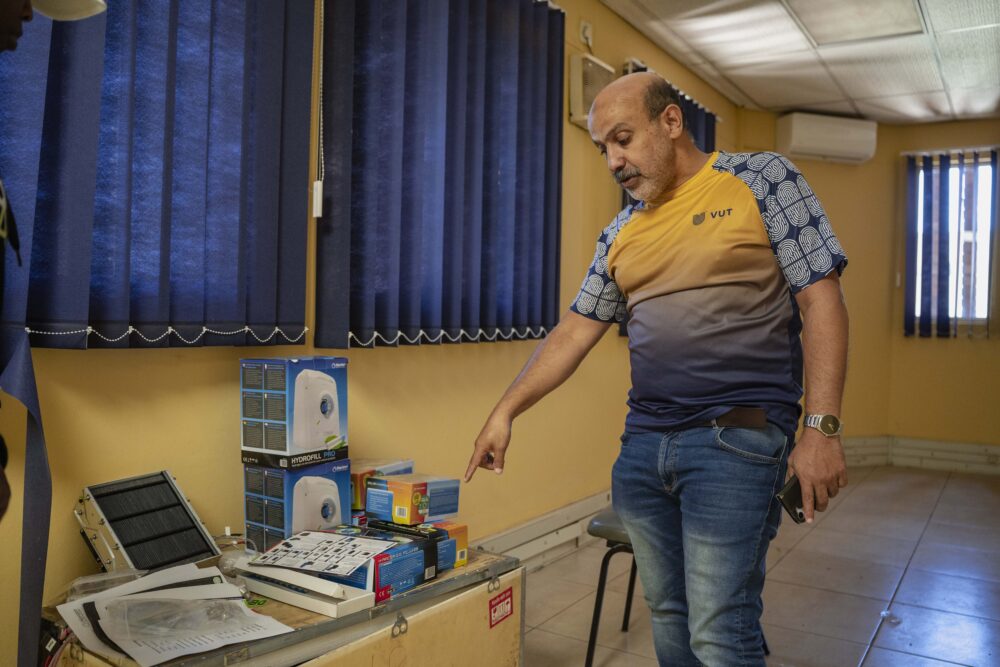
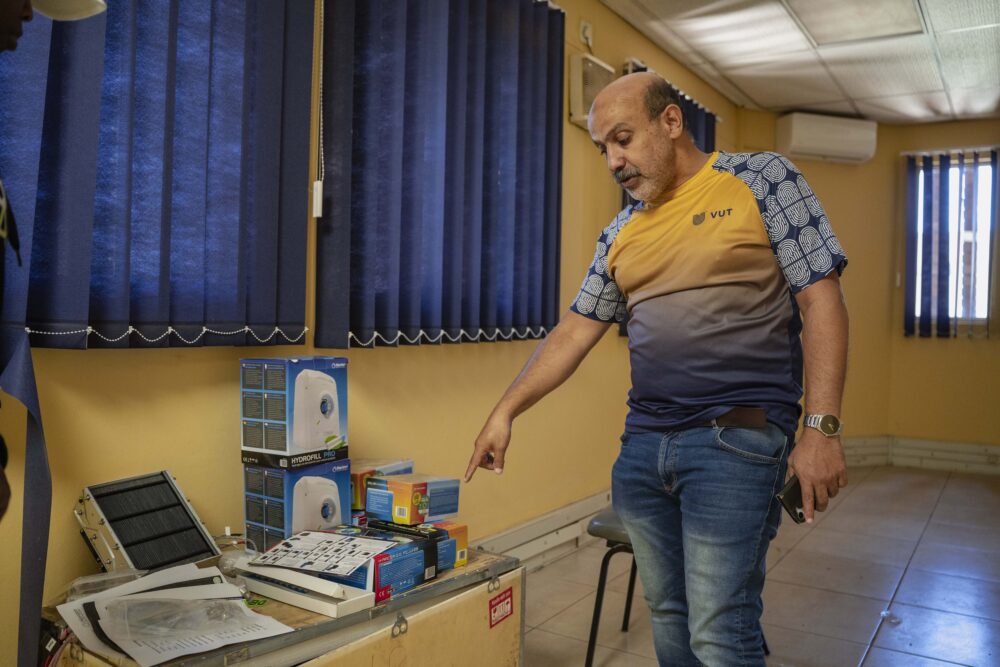
The Vaal University of Technology (VUT) has established a Standard Bank Green Hydrogen Centre in Sebokeng aimed at developing technical skills in anticipation of development of the Vaal hydrogen valley. “With any technology you need people who understand how to operate and maintain it,” said professor Khaled Abou-El-Hossein, executive dean of VUT’s Faculty of Engineering Technology. “Where are those skills going to come from? We realised universities need to start preparing now.”
The centre includes demonstration models and educational kits designed to teach students about hydrogen systems. Abou-El-Hossein acknowledged the programme is still in its early stages and requires further investment. “The challenge is about skills – for technicians, engineers and specialists in this domain,” he said.
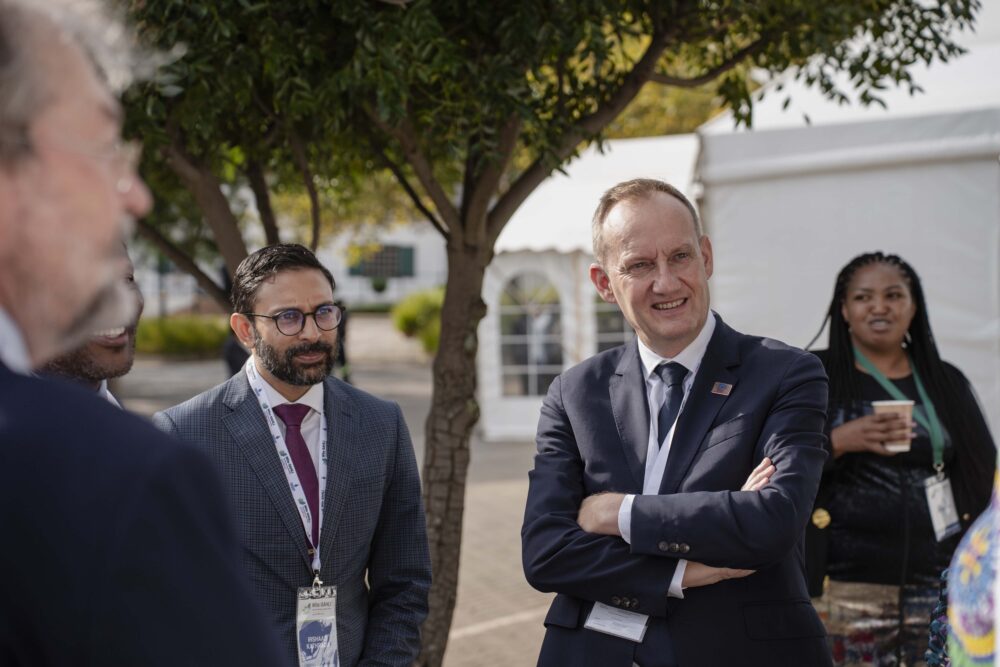
At Wits University, the GH2 research facility was launched in partnership with Air Liquide, a global industrial gas company. Nicolas Poirot, the chief executive of Air Liquide for Africa, described the project as a “living laboratory”. “We are bringing technologies, knowledge, skills and capital so that students and researchers can engage directly with the hydrogen economy.”
The facility uses solar energy to power an electrolyser that splits water into hydrogen and oxygen. The hydrogen is then stored and later converted back into electricity using fuel cells.
The project demonstrates the full GH2 production cycle. Air Liquide has invested about R100 million in the facility.
Professor Rodney Michael Genga, assistant dean of strategic projects at the Wits Faculty of Engineering and the Built Environment, said the biggest barriers to hydrogen development are technical expertise and financing.
“The barriers to entry are very high,” he said. “You need both technical capability and significant financial investment.”
The pilot facility is capable of producing about 200kg of hydrogen every three to four days, generating roughly 200 kilowatts of electricity. Genga said such systems could eventually be scaled up for industrial applications.
Another partner in the project, the Localisation Support Fund (LSF), helped finance the front-end engineering design. Irshad Khatrana, the chief executive of the LSF, said South Africa risks falling behind if it fails to build hydrogen skills.“We estimate that within the next 25 years about a fifth of global energy generation could come from hydrogen.”
*This investigation by the Oxpeckers #PowerTracker Project was supported by the New Economy Hub and Ford Foundation.
A flagship green hydrogen project is positioned to support industrial development in the Vaal — but there’s no sign of it and little awareness among the communities it is meant to serve