What happened
After eliminating multiple Russian demands from a peace plan backed by President Trump, U.S. and Ukrainian negotiators agreed this week in Geneva on the framework for a deal to end the Ukraine war—but Russia’s acceptance appeared unlikely. The framework is a heavily revised version of the 28-point peace plan that emerged last week from a secret meeting between White House special envoy Steve Witkoff, Trump son-in-law Jared Kushner, and Russian negotiator Kirill Dmitriev. That plan set off a firestorm when it was leaked, with Ukrainian and European officials and many U.S. lawmakers criticizing it as a surrender requiring no concessions from Moscow. It would have forced Ukraine to cede not only Russian-occupied regions but territory it still controls in the Donbas, reduced and capped the size of its military, and barred Ukraine from NATO membership and having NATO peacekeepers on its soil. Trump issued an ultimatum to Ukrainian President Volodymyr Zelensky to accept the deal or “continue to fight his little heart out” without U.S. support.
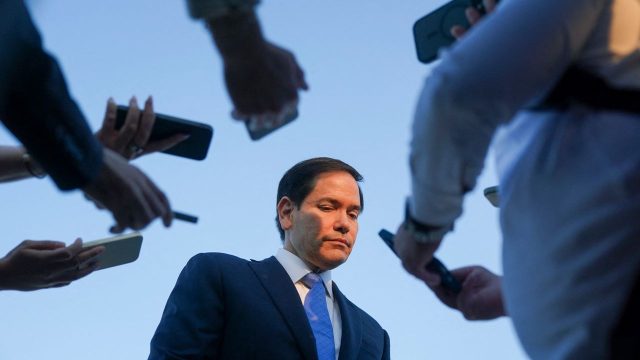
The ground soon shifted, as Secretary of State Marco Rubio met with Ukrainian and European negotiators in Geneva and removed nine of the most objectionable points from Russia’s plan. Rubio said he was “very optimistic” about the new, 19-point framework, which leaves the final territorial lines open to further negotiation. Zelensky asked to meet directly with Trump “as soon as possible” to lobby against any land concessions to Russia and finalize the amended plan. Russian Foreign Minister Sergey Lavrov said any meaningful changes to understandings reached between Putin and Trump would create “a fundamentally different situation.”
What the columnists said
The only explanation for this confusing series of events is that “rival factions” within the White House fought over the peace plan “and made a mess of it,” said Nick Catoggio in The Dispatch. Witkoff, Kushner, and Dmitriev “essentially laundered a Kremlin Christmas wish list,” triggering an uproar. Rubio then told a bipartisan group of senators that the 28-point plan came from Russia and was not the U.S.’s proposal. The secretary of state worked with Ukrainian and European envoys to shape a proposal that a relieved Zelensky is now endorsing while Moscow scowls.
The initial plan realized Ukraine’s worst fears, said Andrew C. McCarthy in National Review. Once again, Trump was “doing Russia’s bidding,” which became all the more obvious when he issued his “stark ultimatum” to Zelensky. Rubio was the game changer, said Jack Blanchard and Dasha Burns in Politico. When the White House cast the proposal “as a fait accompli,” he shifted the narrative, insisting Ukraine deserved a say. The longtime “Russia hawk” then forged a Ukraine friendly peace proposal in Geneva that he’s touting as the best “we have had in our entire 10 months of working on these issues.” Clearly, this “ultra-positive message was aimed at a certain Audience of One.”
Zelensky handled Trump shrewdly, showing he’s learned “since foolishly sparring with him in the Oval Office in February,” said The Washington Post in an editorial. Faced with the disastrous Russian plan Trump adopted, he “remained calm and offered to negotiate.” But the likely outcome of any plan that denies Putin his main goals is that Russia will fight on “no matter the human cost.”
Trump and Putin hoped that a “weakened” Zelensky would have to swallow a bad deal, said Yaroslav Trofimov in The Wall Street Journal. Rocked by a corruption scandal that has ensnared top ministers and “sparked fury across Ukraine,” he’s on shakier ground politically than at any point during the four-year war. But that makes him actually less likely to give ground in a conflict “many Ukrainians view as existential.” Despite brutal losses, they are in no mood to surrender.
Nor is Putin about to bend, said Paul Sonne in The New York Times. He would gladly have taken as a win a “Kremlin-friendly peace plan that enshrines Ukraine’s perpetual subordination.” But he’ll also see “a failed process” as a victory if it leads Trump to “pull remaining support for Ukraine.” With his economy struggling and his troops mired in a slow advance that’s had a steep cost in “lives and matériel,” Putin’s capacity for continued war “isn’t limitless.” But he believes “time is on his side,” and his goal hasn’t shifted: He “wants to break Ukraine.”
The only explanation for this confusing series of events is that ‘rival factions’ within the White House fought over the peace plan ‘and made a mess of it’