What happened
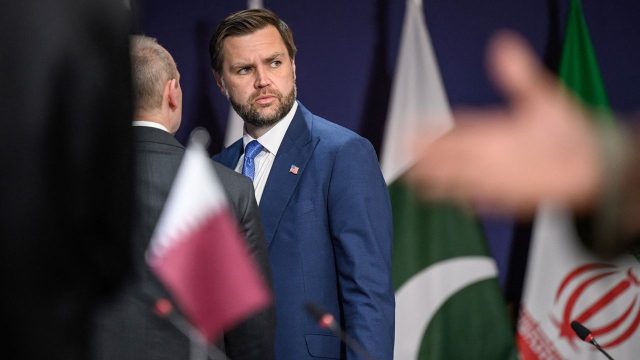
The U.S. last week removed sanctions on Iranian oil even as peace talks between Washington and Tehran appeared to descend into confusion, with the two sides issuing conflicting accounts of discussions on nuclear inspections and the unfreezing of billions in Iranian funds. An initial round of talks in Switzerland “laid a very good foundation” for a final peace deal, said Vice President JD Vance, who led the U.S. delegation. But the two sides soon sparred publicly over Iran’s nuclear program, with Vance and President Trump saying Tehran had agreed to U.N. inspections of its damaged nuclear sites while Iranians insisted they hadn’t. “They know they’re wrong,” Trump said. “They told us inside.” The two sides also disagreed over the fate of Iran’s highly enriched uranium, which the preliminary agreement states will be diluted. Iranian President Masoud Pezeshkian said his country will “never back down from the right to enrich uranium”; Trump shot back that “he better watch his mouth” or “we’ll take over the rest of the country.”
Citing “productive” talks, the U.S. waived long-standing sanctions on Iranian oil through August and cleared the way for Tehran to be paid in dollars, including by U.S. buyers. Iranian officials said steps had been taken toward the release of $24 billion in frozen Iranian assets. Vance said if assets were released, Iran would have to spend them on U.S. exports, but Iranian Foreign Ministry spokesman Esmail Baghaei insisted Iran can spend any released funds “freely.” There were also sharp divisions over the Strait of Hormuz, where hundreds of ships were stranded during the conflict. Iran said it will charge “fees” to ships using the strait in exchange for unspecified services; Secretary of State Marco Rubio said that no country can charge fees for transiting an international waterway.
In Washington, the Senate passed a resolution barring Trump from resuming the Iran war without congressional authorization, with four Republicans joining Democrats in a rare rebuke of the president. The vote came amid broad GOP skepticism about Trump’s ceasefire deal, which has been widely criticized for ceding too much to Iran while achieving none of Trump’s war aims. “The administration acts like they want a deal much more than the ayatollah regime,” said Rep. Don Bacon (R-Neb.). It “looks like weakness.”
What the columnists said
The “sweeping rollback” of U.S. oil sanctions reverses “years of pressure designed to cripple Iran’s economy,” said Anniek Bao in CNBC.com. The 60-day license issued by the Treasury Department will unlock the sale of 67 million barrels of Iranian crude floating in the strait, yielding a “windfall” of up to $9 billion for Tehran. And it reopens “Iran’s most important revenue stream.” Sanctions are unlikely to return after 60 days, said Jonathan V. Last in The Bulwark. “Once Iranian oil is in the international supply line, they have Trump over a barrel,” because he won’t be able to impose curbs on Iranian exports without “pushing oil prices up again.”
This is quite the turnaround for the Trump team, said Andrew Kaczynski and Jennifer Hansler in CNN.com. For years, Trump, Rubio, and Vance assailed deals that provided financial concessions to Iran, saying they would enrich a dangerous foe that “fuels terror.” That was their “central indictment” of former president Barack Obama’s 2015 nuclear deal, which granted Iran sanctions relief and “access to frozen assets.” Now they’re poised to hand the regime piles of dollar bills.
And for what? asked The Wall Street Journal in an editorial. Tehran has “made no serious concession on nuclear matters.” Lifting oil sanctions now will “gut” U.S. leverage and send cash flowing to the coffers of the Islamic Revolutionary Guard Corps. Iran claims some of its frozen assets have already been released, possibly $6 billion that was being held in Qatar. Even if Tehran complies with a U.S. dictate that such cash be spent only on food and medicine, “it frees up other funds for military purposes.”
Meanwhile, the preliminary deal signed by Trump treats our ally Israel as if it were a U.S. “puppet” with “no sovereignty beyond that which America grants it,” said Noah Rothman in National Review. By demanding a ceasefire in southern Lebanon, Iran has compelled America to tacitly take the side of the Iran-backed Hezbollah terrorists who use the region to strike at northern Israel. “And all in the craven pursuit of a ‘peace’ unworthy of the word.”
“Negotiating with Iran has always been an extraordinary challenge,” said David E. Sanger and Yeganeh Torbati in The New York Times, but it’s even more complex under Trump. Instead of letting negotiators quietly work toward a full agreement, he likes to trumpet “his preferred outcomes as fully negotiated side deals,” in a bid to force Iran’s hand. The Iranians have their own “spin strategy”: Deny every claim, even if it contains “an element of truth.” Some “posturing” is par for the course, but at this level it raises the question of whether the sniping “will ultimately sink the whole venture.”
Hanging over the negotiations is “an uncomfortable question,” said Aviva Klompas in USA Today. What exactly has the U.S. accomplished? The hardliners remain in power in Tehran. The fate of Iran’s highly enriched uranium is unsettled. The Strait of Hormuz, where oil shipping was uncontested before the war, is now a “bargaining chip.” Iran has “suffered enormous losses” to its military and nuclear infrastructure. But if it is financially rewarded and retains its nuclear and ballistic missile programs, it’s fair to ask “whether Tehran has once again accomplished a tactic it has spent decades perfecting: losing the war while winning the negotiation.”
This reverses years of pressure on Tehran