
What happened
U.S. trading partners, businesses and the Trump administration spent the weekend planning next steps after the Supreme Court, in a 6-3 decision on Friday, ruled that President Donald Trump’s most sweeping tariffs were unlawful. The court said Trump did not have his claimed authority to unilaterally impose import taxes under the 1977 International Emergency Economic Powers Act (IEEPA). Trump said he would use a different law to temporarily impose a 10% global tariff, then bumped that up to 15% on Saturday.
Who said what
White House officials are working to “project confidence that the legal setback” will not derail Trump’s “characteristic brinkmanship on trade,” The New York Times said. The administration insisted Sunday that its novel interpretations of the 1974 Trade Act will allow it to resurrect many of its tariffs, but that show of confidence “contrasted starkly with the chaos and confusion bubbling up around the world” about U.S. trade policy.
Notably, the Supreme Court “left a $133 billion question unanswered: What’s going to happen to the money the government has already collected in import taxes now declared unlawful?” The Associated Press said. U.S. companies “have been lining up for refunds,” but trade lawyers suggested the administration won’t make that process easy. Business leaders are also “awash in a flood” of other questions, The Wall Street Journal said, including “how to proceed without ruffling the Trump administration” or “customers seeking price breaks?”
Trump is also “insisting” that the trade and investment deals he reached with “nearly 20 countries — most with higher tariffs” than his new 15% tax — “should remain untouched,” even after the Supreme Court struck down the “‘anytime, anywhere for any reason’ cudgel” he used to secure those deals, Reuters said. Those countries, mostly in Asia, “are now disadvantaged,” said Steven Okun, CEO of APAC Advisors, to the Times. In that predicament, “do you renegotiate and drive a harder bargain since Trump’s leverage is diminished? Or keep what you have to avoid retaliation?”
What next?
Until U.S. Customs and Border Protection updates its system, “U.S. importers are still paying duties on goods” under the unlawful IEEPA tariffs, CNBC said. “Consumers hoping for a refund are unlikely to be compensated for the higher prices they paid when companies passed along the cost of the tariffs,” the AP said.
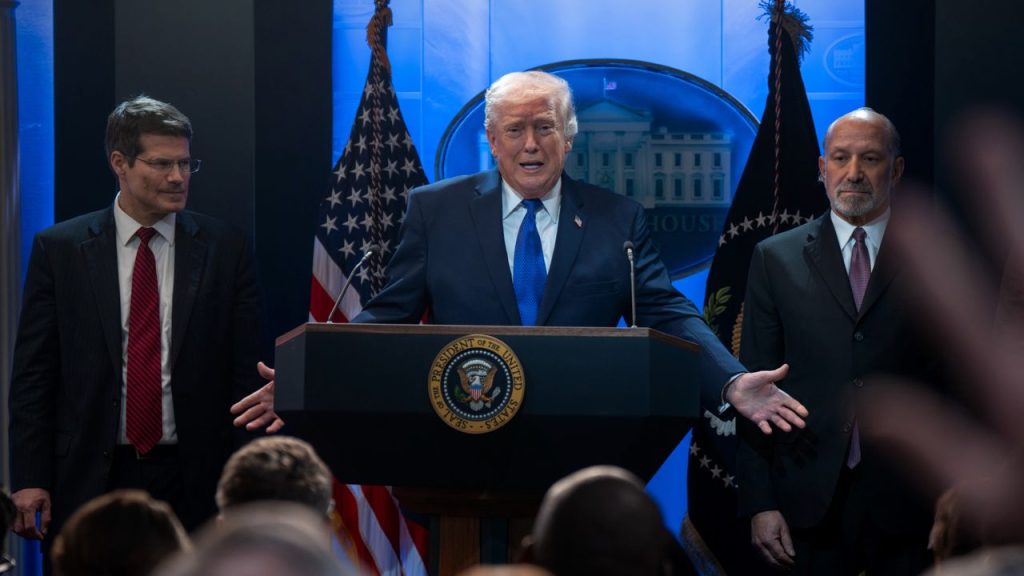
The court ruled that President Donald Trump’s most sweeping tariffs were unlawful