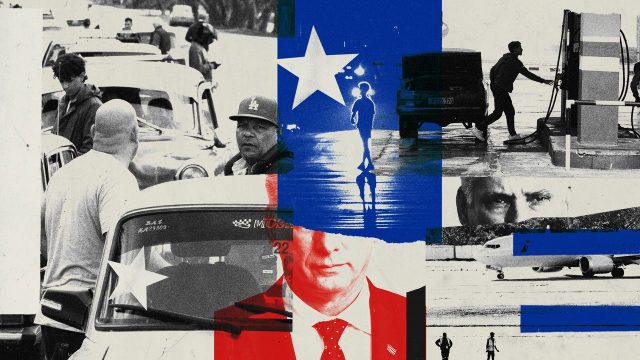
It’s been just over a month since President Donald Trump accused Cuba of undertaking “extraordinary actions that harm and threaten the United States” in an executive order that imposed strict penalties on anyone selling oil to the isolated communist nation. Since then, Cuba has plunged into a nationwide fuel crisis, with tourism plummeting and air travel crippled as the island’s already-fragile power grid suffers even more extreme outages. While the geopolitical implications of Trump’s blockade suggest an intended regime change, the experiences of ordinary Cubans point to a quickly devolving situation on the ground, with gasoline scarcity approaching critical levels.
‘Resilience’ mixed with ‘grief, sorrow and indignation’
The Trump-imposed fuel blockade has created a “severe energy crisis on the island,” said Time, leading to “rolling blackouts, a strain on hospitals and the grounding of jets.” Already “struggling” after decades of American sanctions, the situation in Cuba “rapidly deteriorated” following the January arrest of President Nicolas Maduro of Venezuela, previously Cuba’s main fuel supplier. Should Cuba’s oil needs go “unmet,” the humanitarian situation on the island could worsen “if not collapse,” said United Nations Spokesperson Stéphane Dujarric.
Cubans have faced the intensified blockade with “resilience,” said Francisco Pichon, the UN’s resident coordinator for Cuba. But that resilience has been tempered with “grief, sorrow and indignation, and some concern about the regional developments.”
Cuban state companies are set to “shift to a four‑day workweek,” said Al Jazeera, while interprovincial transport has been “dialed down.” What fuel Cuba has on hand will “protect essential services for the population” as well as “indispensable economic activities,” said Deputy Prime Minister Oscar Perez‑Oliva Fraga in televised remarks last week.
Perhaps most notable has been the impact on Cuba’s aviation industry, which has been brought to a virtual standstill amid the fuel scarcity. Cuban authorities have notified airlines that there simply “isn’t enough fuel for airplanes to refuel on the island,” said CBS News. The rationing “may not disrupt shorter regional flights,” but does present a “significant challenge for long-haul routes” from places like Russia and Canada, which represent a “critical pillar of Cuba’s tourism economy.”
International response
Cuba’s dire straits have prompted a mixture of responses from an international community struggling to balance trade and aid obligations with concern over the Trump administration’s geopolitical unpredictability. “No one can ignore” the situation in Cuba stemming from the “sanctions that the United States is imposing in a very unfair manner,” said Mexican President Claudia Sheinbaum this week at a press conference. “You cannot strangle a people like this.” While Mexico has withheld oil shipments to Cuba since the Trump administration’s threat of economic consequences, Sheinbaum’s government has deployed two naval carriers loaded with “more than 814 tons of humanitarian aid” consisting largely of “staple foods and hygiene supplies” to the island, said The New York Times.
China also supports Cuba “safeguarding its national sovereignty and security, and opposes foreign interference,” said Foreign Ministry Spokesperson Lin Jian at a news conference. Beijing will “always provide support and help to the Cuban side to the best of our ability.” Similarly, said former Canadian Ambassador to Cuba Mark Entwistle at CBC, there may “soon come a time when Canada needs to step in and send significant humanitarian aid despite the tariff threats.” And should Canada begin an aid operation, hopefully the Trump administration won’t be too “ferocious” about it.
Plummeting tourism, scrambling airlines and rolling blackouts are pushing Cuban society to the brink