
What happened
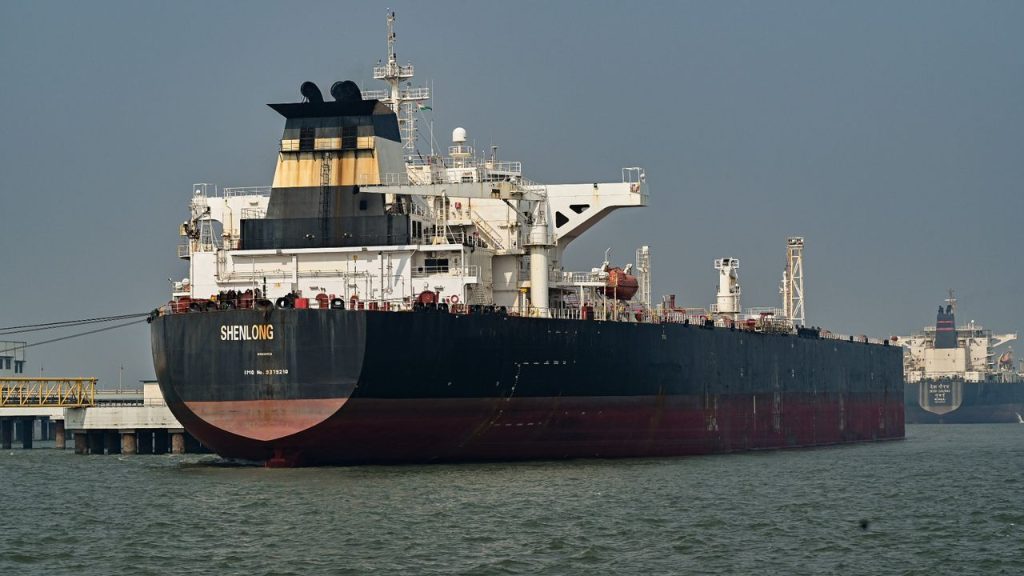
President Trump lashed out at U.S. allies this week after they rebuffed his demand to help break Iran’s blockade of a crucial oil shipping route, as the energy shock unleashed by the U.S.-Israel war with the Islamic Republic reverberated around the globe. Traffic through the Strait of Hormuz—the Persian Gulf channel that carries 20% of the world’s oil—has slowed to a trickle since the war started on Feb. 28, causing the cost of crude to spike more than 50% to above $110 a barrel. Few shipping companies want to risk a voyage through the channel: Iran has hit at least 16 ships with drones and missiles and, according to U.S. officials, has begun laying mines in the strait. Trump demanded that European nations, China, Japan, South Korea, and other countries “that receive oil” from the Middle East send warships to escort tankers, warning that if NATO allies didn’t step up it would “be very bad for the future.” No nation offered ships. “This is not our war,” said German Defense Minister Boris Pistorius. Trump then raged on Truth Social that the U.S. did not “NEED THE HELP OF ANYONE” to open the strait. “WE NEVER DID.”
Israel intensified its strikes on the Iranian regime, killing Intelligence Minister Esmail Khatib and top security official Ali Larijani, the country’s de facto ruler. Israeli Prime Minister Benjamin Netanyahu said the “crushing” strikes had created “optimal” conditions for an uprising. Trump said asking unarmed Iranian civilians to take on a regime that killed up to 30,000 protesters in January was “a big hurdle to climb.” Officials in Tehran said more than 1,300 Iranian civilians had been killed in the war so far; at least 13 U.S. personnel have died, including six crew members onboard a refueling plane that crashed in Iraq last week.
U.S. National Counterterrorism Center Director Joe Kent announced his resignation, saying he couldn’t support the war “in good conscience” and that U.S. soldiers shouldn’t die in a conflict started “due to pressure from Israel.” The departure of Kent, an outspoken member of the “America first” movement, came as warships carrying 2,500 Marines headed from Asia to the Persian Gulf, fueling speculation they could be used to seize the strait or Kharg Island, a departure point for Iran’s oil exports. Asked if he was worried that deploying ground troops might lead to a quagmire, Trump said, “I’m really not afraid of anything.”
What the columnists said
Trump’s “catastrophic” war “is the worst conceived in American history,” said Jen Rubin in The Contrarian. He was warned that a U.S. attack would lead Iran to close the Strait of Hormuz—and that attempting to topple an entrenched regime was fraught with risk. But pumped up by the lightning capture of Venezuelan strongman Nicolás Maduro, he ignored the red flags. Now the war is raging out of control; the price of gas, diesel, and jet fuel is spiking; “and the economy is teetering.” Iran’s closure of the strait isn’t just a “blow to the global economy,” said Rich Lowry in National Review. It’s “an assault against one of the foundations of American power.” Allowing it to stand would bring “intolerable” economic damage and our “national humiliation.” Trump has two options: Negotiate a ceasefire with an enemy that’s just demonstrated “de facto control of one of the most consequential waterways in the world,” or “break their grip on the strait by force of arms.”
That won’t be easy, said Sarah Young and John Irish in Reuters. The strait’s shipping lanes—which are just 2 nautical miles wide—wind past a “mountainous coast that provides cover for Iranian forces.” While Iran’s navy has been obliterated, the elite Revolutionary Guard still has plenty of ways to attack, including speedy small boats, mines, and anti-ship missiles. Getting a few ships a day through with U.S. Navy escorts would be “feasible in the short term” but hard to sustain in the long run.
Three weeks into the war, Trump is staring down “a stalemate,” said Walter Russell Mead in The Wall Street Journal. U.S. and Israeli strikes have laid waste to the Iranian regime’s military and political infrastructure. But they haven’t “broken the mullahs’ will.” As they choke energy shipping and keep hitting our Gulf allies, Trump faces a fateful choice: to pull back or dive in deeper. If he retreats without reopening the strait or securing Iran’s nuclear materials, the words “Trump Always Chickens Out” will “be carved on his tombstone.” But to plunge “further into the chaos of an escalating and widening war” is loaded with other risks.
Netanyahu has his own goals, said Adam Rasgon in The New York Times. He’s betting that Israel’s attacks on Iranian security forces will destabilize a widely hated regime and pave the way for a popular uprising. “I’m telling the Iranian people,” he said this week: “The moment you can come out for freedom is getting closer.” U.S. intelligence agencies don’t think that’s likely, said Ellen Nakashima in The Washington Post. In their assessments, the regime will “remain intact and possibly even emboldened” by the war, “believing it stood up to Trump and survived.”
As a military campaign that was supposed to be a “quick, surgical operation” deepens, Trump’s White House allies increasingly fear the “off-ramps” are closing, said Megan Messerly in Politico. They see Trump being boxed into a corner where escalation and putting boots on the ground “become the only way to credibly claim victory.” Given the steep cost of walking away, fear is growing that Trump is “drifting toward the kind of open-ended Middle East conflict he has long railed against.”
What next?
Iran’s Kharg Island is “an appealing target for Trump,” said Anton Troianovski in The New York Times, but one that carries “high risks.” Seizing the island or wiping out its oil infrastructure could “cripple” Iran’s regime-sustaining energy industry. But that could prompt damaging retaliatory strikes against energy sites across the region, and pulling Iran’s oil from the world market could spike energy prices even further, “with all the economic and political problems that would accompany such a surge.” Trump could also try to seize Iran’s stocks of enriched uranium, said Michael R. Gordon and Laurence Norman in The Wall Street Journal. But locating and extracting them would be a complex, dangerous operation involving hundreds of troops. It could require “the largest special forces operation in history,” said retired Adm. James Stavridis. But leaving that uranium—much of which could be quickly converted to weapons grade—in the hands of a regime “looking to ensure its survival” would be “dangerous too.”
With dwindling support from allies, his options are becoming limited