What happened
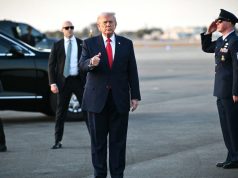
President Donald Trump on Monday claimed “great progress” in his administration’s “serious discussions” with Iran’s “NEW, AND MORE REASONABLE, REGIME.” But if a deal is “not shortly reached,” he added in a social media post, and “if the Hormuz Strait is not immediately ‘Open for Business,’ we will conclude our lovely ‘stay’ in Iran by blowing up and completely obliterating” all its power plants, oil wells and “possibly all desalination plants!”
Who said what
“Deliberate attacks on desalinization plants” would “be a major escalation that could constitute a war crime under international law,” Politico said. White House Press Secretary Karoline Leavitt said Monday the Trump administration “will always act within the confines of the law,” but Trump “is going to move forward unabated” to achieve his objectives in the war.
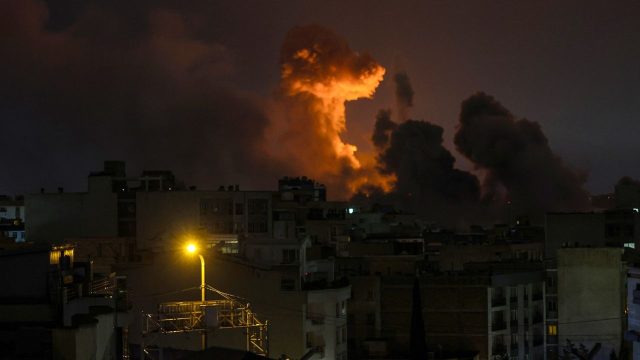
The “biggest danger” for the region “may not be what Trump could do to Iran, but how Tehran could retaliate,” The Associated Press said. Iran isn’t as reliant on desalination as its Gulf Arab neighbors, who “depend on it” to “sustain their current populations.” After Trump’s post, Iran “attacked and set ablaze a fully loaded crude oil tanker off Dubai,” Reuters said, and Kuwait said Iran hit a key power and water desalination plant.
What next?
An Iranian Foreign Ministry spokesperson said Tehran wasn’t negotiating directly with the U.S. but had received a 15-point proposal filled with “excessive, unrealistic and irrational” demands. Trump claims a “new government is in charge in Iran,” The New York Times said, but the killing of its previous leaders makes it “more difficult” for the “fractured” leadership that remains to “negotiate with American envoys or make significant concessions.”
Experts warned that this could constitute a potential war crime