
What happened
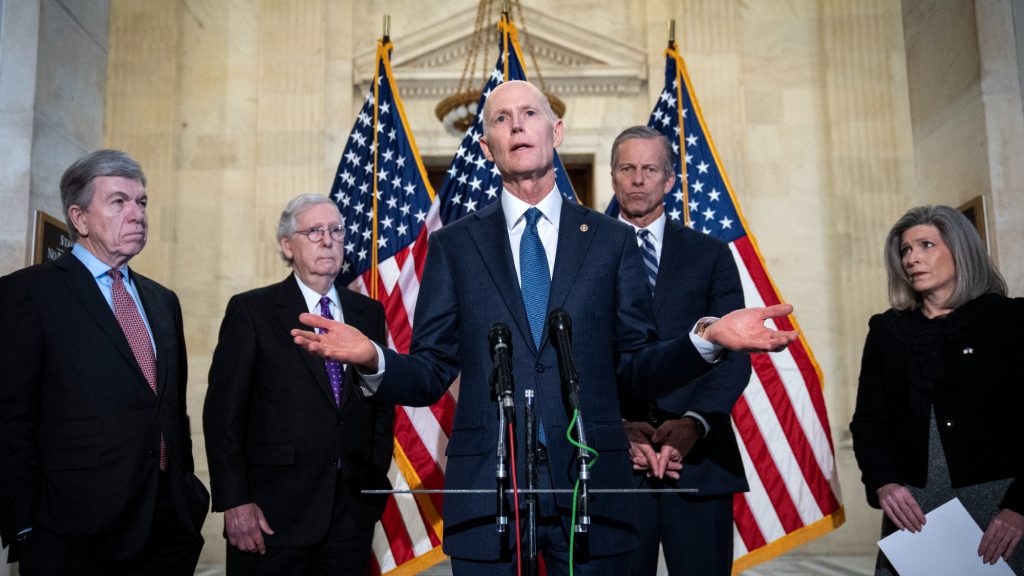
President-elect Donald Trump Sunday weighed into the race for Senate Republican leader, saying any senator who wanted the “coveted” position “must agree to recess appointments” — allowing Trump to appoint Cabinet secretaries and other high-ranking officials for up to two years without Senate confirmation. All three candidates for the position quickly backed the idea. The next GOP leader will become Senate majority leader in January when Republicans take control of the Senate.
Who said what
Sen. Rick Scott (R-Fla.), previously a long-shot candidate to replace longtime GOP leader Mitch McConnell (R-Ky.), was first to jump in, telling Trump on X he would “100%” do “whatever it takes to get your nominations through as quickly as possible.” That earned Scott a quick endorsement from X owner Elon Musk, now a close Trump ally. The Florida senator also won the recent backing of several other right-wing influencers and Trump allies, including four senate colleagues.
Sen. John Thune (R-S.D.) and Sen. John Cornyn (R-Texas) agreed in short order that Trump should get his appointments quickly, that Democrats shouldn’t be able to block Trump’s picks and that recess appointments were on the table. That signaled a “notable support for expansion of presidential power, even for a leader in the same party as the president-elect,” CNN said. Recess appointments have been effectively blocked since the Supreme Court ruled in 2014 that presidents can only use that power when the Senate is out of session for 10 days.
What next?
Scott has “has turned a two-way race” into a “three-man contest that stands as the first test of Trump’s grip on the Republican Party,” The Washington Post said. Senate Republicans will vote Wednesday “via secret ballot,” Axios said, and “momentum does not necessarily translate to senators’ votes.”
The president-elect said the next Senate majority leader must allow him to make recess appointments