
What happened
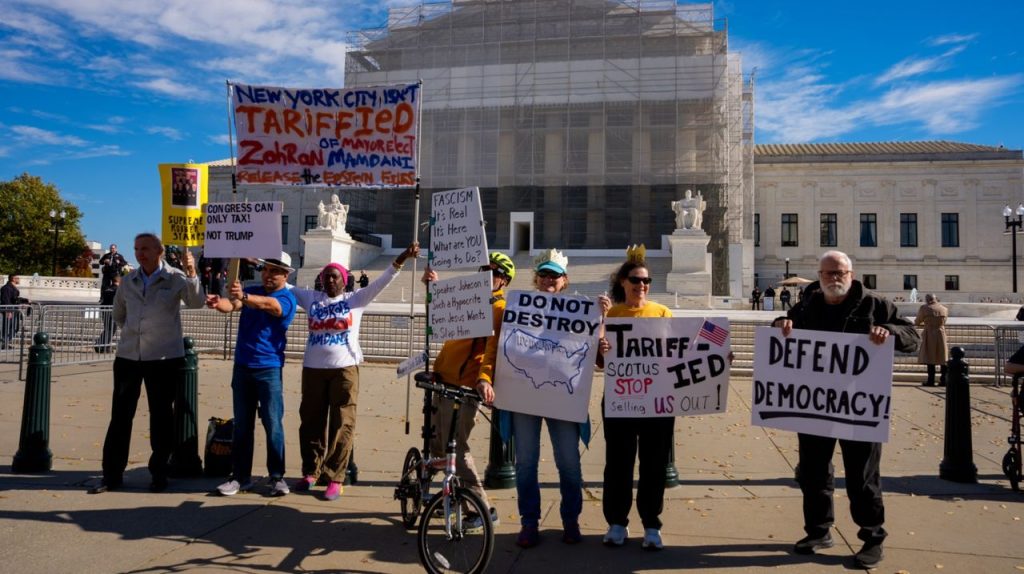
The Supreme Court Wednesday appeared skeptical of President Donald Trump’s authority to unilaterally levy widespread tariffs on foreign countries. The case — a challenge by states and small businesses to Trump’s “reciprocal” and fentanyl-related import taxes — was the first significant test of the president’s second-term expansive claim of power to get a full hearing before the high court.
Who said what
The court’s three liberal justices “were expected to be critical of Trump’s tariffs, but several of the court’s conservatives joined them in sharply questioning” Solicitor General D. John Sauer, said The Washington Post. The court’s decision “could affect global trade, the U.S. economy, inflation, businesses and the wallets of every American,” so the “stakes could hardly be higher.”
The justices are considering Trump’s use of the 1977 International Emergency Economic Powers Act, which doesn’t mention tariffs. The “imposition of taxes on Americans” has “always been the core power of Congress,” Chief Justice John Roberts said. Justice Neil Gorsuch expressed concern about the “gradual but continual accretion of power in the executive branch and away from the people’s elected representatives,” saying the “power to reach into the pockets of the American people is just different.” Sauer argued that the issue was Trump’s ability to regulate international commerce, and the billions in tariff revenue was “only incidental.” Hours later, Trump “bragged at an event in Florida about the revenue that tariffs have raised,” The New York Times said.
What next?
Trump would “still have plenty of options to keep taxing imports aggressively even if the court rules against him,” The Associated Press said. He just couldn’t use the “boundless authority he’s claimed” under the 1977 law.
Even some of the Court’s conservative justices appeared skeptical