What happened
The Trump administration on Monday signaled a retreat from its $1.8 billion “anti-weaponization” fund after Senate Republicans reiterated that it jeopardized President Donald Trump’s legislative agenda and a pair of court orders imperiled its prospects. The Justice Department said it “disagrees strongly” with U.S. District Judge Leonie Brinkema’s decision to temporarily freeze the fund but “will abide by the court’s ruling.”
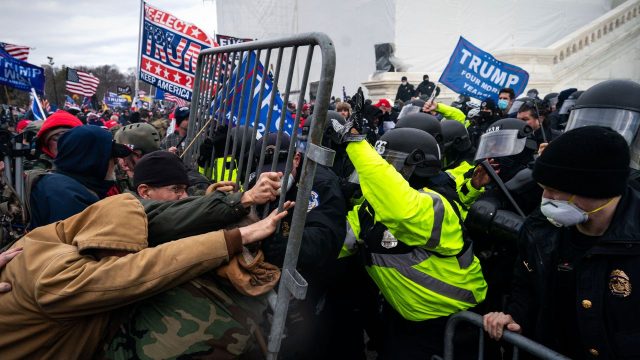
The fund, which bipartisan critics characterize as a scheme to funnel taxpayer money to Jan. 6 Capitol rioters, is “dead for now,” a senior administration official told Axios. “How dead it is is what’s being worked on,” an official told CNN.
Who said what
Senators returned to Washington on Monday, 10 days after Republicans scuttled a vote on a $72 billion filibuster-proof ICE-Border Patrol bill due to discomfort with the fund. Some administration officials “privately expressed relief” that Brinkema’s ruling offered a “way out of what most had seen as a mess of the Trump team’s own making,” The New York Times said.
But Republicans “cast serious doubt on whether the president would ultimately be willing to kill off the fund” and suggested they needed “firmer assurances that he would follow through,” said the Times. The “best way to handle it is if the administration decides to shut it down themselves,” Senate Majority Leader John Thune (R-S.D.) told reporters, and killing the fund permanently “would be the ideal outcome.”
What next?
Senate Minority Leader Chuck Schumer (D-N.Y.) told colleagues that “no matter what Republicans do, we will force them to vote” on shutting down the “slush fund before one cent goes out the door.”
The Justice Department said it will abide by a court ruling freezing the fund