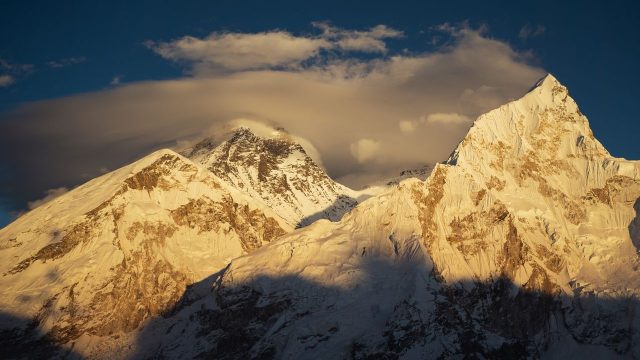
‘How Everest has changed since “Into Thin Air”’
Jon Krakauer at The Atlantic
When the “first edition of ‘Into Thin Air’ was published not long after the 1996 Mount Everest calamity,” many “assumed that the disturbing events I described in my book would convince amateur climbers that paying a lot of money to be guided up the highest mountain on Earth was a bad idea,” says Jon Krakauer. But Nepali workers “deserve much of the credit for making Everest a less dangerous mountain than it used to be.”
‘Amsterdam’s ban on advertising hamburgers won’t stop climate change’
The Washington Post editorial board
Amsterdam “just banned all advertisements for meat in public spaces. Its justification: Eating meat contributes to climate change,” says The Washington Post editorial board. But “censoring ads for beef, pork, chicken and even fish won’t reduce carbon emissions. Nor will it make people less hungry for protein and other nutrients essential to a healthy diet.” Humanity “will have an easier time innovating out of the challenges posed by climate change if it’s not working on an empty stomach.”
‘The fight over data centers is a distraction’
Abdallah Fayyad at The Boston Globe
Despite the “threats posed by AI — ranging from environmental to economic to privacy concerns — there’s little to no appetite in Washington to meaningfully regulate the industry,” says Abdallah Fayyad. America has “fixated on the one part of the story it can’t ignore, the part that is having a tangible impact on community after community: the proliferation of data centers.” While “opposing data center construction may make for good politics, it isn’t moving the needle when it comes to regulating AI.”
‘How inequality killed the affordable American car’
Harold Meyerson at The American Prospect
For “middle-class and working-class Americans, most new cars” are “now out of reach,” says Harold Meyerson. The “economists at GM and virtually every corporation clearly believe” that “focusing on selling more costly goods and services to the investment-enriched sector of the public will net their companies more money than the kind of ‘product for every purse’ marketing that thrived in that long-ago postwar economy.” The “gaps between the wealthy and everyone else are widening and accelerating.”
Opinion, comment and editorials of the day